

























































Kamau Therapeutics Releases Encouraging Sickle Cell Clinical Data Ahead of ASH Meeting

Kamau Therapeutics, a California biotech company co-founded by Stanford University physician-scientist Matthew Porteus, MD, PhD, has emerged from stealth with the release of preliminary clinical data on its first cohort of gene-edited patients with sickle cell disease (SCD).
The findings, part of a trove of abstracts that will be presented at next month’s American Society of Hematology (ASH) conference, show precise correction of the SCD mutation in the β-globin gene in three SCD patients as well as restored expression of adult hemoglobin (HbA). In contrast to FDA-approved Casgevy, which overcomes the SCD mutation by switching up expression of fetal hemoglobin (HbF), Kamau is employing a direct replacement of the SCD mutation using homology-directed repair (HDR) of the β-globin gene.
All three patients are currently transfusion-independent and have not experienced any pain crises since receiving their gene-edited hematopoietic stem cells (HSCs). In addition to the predominant HbA profile being restored, Kamau reports that the sickle hemoglobin (HbS) level fell below 20% of total hemoglobin in the two patients who have reached the 6-month post-infusion mark.

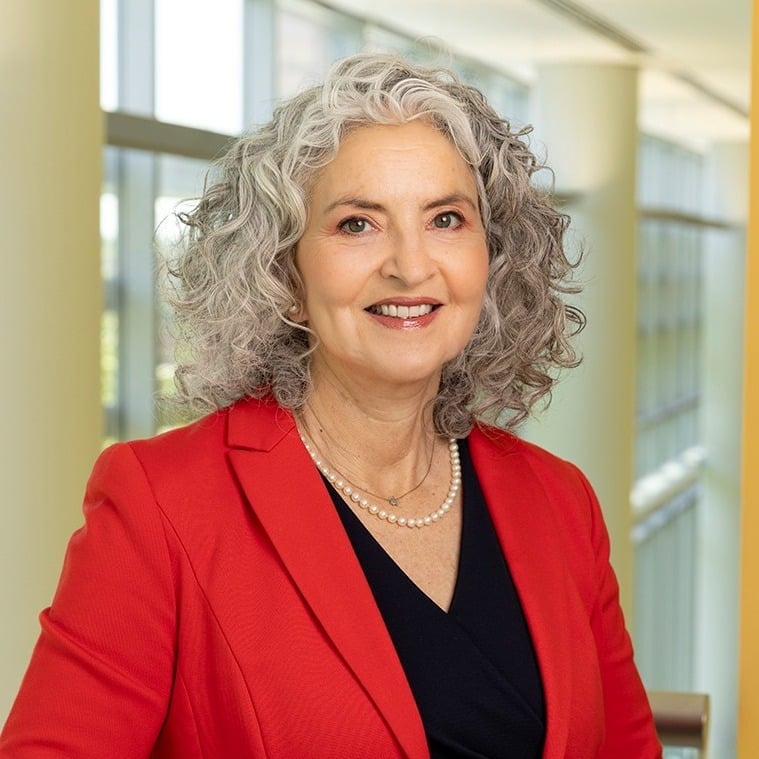
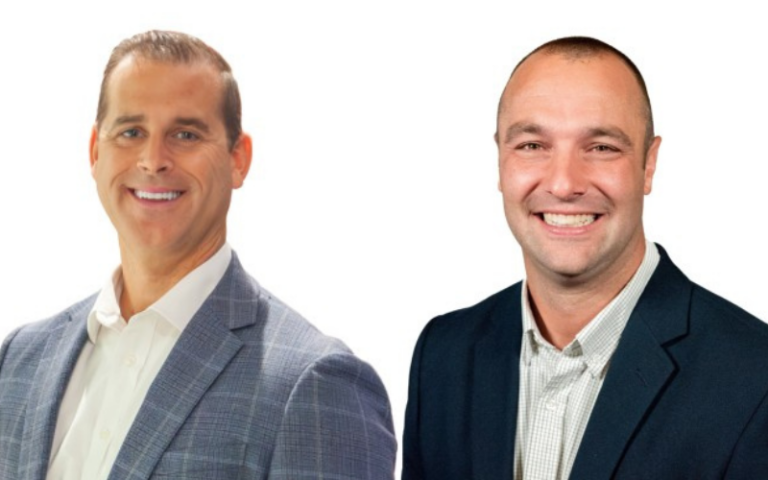
Co-Founder, Kamau Therapeutics
Associate Professor of Pediatrics, Stanford University
Porteus told GEN he was “very encouraged” by this early readout of Kamau’s RESTORE trial. “These were the target results that we were expecting once we got HDR to work in engraftable HSCs,” Porteus said. “We are now full speed ahead on enrolling more patients and moving to talk to the FDA about the registration trial design.” The Phase I/II RESTORE trial is enrolling some 15 participants.
Between the abstract submission and next month’s presentation at ASH, Porteus said Kamau has “further data that gives us confidence in the safety, efficacy and sustainability of the approach.” Porteus says that the updated data will be included in the ASH talk, which will be given by John DiPersio, MD, Director of the Center for Gene and Cellular Immunotherapy at Washington University School of Medicine, on December 14 in New Orleans.
“Achieving hemoglobin levels above 10 g/dL, with sickle hemoglobin below 20% and adult hemoglobin predominant, in patients who also remain free of vaso-occlusive events, is an encouraging early signal,” DiPersio said in a press release. “Seeing that profile alongside stable engraftment of corrected cells is what we would hope to see from a durable correction of the underlying mutation.”
Vali Barsan, MD, co-founder and CEO of Kamau Therapeutics, said his team applies “process engineering to HDR, nature’s own high-fidelity repair pathway.” The HDR pathway “can implement corrections we design directly into a patient’s own stem cells,” Barsan continued. “That has been the promise of gene editing from the beginning, and these data are early clinical evidence that it can be realized.”
Direct deposit
Porteus, who is head of R&D of Kamau, has been steadfast in his determination to translate some of the basic insights he helped define regarding DNA repair and recombination into the clinic, especially for the benefit of patients with SCD. He said his new company adopts a twin-stranded approach: reduce production of pathogenic HbS and restore the body’s own production of normal HbA. Kamau’s gene replacement strategy is a 1:1 exchange of the faulty HbS allele with a healthy HbA copy, rather than a gene addition strategy.
“We developed nula-cel to work in a patient’s own stem cells, enabling those cells to produce adult hemoglobin under the body’s normal regulation,” Porteus said. The nula-cel therapy directly corrects the SCD mutation in the β-globin gene. That is in contrast to the HbF switching approach taken in Casgevy, the gene editing therapy sponsored by Vertex Pharmaceuticals and CRISPR Therapeutics, approved in late 2023.
A major question is whether Kamau’s HDR strategy will offer any long-term clinical advantages compared to Casgevy. Porteus believes it might. “Since we see a greater reduction in HbS than the HbF [switching] approaches, we think that it will prove better at preventing the myriad of multi-organ damage that the disease causes,” Porteus told GEN. For example, “it has been shown that exchange transfusion, in which the target is to keep HbS below 30%, is better at preventing stroke or recurrent stroke than upregulation of HbF.”
In addition, Porteus said, “evolution has selected a tunable HbA as the solution to oxygen delivery to tissues under various conditions, whereas HbF is not tunable in its oxygen unloading. This may result in better long-term organ health.”
Of course, Kamau still faces some very stiff headwinds en route to commercial viability. In December 2024, Editas Medicine suspended its own gene editing asset for SCD after it was unable to find a pharma partner to move the therapy to approval despite strong clinical data.
Porteus notes that in his reading of Editas’ published data, “it did not appear the clinical results were improved over Casgevy.” Moreover, there are encouraging signs that the gene therapy approaches approved in 2023 are beginning to reach patients. “That Lyfgenia is, and Casgevy will soon be, profitable as patient infusions logarithmically increase quarter-over-quarter, while only addressing a tiny portion of the [SCD] patient population, gives us conviction on the commercial upside,” Porteus told GEN.
“The demand is there and we will be part of the solution to meet that demand,” Porteus insists. And as the CAR T commercial market demonstrates, “being first to market helps but the ultimate winner is best in indication.”
ASH anticipation
DiPersio’s presentation at ASH next month will be entitled: “First Clinical Results of Precise HBB Gene Correction by Homology Directed Repair in Patients with Severe Sickle Cell Disease: Safety and Efficacy from Phase 1A of the RESTORE Study” (NCT04819841). He will present results on three SCD patients treated with Kamau’s revised manufacturing process (V2.0) for nula-cel, along with continued follow-up of the first patient ever treated with nula-cel four years ago, under the auspices of Graphite Bio, Porteus’ previous company. Graphite Bio halted its SCD clinical trial in late 2022 and subsequently disbanded.
The ASH data “provide early clinical evidence that precise HDR-mediated correction of the native HBB gene is feasible,” Porteus said. “We look forward to learning more as the RESTORE trial progresses.”
All three V2.0 treated patients achieved transfusion independence before they were released from hospital, achieving neutrophil engraftment at a median of 21 days. In the two patients with more than six months of follow-up, total hemoglobin exceeded 10 g/dL, with relatively low levels of HbS (17.6% at 12 months and 19.1% at 8 months) and high HbA (77% at 12 months and 67% at 8 months).
Bone marrow HDR allele frequencies stabilized at approximately 20%, consistent with durable engraftment of gene-corrected HSCs. Single-cell analyses showed more than 90% of circulating red blood cells contained protective levels of HbA. There were no serious adverse events related to nula-cel or the multistep gene-editing process V2.0-treated patients, but some consistent with the busulfan conditioning and stem-cell transplantation.
Off-target gene editing remained low and unchanged, Kamau said. HDR allele frequencies exceeded the 20% target in all three patients (32–38%). HSC mobilization required a median of just 1.3 apheresis cycles to reach target cell dose.
Nula-cel, which has received Fast Track and Orphan Drug designations from the U.S. Food and Drug Administration (FDA), is an ex vivo approach. Kamau engineers a patient’s own stem cells outside the body, verifying each cell product’s quality, potency, and safety, before reinfusing the HSCs into the patient. Kamau claims this offers a measure of control that would not be possible using an in vivo gene editing approach.
Kamau is funded by a group of investors including Khosla Ventures, Cormorant Asset Management, NEVA SGR, Draper VC, Modi Ventures, and Regeneron Ventures. The company’s leadership team also includes chief technology officer Ramji Krishnan, PhD, who brings experience in CMC leadership at BMS/Celgene, and autologous HSC gene therapy experience at Rocket; chief medical officer Jacob Garcia, MD, previously at Juno/BMS; and chief business officer Reza Afkhami, formerly with Global Blood Therapeutics, where he helped manage the company’s 2022 acquisition by Pfizer.
The post Kamau Therapeutics Releases Encouraging Sickle Cell Clinical Data Ahead of ASH Meeting appeared first on GEN - Genetic Engineering and Biotechnology News.
Apa Reaksi Anda?
 Suka
0
 Kurang Suka
0
 Setuju
0
 Tidak Setuju
0
 Bagus
0
 Berguna
0
 Hebat
0