




































































IP: American as apple pie and essential for biotech

The United States leads the world in biotech innovation, and a major driver is its strong intellectual property (IP) system.
In fact, IP rights are as American as apple pie. President George Washington not only talked about the importance of intellectual property protection in his first State of the Union address, but American IP rights were codified in the Patent Act in April of 1790—only 14 years into the country’s founding.
“That’s because the Founders, in creating our country and looking at the model of what was working and not working in England, saw that economic protection for scientific discoveries and innovations was critical to grow, support and nurture the economic success of a new country,” said Coke Morgan Stewart, the President and CEO of the Council for Innovation Promotion (C4IP), and former Deputy Undersecretary of Commerce for Intellectual Property and Deputy Director of the U.S. Patent and Trademark Office (USPTO) during a conversation she had with the Center For Individual Freedom.
For IP Awareness Month this October, Bio.News looks at how IP has helped facilitate decades of innovation in biotech, helping patients lead better, healthier, and long lives.
The circle of biotech innovation
It all starts with the spark of an idea.
A scientist in a lab makes a discovery and recognizes its potential to fill an unmet medical need: a treatment, therapy, or even a cure. So the scientist’s institution or company files a patent on their discovery. But why?
The biotech industry is one of the most research-intensive industries operating today, requiring often over a decade of work and billions of dollars to get a drug, treatment, or cure to market.
And IP protections, in many ways, act as the armor around an idea or invention, allow for:
- The incentivization of innovation, allowing inventors to recover their research and development costs and profit from their hard work;
- Prevention of counterfeiting, which doesn’t just prevent theft of an idea, but also the ability to profit from its introduction to the market, allowing inventors to keep developing new ideas; and
- Attraction of investment, building economic value for both individual companies, as well as the economy as a whole.
Any biotech, big, small, or in between, needs IP protections to keep the circle of innovation turning, but when it comes to small biotechs, the stakes are much higher, making these protections even more imperative—and protecting them is good for patients too.
As Bio.News reported: “By most estimates, small and medium-sized biotech firms are behind the majority of new drugs. One study shows 55% of drugs gaining Food and Drug Administration (FDA) approval between 2011-2022 were developed by companies with less than $500 million in revenue.”
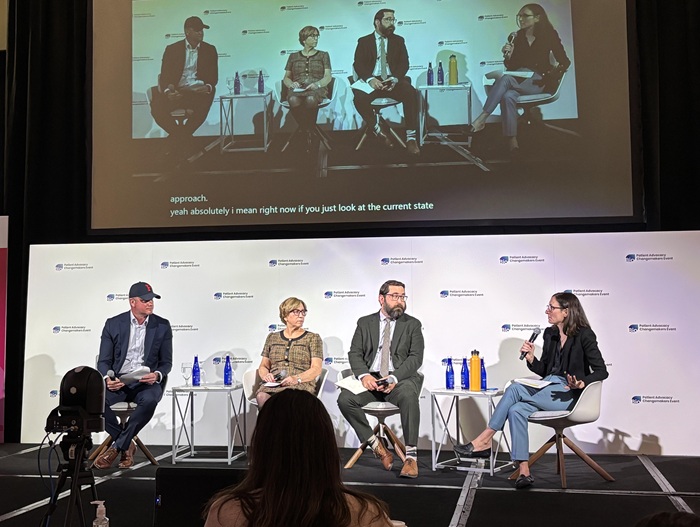
“There’s a lot of people who believe that patents stifle competition,” said panelist Dede Willis, CEO of Orbit Geonomics during the 2026 International BIO Convention. “I would actually argue the opposite, for life sciences in particular, especially biotech, where the timelines to get to market and the cost to develop a product are extremely high. The patents are actually increasing competition because they’re enabling new technologies to be funded and commercialized.”
Completing the cycle
Let’s look at the end of a development cycle: the R&D was successful, the clinical trials are complete, and the FDA is on board. The drug is going to market and the investors are making a return on their investment. What do they do? Say Thanks, that was fun, but I am moving on. Well, as it would turn out, not really.
As BIO has found, “Revenue from product sales helps fund future research. U.S. biopharma firms reinvest about 34% of their revenue into R&D, more than almost every other industry.”
And the numbers behind that 34% are huge. As the study, “Comprehensive measurement of biopharmaceutical R&D investment” found, “global biopharmaceutical R&D investment totaled $276 billion across 4,191 global companies in 2021.”
And these numbers have been holding steady and even gaining momentum.
As Bio.News reported in February: “both licensing and M&A in biopharma, saw over 4,000 deals and more than $600 billion in headline value—and 2026 seems to be keeping up this momentum.”
Continuing, “there were a total of 4,341 deals in 2025, compared to 3,883 in 2024, and the $606 billion in total deal value was higher than the $421 billion in 2024. The $291 billion in upfront cash and equity of 2025 was an improvement over the $191 billion in 2024. Notably, large cap biopharmas signed fewer, higher-value deals, with 255 in 2025, compared to 294 in 2024.”
And thus the cycle continues, and even powers itself.
As a last example, a 2026 study published by the U.S. Chamber of Commerce Global Innovation Policy Center found that the U.S.’s strong IP safeguards not only make it more competitive today, but also ensure competitiveness for the future.
“Economies with robust IP environments are 97% more likely to be prepared for the future of growth,” the study observed. Continuing, “economies with strong IP systems are 59% more likely to be able to transform their economies using sophisticated, state-of-the-art technologies compared with economies whose IP systems require improvement.”
And so, IP proves itself time and time again to be a key element of innovation, progress, and competitiveness.
The post IP: American as apple pie and essential for biotech appeared first on Bio.News.
Apa Reaksi Anda?
 Suka
0
 Kurang Suka
0
 Setuju
0
 Tidak Setuju
0
 Bagus
0
 Berguna
0
 Hebat
0