





































Hen weight biggest factor in determining egg, chick weight
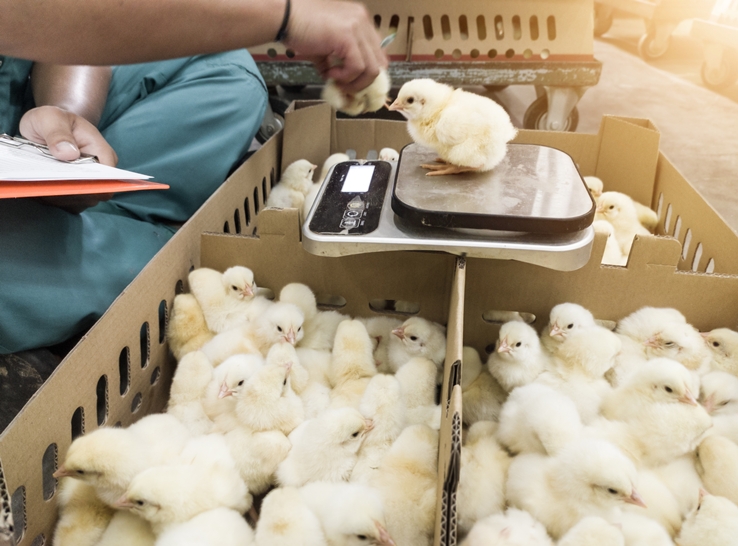
As an intern in the Prestage Department of Poultry Science, North Carolina State University, veterinarian Gabriele Kinchin studied 1,600 pullets and more than 10,000 eggs to determined if hen bodyweight influences egg weight and geometric shape.
“We hypothesized that the hen’s target bodyweight and the length of the starter feeding phase would influence egg weight and egg geometric traits, and the difference would affect peak bodyweight,” Kinchin reported.
She discussed the research and results at the 2026 International Poultry Scientific Forum.
Hen weight, starter-phase length measured
The research was designed to evaluate the effects of pullet bodyweight and a 4- or 6-week starter phase on egg weight, geometric traits and uniformity. The research also measured chick progeny weight, yolk-free bodyweight and residual yolk.
The 1,600 day-old Cobb commercial pullets were placed in a house with 16 pens (four replicates per treatment). The pullets were fed either the 4- or 6-week starter diet, followed by grower and developer diets. Feed was allocated to achieve target bodyweights and adjusted weekly based on observed bodyweight.
At 22 weeks of age, hens were transferred to the laying house with 72 hens and seven roosters per pen. Eggs were collected three times a day, and 84 eggs per pen were individually weighed and incubated at 27, 29, 31, 33, 34, 36, 38, 40 and 42 weeks of age.
Egg-weight loss was determined after transfer from the setter to the hatcher on day 18.
Egg measurements were taken from 30 eggs per pen to determine geometric traits. In addition, 10 chickens per pen were weighed at hatch, sacrificed and the yolk-free bodyweight was determined.
Heavy hens, eggs and chicks
The results demonstrated that eggs from heavier hens had the highest egg weights, regardless of hen age or duration of starter diet.
In lighter hens, the 4-week starter diet produced heavier eggs than lighter hens fed the 6-week starter diet. Also, eggs from lighter hens were less uniform than eggs from heavier hens.
Chick bodyweight followed the same pattern. Chicks from heavier hens had higher bodyweight than those from lighter hens. This was also true for yolk-free bodyweight.
“As we expected, chicks from heavier hens were heavier,” Kinchin said. “In contrast, starter length did not affect chick bodyweight, indicating that differences in chick weight were mainly related to egg size rather than starter duration. Similarly, starter-diet length did not influence yoke-free bodyweight.”
Hen bodyweight important
“To conclude, hen target bodyweight was the main factor that influenced egg weight, egg geometric traits, chick bodyweight and yolk-free bodyweight,” Kinchin said.
“Starter-phase length did not show a consistent effect on egg weight,” she continued. “However, it interacted with target bodyweight, modulating egg geometric traits especially in lighter hens.
“And finally, egg-weight loss was not affected by target bodyweight, starter-phase length or their interaction.”
The post Hen weight biggest factor in determining egg, chick weight appeared first on Modern Poultry.
Apa Reaksi Anda?
 Suka
0
 Kurang Suka
0
 Setuju
0
 Tidak Setuju
0
 Bagus
0
 Berguna
0
 Hebat
0