






























































 Large.jpeg?format=1500w#)






Try These 10 TRX Leg Exercises for Lower Body Strength


TRX leg exercises include Suspension Trainer™ versions of squats, lunges, bridges, curls, and plank-based movements. These ten TRX lower-body exercises cover squat, lunge, lateral, posterior-chain, and dynamic patterns, with practical cues for choosing a version you can control.
Start with a secure anchor, smooth reps, and a range of motion you can own. If you feel pain, cannot keep the anchor stable, or are unsure whether an exercise fits your current restrictions, stop and get qualified guidance before continuing.
Key Takeaways for Choosing TRX Leg Exercises
-
TRX leg exercises can train squat, lunge, lateral, posterior-chain, and dynamic movement patterns in one lower-body session.
-
The TRX Home2 System uses bodyweight as resistance, and changing your body position adjusts the difficulty of standing squats and lunges so you can scale the same pattern to your present control.
-
Beginners can choose three to five controlled movements, and experienced users can add unilateral or faster variations after the basic version stays steady.
-
Foot-cradle exercises need the correct strap length and even tension, and any pain, unstable anchor, or loss of control is a reason to stop or choose an easier option.
How to Choose and Scale These TRX Leg Exercises
Choose among these TRX exercises for your legs by movement pattern, current control, and the role each move will play in your session. A balanced shortlist can include one squat, one lunge, one lateral move, one bridge or curl, and an optional dynamic exercise.
Start with TRX Squats, Glute Bridges, Side-to-Side Lunges, or Hamstring Curls if you are learning the equipment. Crossing Lunges, Abducted Lunges, Hip Presses, Mountain Climbers, and Squat Jumps ask for more balance, coordination, or speed, so earn those versions with clean, repeatable reps.
For standing squats and lunges, the TRX Home2 System uses bodyweight as resistance, and your body position changes how hard the movement feels. Start with a more upright stance or more help from the handles. Change one variable at a time, and keep the harder version only when your posture and tempo stay consistent.
Foot-cradle moves need a different setup. Set both straps evenly, adjust the cradles to hold your heels or toes securely, and keep equal pressure through both sides so the straps do not saw back and forth.
If you are comparing equipment for a broader lower-body setup, browse the Leg Gym Equipment collection. TRX groups the Home2 System with strength bands, YBell weights, and exercise bands there, giving you one place to compare the loading method that fits the movements you plan to repeat. Keep other categories, including speed and agility tools, as separate equipment decisions instead of treating them as proof that one exercise improves sport performance.
Not sure where to start with TRX training? Take our quick fitness assessment to narrow the exercise options to your current experience and goals.
10. TRX Glute Bridges
10. TRX Glute Bridges
TRX Glute Bridges train hip extension with an emphasis on the glutes and hamstrings. Your heels stay in the foot cradles while your trunk remains supported on the floor.
-
Set the straps to mid-calf length and lie on your back facing the anchor.
-
Place both heels securely in the foot cradles, bend your knees to about 90 degrees, and keep your feet hip-width apart.
-
Brace your midsection and press your heels into the cradles.
-
Tuck your pelvis slightly, then lift your hips until your shoulders, hips, and knees form a long diagonal line.
-
Pause and squeeze your glutes without arching your lower back.
-
Lower your hips with control and repeat.
Scale it. Keep the lift smaller or rest your hips briefly between reps for an easier version. Hold the top position for one or two counts when you can keep both straps even.
Common mistake. Pushing through the toes or flaring the ribs shifts attention away from a controlled hip lift. Keep your heels heavy and stop the rep before your lower back arches. For a broader movement session, use the functional mobility guide separately.
9. TRX Crossing Lunges
TRX Crossing Lunges combine a single-leg squat pattern with a diagonal step behind the standing leg. The front-leg glutes and quads do most of the work while the straps help you control balance.
-
Set the straps to mid-length and stand facing the anchor with one handle in each hand.
-
Keep light tension on the straps, feet about hip-width apart, and your chest tall.
-
Shift your weight onto one leg and step the other foot behind and across your body.
-
Lower only as far as the standing foot stays planted and the front knee tracks in line with the toes.
-
Drive through the standing foot to return, then repeat before switching sides.
Scale it. Make the cross-behind step smaller and use more support from the handles. Increase the step and depth only after the pelvis stays level and the standing knee remains controlled.
Common mistake. Twisting the front knee inward to chase depth turns the movement into a wobble. Shorten the step and keep the front knee following the foot.
8. TRX Hip Presses
TRX Hip Presses combine a hamstring curl with a bridge, so the glutes and hamstrings work while the feet remain suspended. The two-part movement requires steady hip height and even strap tension.
-
Set the straps to mid-calf length and lie on your back facing the anchor.
-
Place both heels in the foot cradles and extend your legs.
-
Press through your heels and lift your hips into a straight line from shoulders to heels.
-
Bend both knees and draw your heels toward you without letting the straps saw.
-
Press your hips up while keeping the heels close.
-
Lower your hips, extend your legs with control, and repeat.
Scale it. Keep your hips closer to the floor or practice the curl and bridge as separate movements. Slow the leg extension or add a brief hold before considering a single-leg version.
Common mistake. Letting the hips drop as the knees bend removes the bridge portion. Use a smaller curl that lets you keep the pelvis steady.
7. TRX Squat Jump
The TRX Squat Jump adds a controlled jump to the squat pattern. It emphasizes the quads, glutes, hamstrings, and calves while the handles provide a consistent reference point.
-
Set the straps to mid-length and stand facing the anchor with light tension on the handles.
-
Place your feet about shoulder-width apart and keep your chest tall.
-
Sit your hips down and back into a squat that you can control.
-
Drive through the floor and jump straight up without pulling yourself up with the handles.
-
Land softly through the whole foot and bend your knees and hips to absorb the landing.
-
Reset your stance before the next rep.
Scale it. Begin with regular TRX Squats or rise onto your toes instead of leaving the floor. Add a small jump only when every landing stays quiet and balanced.
Common mistake. Turning the handles into a launch system reduces control. Keep the straps lightly tensioned and let your legs create the jump.
Marathon runners should treat squat jumps as optional supplemental work and fit them around the demands of their running plan. If you want a mixed session, pair the move with a TRX Push-Up inside a strength training routine at home. Compare basketball workout gear separately when your wider plan includes sport-specific drills.
6. TRX Side-to-Side Lunge
The TRX Side-to-Side Lunge trains a lateral squat pattern that emphasizes the glutes, quads, and inner thighs of the working leg. One leg bends while the other stays long.
-
Set the straps to mid-length and stand facing the anchor with one handle in each hand.
-
Step one foot to the side while the other foot stays planted.
-
Sit your hips back over the stepping leg and bend that knee.
-
Keep the opposite leg long, both feet planted, and your chest lifted.
-
Drive through the bent leg to return to center.
-
Repeat on the other side with the same range.
Scale it. Use a smaller side step and shallower depth. Increase the range only while both feet stay flat and the hips continue moving back.
Common mistake. Letting the working heel lift or the knee collapse inward makes the base less stable. Shorten the range and keep the knee tracking with the toes.
If your wider plan includes field drills, browse soccer fitness gear as a separate equipment decision. The lunge itself should stay focused on controlled lateral movement.
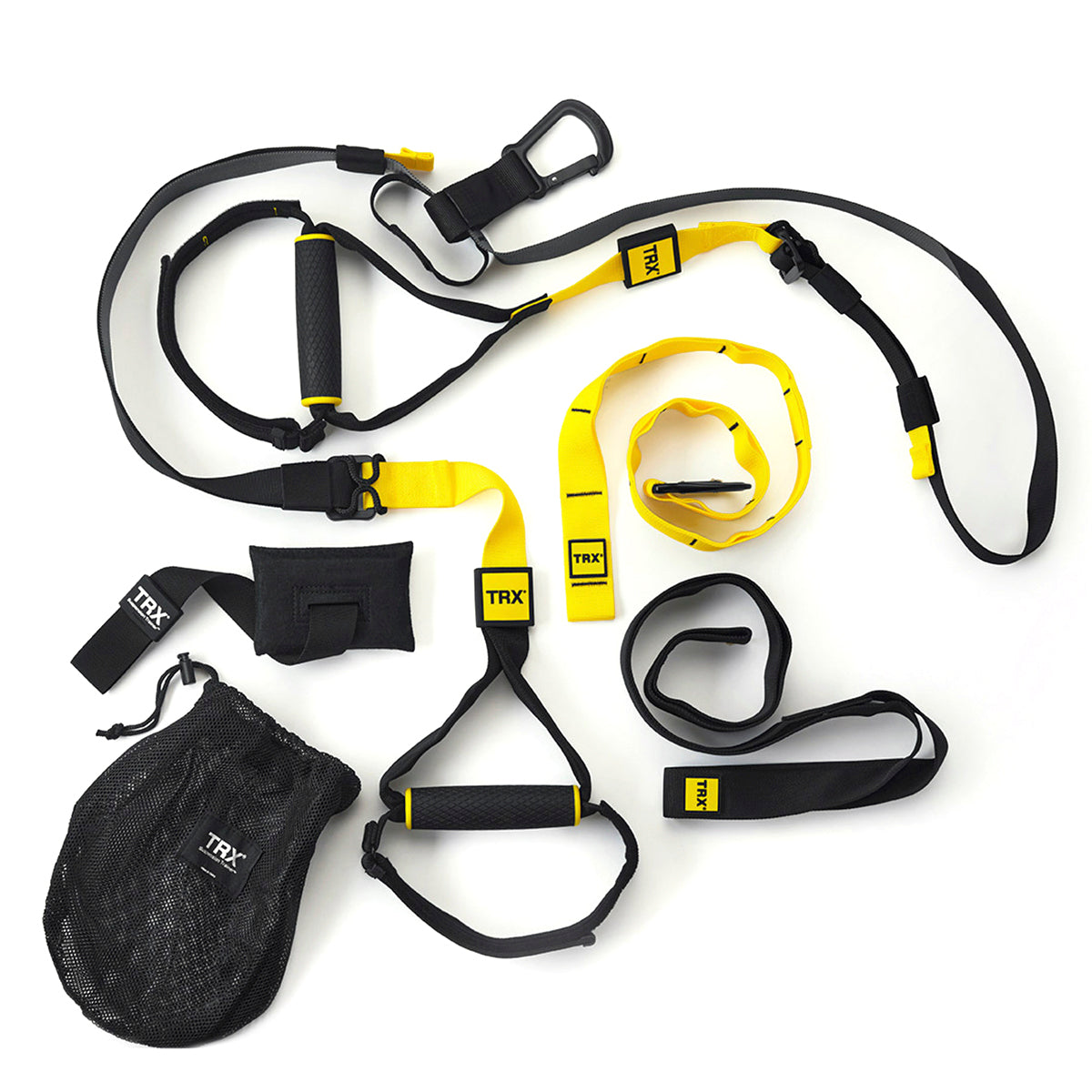
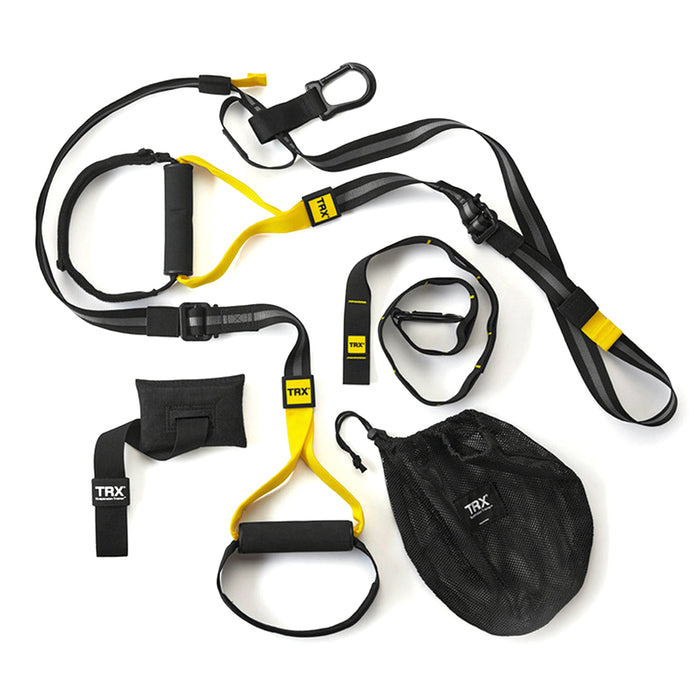
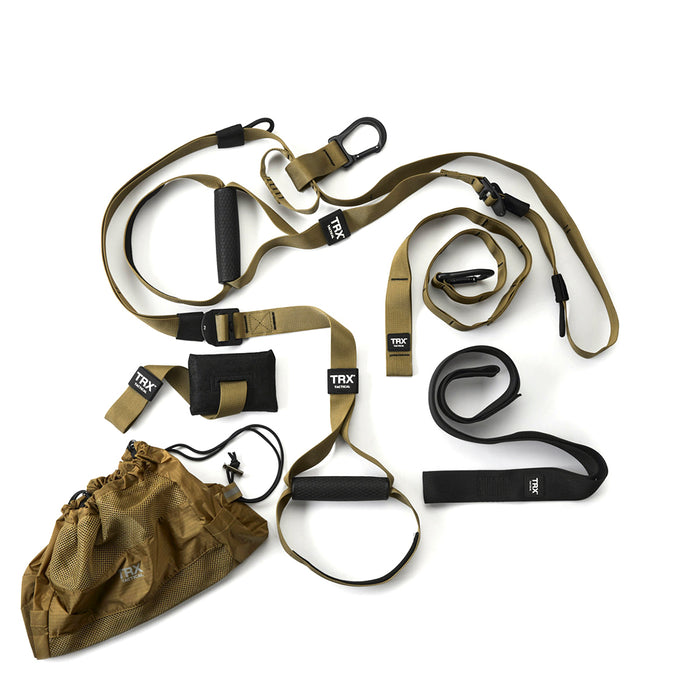
If you are comparing Suspension Trainer systems, review the handles, foot cradles, included anchors, and intended training environment before you choose.
5. TRX Mountain Climbers
TRX Mountain Climbers use a suspended plank with alternating knee drives. The move challenges trunk control while the hips and legs move underneath you.
-
Set the straps to mid-calf length and kneel facing away from the anchor.
-
Place your toes securely in the foot cradles, then move into a plank with hands under shoulders.
-
Keep a long line from your head through your heels.
-
Draw one knee toward your chest while pressing the opposite foot into its cradle.
-
Return to the plank and switch sides.
-
Continue at a pace that keeps the straps even and your hips controlled.
Scale it. Hold the plank first, then add slow single knee drives. Increase speed only after the shoulders and hips stay in position.
Common mistake. Letting the hips bounce or the straps saw side to side turns speed into noise. Slow down and press evenly into both cradles.
4. TRX Abducted Lunges
TRX Abducted Lunges pair a grounded single-leg squat with the other leg suspended to the side. The grounded glutes and quads drive the movement while the inner thigh and hip control the lateral position.
-
Set the straps to mid-calf length and stand sideways to the anchor.
-
Hold both handles in the hand closest to the anchor and place that-side foot in the foot cradle.
-
Stand tall on the grounded leg with tension in the straps.
-
Sit the hips back and bend the grounded knee while the suspended leg extends to the side.
-
Drive through the grounded foot to stand, then complete the set before switching sides.
Scale it. Keep the range shallow and use your free hand on a stable support if needed. Add depth only after you can keep the grounded foot and pelvis steady.
Common mistake. Drifting toward the anchor can let the suspended strap pull you out of position. Stay stacked over the grounded foot and move slowly.
3. TRX Squats
TRX Squats train the basic squat pattern with the handles available for balance and feedback. The quads and glutes drive the movement while the hamstrings and trunk help control it.
-
Adjust the Suspension Trainer straps to mid-length and stand facing the anchor.
-
Hold one handle in each hand with your elbows near your sides and light tension on the straps.
-
Set your feet about shoulder-width apart with weight spread across each foot.
-
Sit your hips down and back while your knees track over your toes.
-
Lower only as far as you can keep your chest lifted and feet planted.
-
Drive through the floor to stand without pulling on the handles.
Scale it. Stand more upright and use the handles for light support. To increase the challenge, use less hand assistance or work through a larger controlled range.
Common mistake. Hanging from the straps shifts the job from the legs to the arms. Keep a soft bend in the elbows and enough tension to guide, not carry, the squat.
2. TRX Hamstring Curls
TRX Hamstring Curls train knee flexion with the heels suspended, placing the main demand on the hamstrings while the glutes help hold the hips up.
-
Set the straps to mid-calf length and sit facing the anchor.
-
Place both heels in the foot cradles, then lie back with your legs extended and arms by your sides.
-
Press through your heels and lift your hips.
-
Bend both knees and draw your heels toward your glutes.
-
Pause without letting the hips twist or drop.
-
Extend the legs slowly and repeat.
Scale it. Keep the hips lower or shorten the curl. Progress by slowing the extension or holding the curled position before trying any single-leg version.
Common mistake. Rushing the return lets the straps pull the legs straight. Control the extension and keep the knees parallel.
This is a practical hamstring exercise to do at home. If you are following a half marathon plan, place it around your running workload instead of assuming the sample sets below fit every training week.
1. TRX Low Lunge
The TRX Low Lunge is a mobility-focused lunge that places one foot in the cradle while the grounded leg controls the position. It creates a front-of-hip stretch without turning the movement into a strength test.
-
Set the straps to mid-calf length and face away from the anchor.
-
Place one foot in both foot cradles and step the other foot forward.
-
Bring your hands to the floor or blocks on either side of the front foot.
-
Lower your hips only as far as the front foot stays planted and your breathing remains steady.
-
Hold briefly, return with control, and switch sides.
Scale it. Keep the lunge higher, place the back knee on the floor if the setup supports that position, or use blocks under your hands. Add an overhead reach only when the base position feels steady.
Common mistake. Forcing the hips lower can turn a useful stretch into a strained position. Choose a range you can hold without pain or loss of balance.
Try these movements and other Suspension Trainer options with the TRX exercises YouTube guide.
Try This Sample TRX Leg Workout Today
This sample TRX leg workout is one way to combine the ten movements, not a universal prescription. Beginners can choose three to five exercises, complete fewer sets, or use the easier variation listed in each section. Resistance-training prescription should match the trainee's goals, capacity, and training status, so treat the sets, reps, and rest below as adjustable starting points.
Warm up with a few minutes of movements that match your ability, such as easy squats, leg swings, marching, and hip rotations.
-
TRX Side-to-Side Lunges: 3 sets of 10 to 12 reps per leg, with 60 seconds of rest.
-
TRX Squats: 3 sets of 12 to 15 reps, with 60 seconds of rest.
-
TRX Glute Bridges: 3 sets of 12 to 15 reps, with 60 to 90 seconds of rest.
-
TRX Crossing Lunges: 3 sets of 10 to 12 reps per leg, with 60 seconds of rest.
-
TRX Hamstring Curls: 3 sets of 12 to 15 reps, with 60 to 90 seconds of rest.
-
TRX Mountain Climbers: 3 sets of 30 to 45 seconds, with 60 to 90 seconds of rest.
-
TRX Hip Presses: 3 sets of 10 to 12 reps, with 60 to 90 seconds of rest.
-
TRX Abducted Lunges: 3 sets of 10 to 12 reps per leg, with 60 to 90 seconds of rest.
-
TRX Squat Jumps: 3 sets of 8 to 10 controlled reps, with 60 to 90 seconds of rest.
-
TRX Low Lunge: hold for 30 to 45 seconds on each leg within a comfortable range.
Finish with a few minutes of easy movement or stretching for the areas you trained. Stop sooner if fatigue changes your form.
You can add upper-body work on another day or build a full-body workout that you can do at home once you know which lower-body movements you can control.
How to Set Your TRX Strap Length for Your Workout
Set TRX strap length to match the exercise, then check that both sides are even and the anchor stays secure before you load the system. Strap length supports the movement setup, but it does not make an exercise suitable for every person.
Step-by-Step Guide to Adjusting and Setting Up TRX Straps
-
Choose the anchor described in your product instructions. A door setup needs a suitable hinged door that closes securely and opens away from the training area.
-
Inspect the straps, stitching, carabiner, anchor, and surrounding space. Pull firmly on the system and add bodyweight gradually before the first rep.
-
Open each Barrel Lock Adjuster fully before sliding the straps. Adjust both sides together when possible so the handles and foot cradles stay even.
-
Use mid-length for the standing squats and lunges in this article. Use mid-calf for floor-based planks, curls, bridges, and foot-cradle lunges when the specific exercise instructions do not state another length.
-
Adjust the foot cradles so the heels or toes sit securely. Recheck the setup whenever you switch between standing and ground-based exercises.
Do not continue if the door, mount, overhead point, hardware, or straps move, show damage, or leave you unsure about the setup. Follow the instructions for your exact Suspension Trainer and anchor model.
TRX Training Club® offers on-demand workouts, setup and anchoring instruction, and guided programs. Use TRX Training Club® to turn a few controlled leg movements into a repeatable session that fits the time you have once your equipment is set up. The service does not replace qualified guidance for pain, medical restrictions, or uncertainty about exercise form.
Common TRX Leg Exercise Mistakes
Watch for setup errors, excessive range, and speed that changes your form during TRX leg exercises.
-
Starting with a loose or untested anchor instead of inspecting and loading the system gradually.
-
Pulling hard on the handles during squats and lunges instead of using the straps for light support and feedback.
-
Letting the straps saw side to side during foot-cradle exercises.
-
Chasing depth, speed, or a harder variation after posture or balance begins to change.
-
Training through pain or ignoring a current restriction that calls for a different exercise or qualified guidance.

Frequently Asked Questions About TRX Leg Exercises
Start with three to five controlled TRX leg exercises, change one variable at a time, and add difficulty only when your form stays consistent.
Which TRX leg exercises are best for beginners?
TRX Squats, Glute Bridges, Side-to-Side Lunges, and two-leg Hamstring Curls are approachable starting points because you can shorten the range, slow the tempo, or use the handles for light support.
How do I make TRX leg exercises easier or harder?
Change one variable at a time. For standing moves, adjust your body angle or hand support. For foot-cradle moves, shorten the range, slow the tempo, or practice the base position before adding a curl, jump, or single-leg demand.
Which TRX inner-thigh exercises should beginners try?
Side-to-Side Lunges, Crossing Lunges, and Abducted Lunges all include lateral or diagonal positions that ask the inner thighs to help control the leg and pelvis. Start with a small range before adding depth.
How many TRX leg exercises should I use in one workout?
A focused beginner session can use three to five TRX leg exercises. Choose different patterns, keep the sets manageable, and add exercises only when your form stays consistent through the final rep.
Build Your TRX Leg Workout With the Right Setup
A useful TRX lower-body workout starts with exercises you can set up and repeat well. Choose a squat, lunge, lateral move, and posterior-chain exercise, then add a dynamic option only when it fits your present control.
Ready to put these leg exercises into practice with TRX? Choose three to five movements you can control, then compare TRX Suspension Trainer systems to pick the setup that matches where you plan to train.
What's Your Reaction?
 Like
0
 Dislike
0
 Agree
0
 Disagree
0
 Excellent
0
 Useful
0
 Great
0