

























































Creatine vs. Protein Powder: What Each Does and Which One Fits Your Goals


You landed on this page because you are staring at two tubs on a supplement shelf and wondering which one earns your money first. Here is the fast answer. Creatine fuels performance. That means more reps, more power, more work under the bar. Protein powder handles repair, rebuilding what you tore down in that session. Two different jobs. Most serious lifters end up taking both.
This guide breaks down what each supplement does, how to dose them, whether you need both, and how to pick the one that fits your goal.
Creatine vs. Protein Powder at a Glance
By the end, you will know what each supplement does, which one to pick for your goal, and whether stacking them makes sense for you. Start with the side-by-side view below.
|
Supplement |
Primary Role |
Best For |
Timeline to Feel It |
Daily Dose |
|
Creatine (compound stored in muscle) |
Refuels ATP for short, intense efforts. Fuels performance. |
Strength, power, more reps at heavy loads |
2 to 4 weeks |
5g monohydrate |
|
Protein Powder (concentrated dietary protein) |
Supplies amino acids for muscle repair and growth |
Recovery, muscle building, hitting daily protein target |
Ongoing with daily intake |
0.7 to 1.0g per pound of bodyweight |
Think of them as teammates with different jobs and complementary outcomes, not two options fighting for the same shelf space.
What Is Creatine and What Does It Do?
Creatine is a naturally occurring compound your body already makes and stores in muscle tissue. Think of it as your muscles' quick-refuel system. During short, intense efforts like a heavy squat set, a sprint, or an explosive jump, your muscles burn through ATP in seconds. Creatine helps regenerate that ATP so you can push out one more rep or squeeze a hair more speed on the last sprint.
Lifters and athletes gravitate toward creatine because the effect is measurable and well-documented. You get more quality reps at heavy loads, better sprint output, and the cell hydration that shows up as visible muscle fullness a few weeks in. The International Society of Sports Nutrition position stand calls creatine monohydrate one of the most effective legal ergogenic aids for building strength and lean mass.
Creatine monohydrate remains the most-studied and most-effective form. Fancy variants like HCL, ethyl ester, and buffered creatines do not outperform plain monohydrate in head-to-head trials. Some new users report mild bloating during the first week, which we address later.
What Is Protein Powder and What Does It Do?
Protein powder is exactly what it sounds like. Concentrated dietary protein isolated into a scoop you can mix with water or milk. Common forms include whey isolate, whey concentrate, casein, and plant blends like pea, rice, or soy. It exists because hitting a real daily protein target from whole food alone is harder than most people think when you also have a job and a life.
Its job is simple. Deliver the essential amino acids your muscle needs to repair and grow after training. Sports nutrition guidelines put the daily target for active adults at roughly 1.4 to 2.0 grams of protein per kilogram of bodyweight, or about 0.7 to 1.0 grams per pound. That is a lot of chicken. A shake fills gaps a busy day leaves open.
Different forms suit different jobs. Whey isolate mixes light and lands lower on lactose, which suits sensitive stomachs. Casein digests slowly, so some lifters take it before bed. Plant blends work for dairy-free eaters. None outperform whole food. They only fill in around a busy schedule.
Creatine vs. Protein Powder, The Core Differences
Set them beside each other and the difference becomes obvious across four lenses.
-
What they are made of. Creatine is a small molecule your body already produces. Protein powder is a food-derived macronutrient made of long chains of amino acids.
-
What system they act on. Creatine acts on the phosphocreatine energy system that fuels short, high-output efforts. Protein powder acts on muscle protein synthesis, the biological process that repairs and builds tissue after training.
-
What training result they support. Creatine improves how hard you can train. Protein rebuilds what you break down.
-
How fast you notice. Creatine takes two to four weeks to fully saturate muscle and produce a felt effect. Protein does not feel like anything acute. It works over months as consistent daily intake supports the training you are doing.
Read those four again. They solve different problems. Comparing them head-to-head is a category mistake most content on the internet quietly makes.
Which Should You Take for Your Goals?
Skip the one-size answer. Pick the supplement that fits the goal you are chasing.
If You Want to Build Muscle
Protein first. Creatine close second.
Muscle growth is fundamentally an amino-acid problem. If you are not eating enough protein daily, no supplement, workout program, or clever hack fixes that gap. Hit 0.7 to 1.0 grams of protein per pound of bodyweight from a combination of whole food and one to two scoops of powder. That is table stakes.
Once that is in place, creatine earns its slot. More creatine means more high-quality reps at your top working sets. More quality reps means more mechanical tension, and mechanical tension is the primary driver of hypertrophy. Add 5 grams of creatine monohydrate daily and let the training compound.
If You Want More Strength and Power
Creatine wins here, and it is not close.
Pure strength gains show up faster with creatine because it directly fuels the ATP-CP energy system your heaviest sets rely on. Add 5 grams daily, keep training hard, and you will notice extra reps at loads that used to bury you. Protein still matters. Strength adaptations require recovery, and recovery requires protein. But if you had to pick one for the sole purpose of adding weight to the bar, creatine gets the nod.
If You Want to Preserve Muscle as You Age
Both matter, and protein needs bump higher after 40. Age-related muscle loss, known as sarcopenia, is driven by two things. A blunted muscle-protein-synthesis response to each meal, and a decline in strength that makes falls and fractures more likely. Protein feeds the first problem. Resistance training plus creatine helps the second.
Older adults benefit from spreading protein across three to five meals so each one hits 30 to 40 grams. A shake acts as insurance on days a meal comes up short. Add 5 grams of creatine daily and pair it with two to three lifting sessions a week. That combination has one of the strongest track records for keeping strength and lean mass on your frame past 60.
If You Want to Recover Faster
Protein is the direct lever. It rebuilds the tissue you damaged in training.
Creatine helps indirectly by reducing markers of exercise-induced muscle damage in some studies. Post-workout timing matters less than most people think. You do not need to slam a shake within 30 minutes of racking the bar. Your total daily protein intake is what moves the needle over weeks and months.
Hydration and electrolytes are the third under-rated recovery lever. Sweat drops your fluid and sodium reserves. If your post-workout drink covers protein and electrolytes in one pass, recovery gets simpler.
Do You Need Both? A Case for Stacking Creatine and Protein
For many people who train hard, taking both can be a high-return supplement stack.
Here is why. Protein handles the raw material. Creatine handles the training output that makes the material worth using. The two stay out of each other's way, with no absorption conflict and no overlap in the job each one does. Skipping one because you are already taking the other is like buying groceries and skipping the stove.
Cost matters too. A daily 5-gram scoop of creatine costs pennies. A solid protein powder runs about a dollar per serving. Combined, they are the most efficient dollars in your supplement budget.
What to Take for Recovery Beyond Creatine and Protein
For recovery beyond creatine and protein, some lifters add an amino acid and adaptogen drink. Aminos deliver muscle-repair building blocks in a lighter format than a full protein shake. Adaptogens support the stress response that can affect sleep, recovery, and the returns on your training.
Essential amino acids supply the building blocks used in muscle protein synthesis in a lighter format than a full protein shake. Branched-chain amino acids are part of that picture, but they do not replace a complete daily protein intake. Ashwagandha and green tea extract are two well-studied ingredients for supporting the body's response to training and daily stress. Magnesium supports normal muscle and nerve function. Taurine plays a role in cellular function. One scoop covers pieces creatine and protein leave open.
TRX Nutrition Aminos + Adaptogens delivers 8 grams of amino acids (6 grams BCAAs plus 2 grams EAAs), a 325-milligram herbal blend of ashwagandha, green tea, and boswellia, 350 milligrams of magnesium, 500 milligrams of taurine, and 75 milligrams of hyaluronic acid per scoop. Zero sugar, stevia-sweetened, mixed berry flavor, 30 servings per tub. Sip it during training or in the evening as a daily recovery drink.
Who benefits most:
-
Anyone stringing together five or more heavy sessions a week
-
Lifters running high work, travel, or short-sleep stress
-
Older exercisers protecting lean mass while managing a heavy daily load
How Much to Take and When
Most people over-complicate a simple protocol. Here is the plain version.
Creatine Dosing
Take 5 grams of creatine monohydrate daily. That is it.
You can front-load with 20 grams per day for five to seven days if you want faster saturation, but the tradeoff is stomach discomfort and bloating in a subset of users. Skipping the load and going straight to 5 grams reaches full saturation in about three to four weeks. Long-term safety at standard doses in healthy adults is well-documented in the same research referenced above. Time of day does not matter much. Daily consistency does.
Protein Dosing
Aim for 0.7 to 1.0 grams of protein per pound of bodyweight per day if you train for muscle or strength. Spread it across three to five meals so each one delivers 25 to 40 grams. Protein powder is a tool for hitting that target, not a replacement for meals.
Two scoops a day covers most gaps for most lifters. A training-day shake in the 20 to 40 gram range works well before or after your session, whichever fits your schedule.
Timing Around Workouts
Peri-workout timing gets more attention than it deserves. Within a few hours before or after training is fine for protein. Total daily intake matters more than the exact window.
Creatine timing is neutral. Take it whenever you will remember to take it daily. Some lifters stir their creatine directly into their post-workout shake for simplicity. That works fine.
If a meal is coming inside the next hour, food usually beats a shake. Whole food comes with fiber, micronutrients, and satiety that no powder replicates.
What Lifters Over 40 Add on Top of Creatine and Protein
Some lifters over 40 add a daily collagen and colostrum drink on top of creatine and protein to support joints, gut lining, and immunity. Muscle protein synthesis becomes less responsive with age. Joints may take longer to bounce back. Creatine and protein still do their jobs, but the recovery envelope can shrink around them, and a third daily piece may fit the routine.
Collagen peptides supply the amino acid profile that supports connective tissue, tendons, and joint cartilage. Colostrum brings immunoglobulins, lactoferrin, and growth factors that support gut lining integrity and immune function, both of which take hits during high training volume.
TRX Nutrition Collagen + Colostrum stacks 5 grams of grass-fed bovine collagen peptides (Type II) with 2 grams of grass-fed bovine colostrum standardized to 25 percent IgG. Unflavored, 25 servings per tub, contains milk. Stir it into coffee or a morning smoothie and stack it with your creatine and protein without any interaction issues.
Who benefits most:
-
Lifters and runners past 40 protecting joints and tendons
-
Anyone rebuilding after a long training block or illness
-
People with gut concerns who want repair support inside the same daily routine
-
GLP-1 medication users who need muscle preservation and skin support (talk to your doctor before starting new supplements)
Common Concerns and What Research Shows
Let us answer the questions most people ask quietly.
Does Creatine Cause Bloating or Water Weight?
It can, and understanding why helps put the scale change in context.
Creatine pulls water into muscle cells (intracellular water retention). That shows up as a couple of pounds on the scale and slightly fuller-looking muscles. It is not fat gain. It is not the kind of bloating you get from a heavy meal.
Loading doses drive many of the digestive complaints new users report. Skipping the load and going straight to 5 grams daily may reduce them. Prebiotic fiber is included for digestive support, which is why the TRX Nutrition™ Creatine + Fiber formula combines the two in a single scoop.
Is Protein Powder Safe for Kidneys?
For healthy adults, yes. A Cleveland Clinic review of the research concluded that higher-protein diets from food or supplements do not damage kidney function in people without pre-existing kidney disease. If you have diagnosed kidney issues, talk to your doctor before adjusting protein intake.
Quality matters. Look for third-party tested products carrying NSF Certified for Sport or Informed Sport marks. Those certifications screen for contaminants and banned substances that lower-quality powders can carry.
Are These Supplements a Shortcut for Weight Loss?
No. Neither creatine nor protein powder is a weight-loss product.
Protein powder can support satiety and help preserve lean muscle during a calorie deficit, both of which help when weight loss is the goal. Creatine can add two to four pounds of intracellular water weight, which reads as scale gain, not fat gain. Body composition changes come from consistent training and total daily food. Supplements support the process rather than replace it.
Food First, When You May Not Need Either Supplement
Supplements fill nutritional gaps. The daily plate is still where most of the work happens.
If your plate already covers your needs, you may only need one, or neither. Three to five protein-rich meals a day from chicken, fish, eggs, dairy, tofu, or lentils gets most people to the daily target. Red meat and fish naturally supply creatine at roughly 1 to 2 grams per pound of cooked meat.
Who benefits most from adding powder?
-
High-training-volume athletes who need serious calories and protein.
-
Older adults hitting a higher per-meal protein target to counter sarcopenia.
-
Plant-based eaters closing the amino-acid gap.
-
Anyone traveling or short on prep time.
How TRX Nutrition Solves the Creatine and Protein Question
If you land on "why not both" as your answer, the next question is which formulas fit the pain points you just met. TRX Nutrition built two products around the exact complaints most people voice about creatine and protein.
TRX Nutrition Creatine + Fiber. This formula pairs 5 grams of creatine monohydrate with 6 grams of dietary fiber from a 7,200-milligram prebiotic blend of Fibersol-2, gum acacia, and chicory root inulin. That fiber directly targets the bloating and GI complaints most creatine users cite. Unflavored, 30 servings per tub. No sugar, no fillers, and it mixes into whatever you are already drinking.
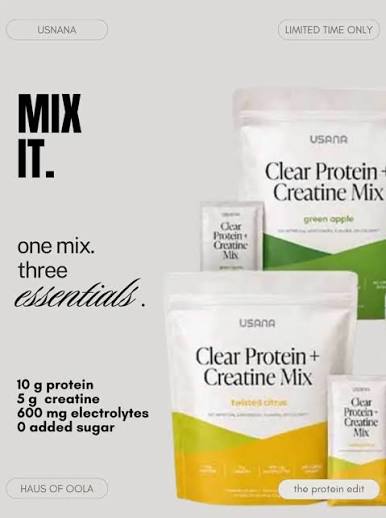
TRX Nutrition Electrolyte + Clear Whey. This formula delivers 15 grams of clear whey protein isolate that mixes light like juice rather than a milkshake, plus 845 milligrams of clinical-grade electrolytes for hydration in one pass. Lemonade flavor, 80 calories, 20 servings per pouch. Contains milk. Great for sessions in heat, long training days, or anyone who finds heavy dairy shakes uncomfortable.
Both formulas are engineered around the anti-bloat and mixability complaints raised earlier, and they support daily training without the trade-offs most powders force on you.
Frequently Asked Questions
Quick answers to the questions readers ask most.
Which is better, creatine or protein powder?
Neither is objectively better. They solve different problems. Pick protein powder if muscle growth is the goal and you struggle to hit daily protein. Pick creatine if strength and power are the goal. Most serious lifters end up taking both because the two answer different questions.
Do I need protein powder if I take creatine?
Yes, if you are not hitting your daily protein target from whole food. Creatine does not supply amino acids. It fuels the training that creates the need for those amino acids. Protein powder is a convenient way to close the gap, not a mandatory purchase.
Can I mix creatine and protein powder together?
Yes. There is no negative interaction. Many lifters stir 5 grams of creatine directly into their post-workout shake for one-and-done simplicity. Daily consistency matters more than the specific delivery vehicle.
When should I take creatine vs. protein powder?
Take creatine any time of day, as long as you take it daily. Take protein powder whenever it helps you hit your daily target. Around training is convenient because a shake mixes fast. A meal later in the day works equally well. Total daily intake beats exact timing every time.
Match the Supplement to the Goal
Here is the whole thing in four lines:
-
Building muscle: protein first.
-
Getting stronger: creatine wins.
-
Preserving muscle as you age: both, with a protein bump.
-
Serious about training: both.
Make your body your machine. If you want the anti-bloat, easy-mixing versions of the two most-used supplements in fitness, explore TRX Nutrition Creatine + Fiber and Electrolyte + Clear Whey together as the pairing built for people who want the benefits without the trade-offs.
What's Your Reaction?
 Like
0
Like
0
 Dislike
0
Dislike
0
 Agree
0
Agree
0
 Disagree
0
Disagree
0
 Excellent
0
Excellent
0
 Useful
0
Useful
0
 Great
0
Great
0