






















































How to Build Bone Density After 40: Lift Heavy, Then Jump (Free Workout Inside!)


Nobody feels their bones getting weaker. That’s the problem.
Osteoporosis is often called a silent disease because bone loss happens gradually, with zero symptoms, until a fracture or a bad fall makes it loud. And ladies, it starts earlier than you think: bone density typically begins declining in our 30s, and women can lose up to 20% of their bone density in the five to seven years around menopause as estrogen drops.
I just released a brand new Bone Building Strength workout on Get Healthy U TV, and our members are loving it. So today I want to give you the why behind it: what actually builds bone, the two types of exercise that do it best, and a free workout so you can start this week.
As a trainer in my 60s who’s 10 years post-menopause, this topic isn’t theoretical for me. This is my skeleton we’re talking about too.
Your Bones Are Alive (and Listening)
We treat our skeleton like scaffolding: it only comes up when something breaks. But your skeleton isn’t a fixed frame. It’s live tissue that tears itself down and rebuilds all day long, a turnover cycle scientists call remodeling.
And here’s the part I love: like muscle, bone adapts to the stress you put on it. Force is the language your bones understand. Give them regular, challenging stress and they respond by getting denser and stronger. Give them nothing, and they quietly lose density year after year.
Read this twice: your bones need stress to stay strong. Comfort isn’t their friend.
This is the same reason building muscle after menopause matters so much. Muscles and bones are a team, and they grow stronger together.
The 2 Best Ways to Build Bone Mass
There’s a lot of noise out there, so let me simplify it. Two kinds of exercise build bone better than anything else:
- Lifting weights, with attention to the eccentric (lowering) phase
- Jumping
That’s the list, and here’s why each one works.
1. Lifting Weights (Heavier Than You Think)
When you strength train, your muscles pull on your bones through their attachments, and that tension under load is a direct signal to your body: build more bone here. The research is clear that the load itself is what matters most, so compound moves like squats, deadlifts, and overhead presses with progressively heavier weight are the gold standard for your skeleton.
The eccentric part of each rep (the lowering phase) is a big piece of that signal. Think about the way down in a squat, or lowering a dumbbell back from a biceps curl. Your muscle is lengthening while it’s still under tension, which lets you handle serious force with control, and controlled force is exactly what tells your bone cells to get to work.
So use it in real life: don’t drop through your lowering, own it. Take 3 controlled counts down in your squat, then stand up strong. Lower that overhead press like you mean it. Your muscles will feel it (hello sore glutes), and so will your skeleton.
If you’re new to lifting or getting back to it, start with these strength exercises to prevent menopause muscle loss. Start where you are. Your bones don’t need you to be advanced, they need you to be consistent.
2. Jumping (Yes, You’re Allowed)
Your muscles get stronger when you load them. Your bones get stronger when you land. Jumping, hopping, and plyometric moves send controlled force through your skeleton, and that impact triggers your body’s natural bone-building response (your hips respond especially well to it).
I know what some of you are thinking: “Chris, I’m 55, I don’t jump anymore.” I’m going to lovingly push back on that. Unless you have a medical reason not to (more on that below), midlife is exactly when you should keep jumping, because it’s a skill and a stimulus you lose if you stop using it.
You don’t need to leap onto a box. Small hops in place, a few jump squats, even brisk stair climbing counts as impact your bones can use. Warm up first (these warm up moves for middle-aged women are perfect), land softly with bent knees, and build up gradually.
The Combo Is Where the Magic Happens
You don’t have to choose between lifting and jumping, and you shouldn’t, because studies of postmenopausal women show the combination beats either one alone.
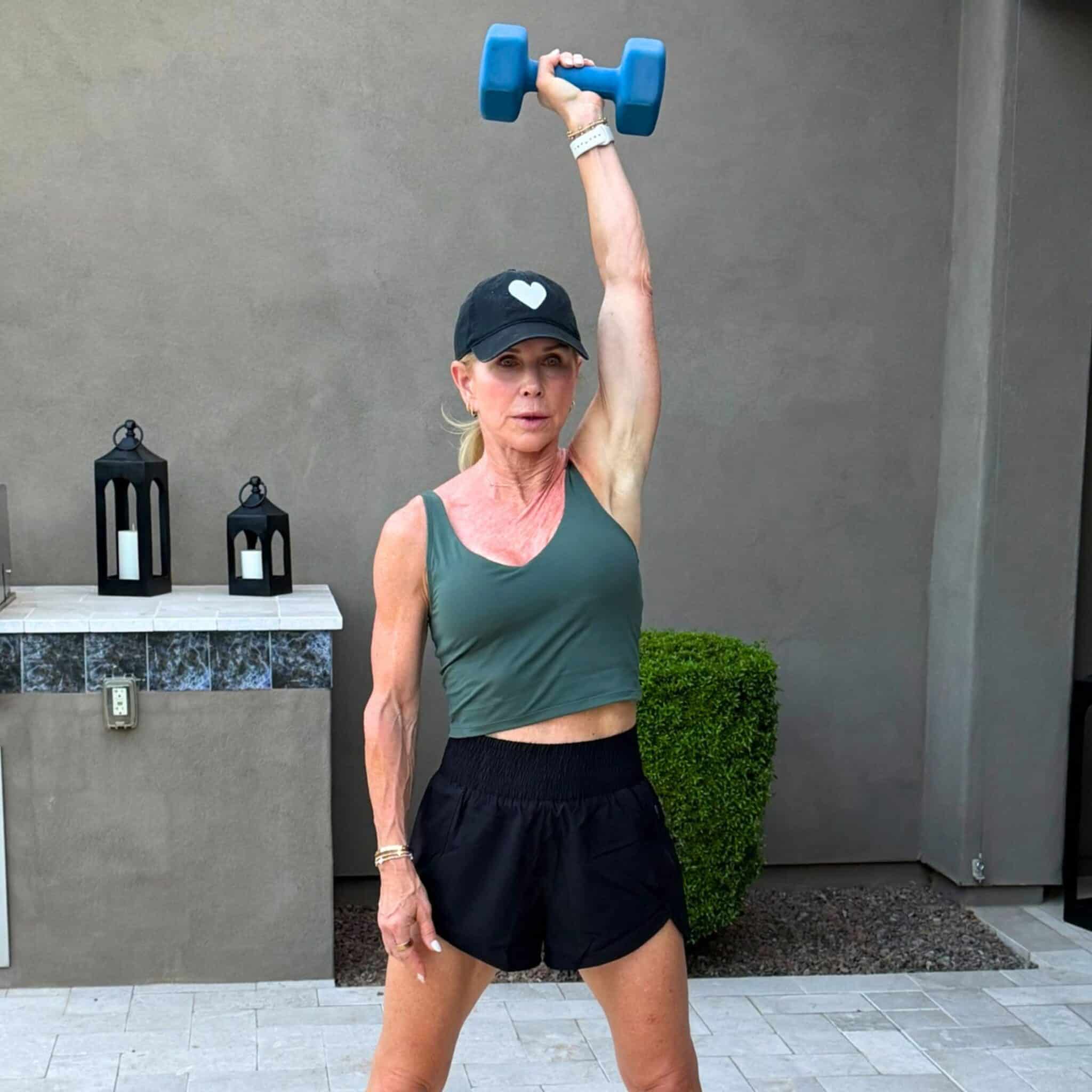
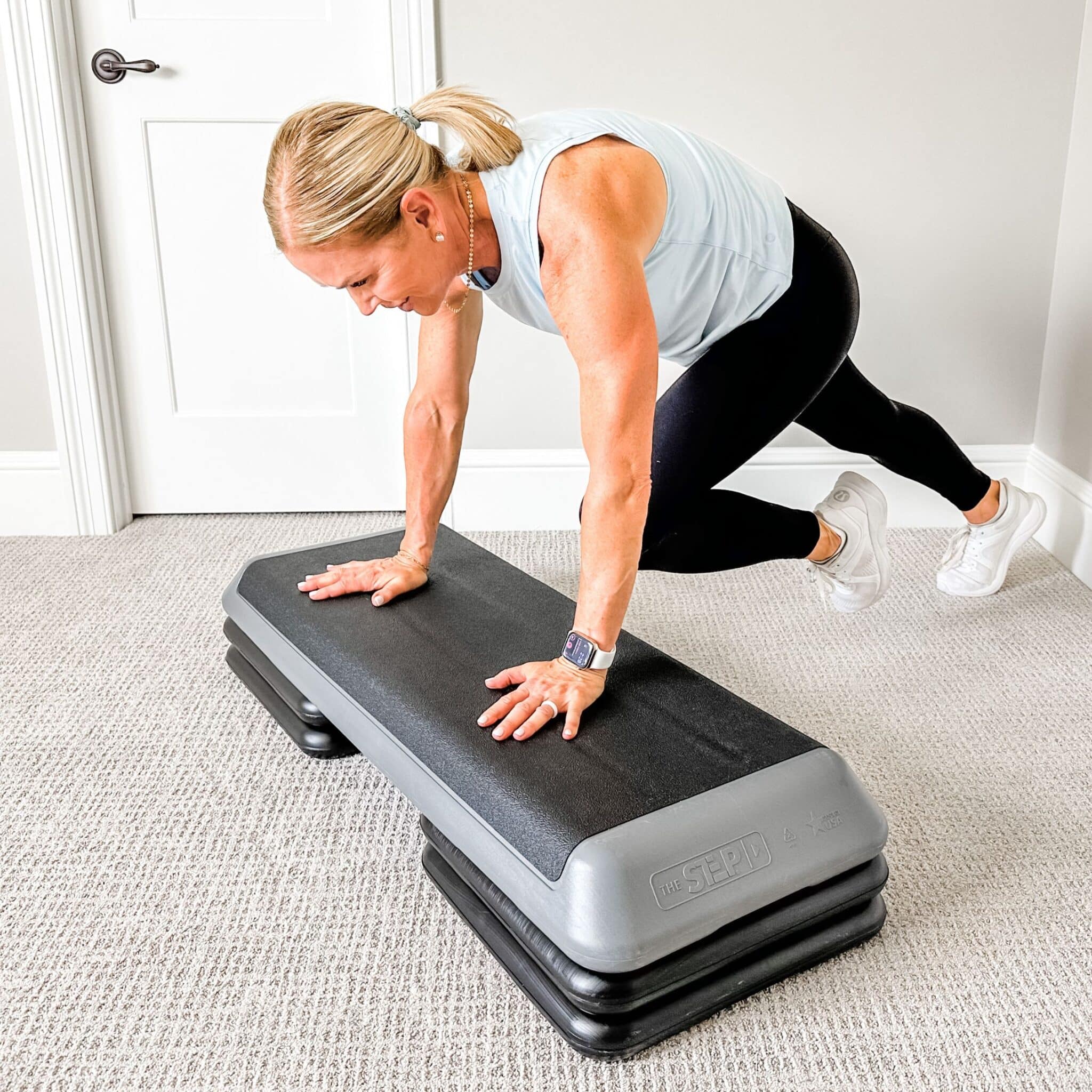
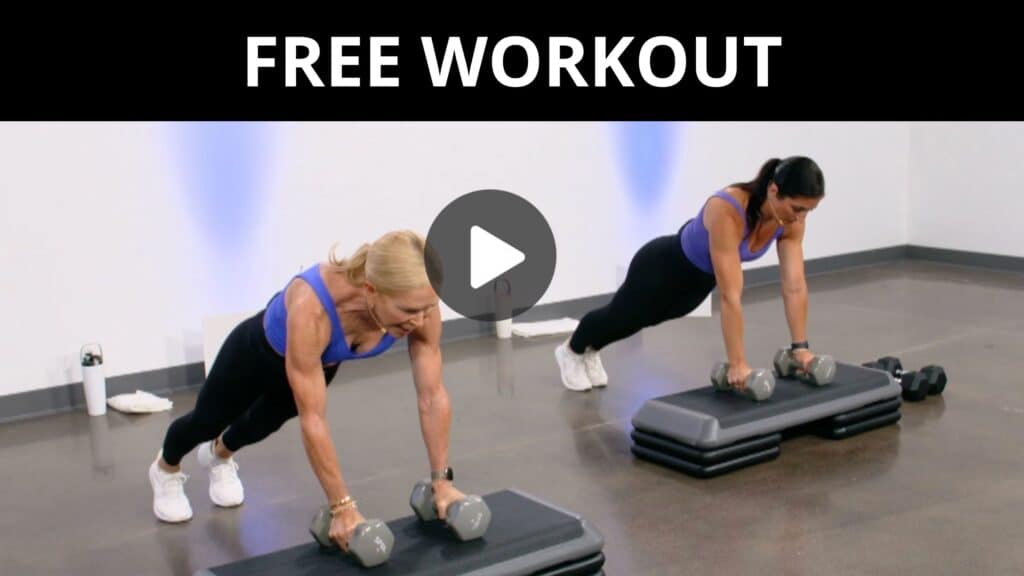
That’s exactly how I built my new Bone Building Strength #1 workout on Get Healthy U TV: strength training with jumping in between. You lift with slow, controlled eccentric lowering, then you add short bursts of impact between strength moves. Your bones get both signals (tension AND impact) in one efficient workout, and honestly, it’s a blast. Our members are already telling me they feel stronger and more powerful.
Want to try it free? Unlock the free bone-building workout here and do it with me this week!
A Quick Word on Safety
Most women benefit from bone-strengthening exercise, but if you’ve been diagnosed with low bone density or osteoporosis, have had a recent fracture, or struggle with balance, talk to your healthcare provider before adding impact work. A physical therapist can help you find safe, modified osteoporosis exercises.
And if you don’t know your starting point, ask your doctor about a DEXA scan. It’s the standard bone density test, it’s quick and painless, and it’s typically recommended at 65 (earlier if you have risk factors like family history, smoking, low body weight, or long-term steroid use). You can’t manage what you haven’t measured.
Feed Your Bones Too
Exercise sends the build signal, but nutrition supplies the raw materials. Women over 50 need about 1,200 mg of calcium a day, plus vitamin D to actually absorb it: dairy, leafy greens, fatty fish like salmon, eggs, nuts, and beans all pull their weight. Magnesium and vitamin K support the crew too.
And don’t sleep on protein. It builds bone as well as muscle, so don’t skimp on it. Not sure how much you need?
Use my free protein calculator to get your daily target.
One more thing, because I’ll always say it out loud: estrogen plays a big role in bone density, which is why bone loss speeds up after menopause. It’s one more reason why Dr. Mary Claire Haver’s The New Menopause is on my required reading list. HRT isn’t right for everyone, so talk to your doctor about whether it makes sense for you.

How Long Does This Take?
Building bone is a long game. With consistent strength training, impact work, and good nutrition, changes typically take a year or more to show up on a scan, which is why doctors usually recheck bone density every one to two years. That might sound slow, but remember: you’re pushing back on a process that took years, and every single workout is a deposit in the account.
Aim for strength training 2 to 3 times a week minimum, sprinkle in impact work, keep up your daily weight-bearing movement like walking, and build in recovery days (your bones remodel during rest, too!).
The sooner you start, the better, and it’s never too late to start. I’ve watched women in their 60s and 70s get measurably stronger. Your bones are listening at every age. Pay attention to these six early warning signs of osteoporosis to stay vigilant.
Moral of the story? Lift heavy things, lower them slowly, jump a little, eat your protein, and repeat for the rest of your long, strong life. Your skeleton is quietly doing its best work behind the scenes, so give it something to work with.
Ready to start? Grab my free Bone Building Strength workout and let’s build some bone together.
PS. Cardio is to live longer, strength training is to live stronger, and mobility training is to live pain-free. Bone building is the reason “stronger” makes the list.
Bone Density FAQs
Osteopenia means your bone density is lower than normal, an early stage of bone loss that can progress if not addressed. Osteoporosis is the disease stage: bones become brittle and fracture-prone, most commonly in the hips, spine, and wrists. Osteopenia is the warning light; osteoporosis is the breakdown.
As early as your 30s, with bone loss accelerating after menopause due to declining estrogen. Because there are usually no symptoms, starting preventative strength and impact training early matters.
Plan on a year or more of consistent training before changes show up on a bone density scan (doctors typically re-test every one to two years). Age, nutrition, hormones, and exercise intensity all affect the timeline.
Anyone with diagnosed low bone density, severe osteoporosis, a recent fracture, balance issues, or a medical condition that raises injury risk should check with a healthcare provider first. A physical therapist can prescribe safe osteoporosis-specific exercises.
Foods rich in calcium, vitamin D, protein, magnesium, and vitamin K: dairy, leafy greens, fatty fish, eggs, nuts, beans, and fortified foods like milk and orange juice.
At least 2 to 3 times per week, with recovery days built in. Consistency over months is what moves the needle, not any single heroic workout.
What's Your Reaction?
 Like
0
Like
0
 Dislike
0
Dislike
0
 Agree
0
Agree
0
 Disagree
0
Disagree
0
 Excellent
0
Excellent
0
 Useful
0
Useful
0
 Great
0
Great
0