




































%20and%20Batch%20Production%20Records%20(BPR).png)














BrainStorm Therapeutics combines brain organoids and AI for CNS drug discovery
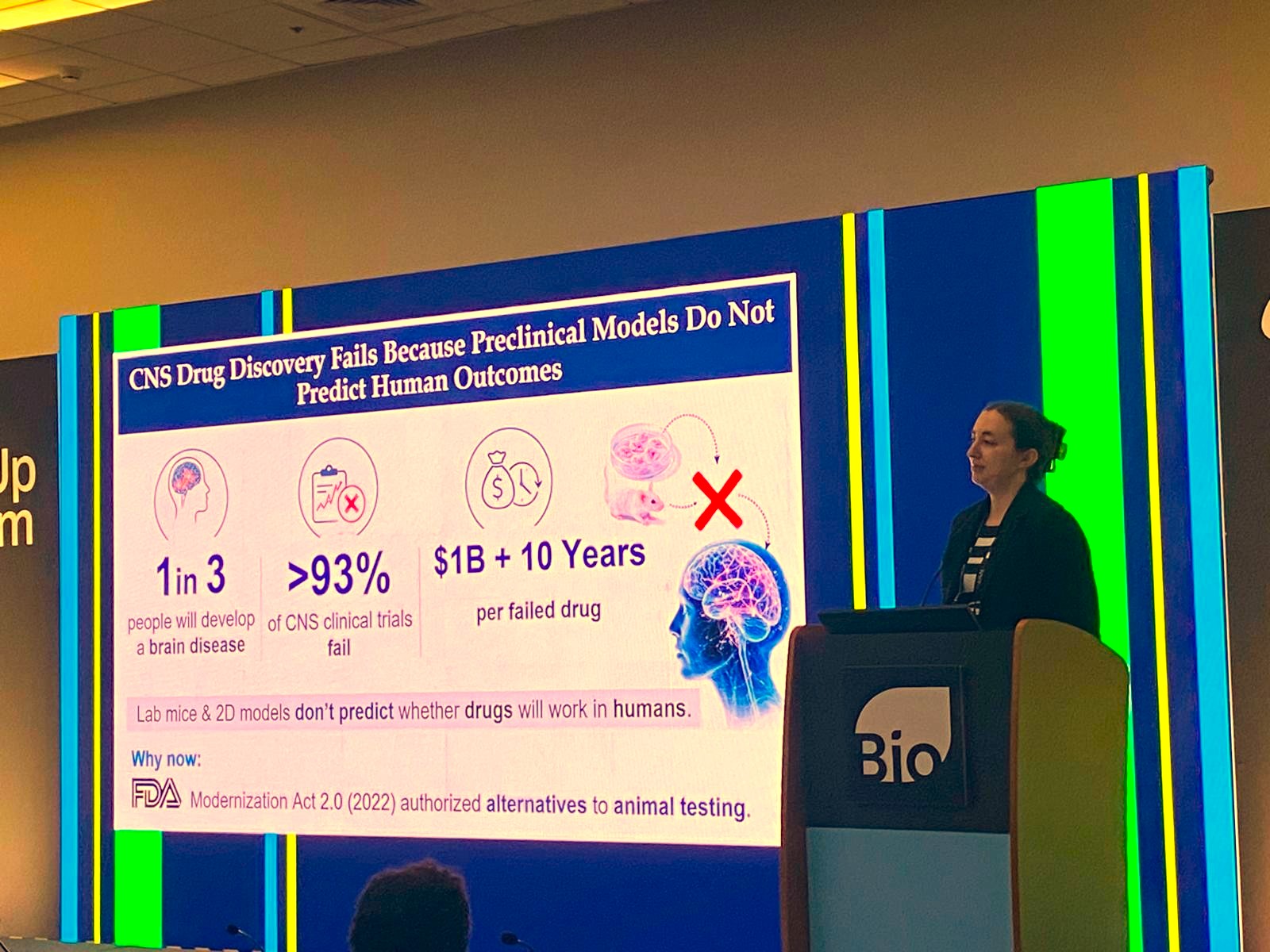
BIO 2026 Start-Up Stadium winner generates human data to improve clinical translation.
Artificial intelligence is opening new possibilities for drug discovery. But in neuroscience, AI is only as powerful as the biological data behind it, and BrainStorm Therapeutics believes AI combined with human brain biology can be better.
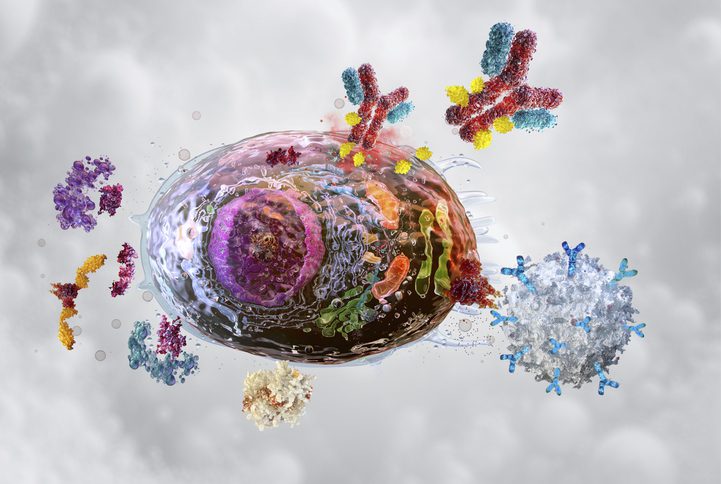
BrainStorm is generating that biology in the laboratory using patient-derived human brain organoids. These living, three-dimensional models reproduce features of the human brain, generating rich datasets that BrainStorm uses for phenotypic drug discovery and to train AI models.
By combining patient-derived brain organoids with AI, the company aims to uncover disease mechanisms, identify therapeutic targets, screen drug candidates, and determine whether potential treatments can reverse disease-associated dysfunction before they enter clinical trials.
BrainStorm is applying the platform across neurological diseases, with a lead therapeutic program in CDKL5 deficiency disorder, or CDD, and discovery programs in Parkinson’s and Alzheimer’s diseases. The approach also builds on earlier work in Rett syndrome, advancing a repurposed therapeutic candidate from organoid screening to an FDA-cleared Investigational New Drug application for a Phase 2 clinical trial.
The company has attracted attention from the scientific and investment communities, most recently earning the Seed-Stage Start-Up Stadium Award at the 2026 BIO International Convention.
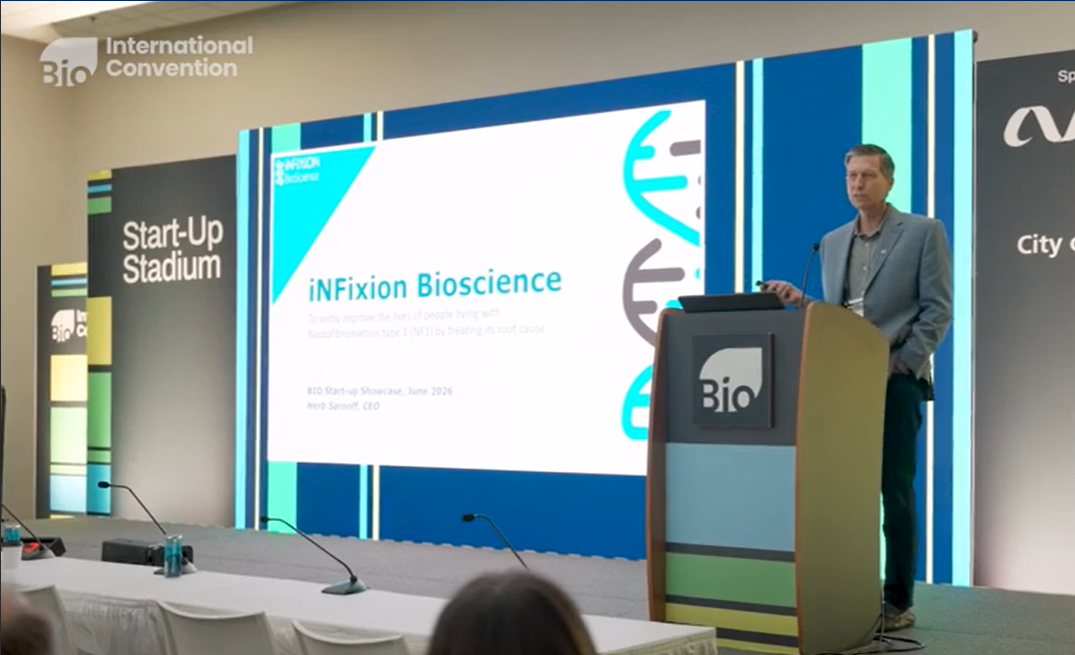
The competition recognizes two companies selected by investor judges from approximately 50 presenting start-ups. BrainStorm received the Seed-Stage Award for companies that had raised less than $1 million, while NF1-focused iNFixion Bioscience received the Emerging Company Award for companies that had raised between $1 million and $10 million.
The brain power behind the platform
BrainStorm generates three-dimensional brain organoids from induced pluripotent stem cells derived from patients carrying disease-causing mutations. The cells are differentiated into regionally defined brain organoids containing multiple interacting neural cell types and functional synaptic networks.
Although organoids do not reproduce an entire human brain, they can model selected cellular, molecular, and functional features of specific human brain regions that are difficult to capture in conventional cell cultures or animal models.
“When we measure calcium signaling and electrophysiological activity in these brain organoids, we can detect patterns of neuronal and network dysfunction associated with specific neurological disorders,” said Maya Gosztyla, Ph.D., BrainStorm’s co-founder and chief scientific officer. “These models bring us closer to studying human disease biology in the laboratory and give us a powerful system for evaluating whether a potential therapy can correct that disease biology.”
BrainStorm uses organoid data to investigate disease mechanisms, identify therapeutic targets, screen drug candidates, and determine whether treatments reverse disease-associated phenotypes. Those experiments also generate proprietary, human-relevant datasets to train and refine the company’s AI models.
“This allows us to do two things at once,” Gosztyla said. “We can directly test whether a potential therapy rescues a disease phenotype while generating rich, high-quality human datasets that improve our AI models.”
BrainStorm uses those data to identify disease-associated gene networks and potential therapeutic targets, then brings AI-generated hypotheses back into its organoid platform for experimental testing.
“That creates a closed loop between computation and experiment,” Gosztyla said. “By grounding our AI models in patient-derived human biology and then experimentally testing their predictions, we believe we can improve the likelihood that discoveries made in the laboratory will translate into meaningful benefits for patients.”
Platform validation in Rett syndrome
BrainStorm’s strategy builds on work led by founder and CEO Robert T. Fremeau, Jr., Ph.D., while he was chief scientific officer of Vyant Bio. Using patient-derived brain organoids, the Vyant team identified repurposed drug candidates for Rett syndrome and a novel therapeutic target and small-molecule hit scaffold for CDD. Rett syndrome is a rare genetic neurological disorder that primarily affects girls and can cause developmental regression, impaired communication and movement, seizures, and other serious symptoms.
“Our most clinically advanced proof point originated from work I led as chief scientific officer of Vyant Bio,” Fremeau said. “Working with the International Rett Syndrome Foundation, we used patient-derived brain organoids to conduct phenotypic screening and identified donepezil as a potential repurposed therapy for Rett syndrome.”
Donepezil is FDA-approved for Alzheimer’s disease but not for Rett syndrome. The program progressed from organoid screening to submission of a Phase 2 clinical trial application in approximately nine months. The FDA subsequently cleared the Investigational New Drug application, allowing the Phase 2 program to proceed. The translational package included efficacy evidence generated in patient-derived human brain organoids, without requiring new animal efficacy studies for the repurposed drug.
“To our knowledge, donepezil represents the first therapeutic candidate identified through phenotypic screening in a patient-derived brain organoid to progress to an FDA-cleared IND,” Fremeau said. “For us, that provided important translational and regulatory validation of the organoid-based approach demonstrating that human brain organoids can move beyond disease modeling to become a practical drug-discovery platform capable of generating therapeutic hypotheses that advance toward the clinic.”
The lead program: CDKL5 deficiency disorder
While the Rett program provided an important example of clinical translation, CDD is now the focus of BrainStorm’s therapeutic development efforts.
CDD is a rare developmental and epileptic encephalopathy caused by pathogenic variants in the CDKL5 gene. It typically presents in early infancy with severe, treatment-resistant seizures and profound developmental, motor, communication, and visual impairments. Existing treatments can reduce seizures in some patients, but no approved therapy addresses the underlying disease biology and neurodevelopmental impairments.
One challenge in developing therapies for CDD is the disorder’s genetic diversity. Different patients carry different pathogenic variants in CDKL5, raising an important question for drug discovery: Can a treatment correct disease biology across multiple genetic backgrounds?
To address that question, BrainStorm is working with the CURE5 Foundation, a patient-led CDD organization, to develop patient-derived brain organoid models representing multiple pathogenic CDKL5 variants.
“We’re growing several new stem-cell-derived brain organoid models from patients with different types of CDKL5 mutations,” Gosztyla said. “These models allow us to ask whether a therapy can work across the genetic diversity of CDD.”
The models provide BrainStorm with a genetically diverse human platform for studying CDD biology and evaluating therapeutic response. They can also support systematic screening of approved drugs to identify potential repurposing opportunities for patients.
At the same time, BrainStorm is advancing its own proprietary therapeutic program for CDD. The program builds on a novel therapeutic target and small-molecule hit scaffold originally identified through phenotypic screening in patient-derived CDD brain organoids.
“Our goal is to develop a first-in-class, disease-modifying therapy that addresses the underlying neuronal dysfunction rather than only treating the symptoms,” Gosztyla said.
CDD organoids exhibit reproducible hyperexcitability that can be measured using high-throughput calcium imaging and electrophysiology. BrainStorm’s hit compound reverses aspects of this disease-associated neuronal dysfunction in CDD organoids while showing little or no effect in healthy controls, suggesting disease-state-selective activity.
The company is now validating the therapeutic response across multiple patient genotypes while advancing the chemistry through hit-to-lead optimization toward selection of a development candidate.
Together, the CURE5 collaboration and BrainStorm’s proprietary program are designed to answer complementary questions: whether existing medicines can be repurposed for genetically diverse CDD patients, and whether a new disease-modifying therapy can be developed specifically to correct the disorder’s underlying neuronal dysfunction.
Advancing toward a development candidate
BrainStorm is now raising a seed financing round to advance its CDD program through hit-to-lead optimization toward a development candidate and expand its therapeutic pipeline.
“The main focus of our current fundraising is to bring the CDD program forward toward a development candidate,” Gosztyla said.
The company has attracted more than $1 million in non-dilutive support. A Phase I Small Business Innovation Research award from the National Science Foundation supported development of BrainStorm’s AI foundation-model capabilities and Parkinson’s disease research, including identifying potential disease-modifying targets.
BrainStorm is also collaborating with Novoron Bioscience and Defined Bioscience on a National Institute on Aging Direct-to-Phase II SBIR award. The project uses three-dimensional cortical organoids to model pathological prion-like tau propagation and identify potential treatments for Alzheimer’s disease.
The company has received recognition from organizations including California Life Sciences, NVIDIA, BioMarin, and Servier. BrainStorm has also entered a master collaboration agreement with BioSymetrics, part of Lunai Bioworks (NASDAQ LNAI), to support translational validation.
Its latest recognition, the BIO Start-Up Stadium Award, came after BrainStorm presented at the 2026 BIO International Convention.
Along with exposure to biotechnology investors, the award includes participation in the Science Inc. Accelerator operated by The Innovation Space.
“The accelerator has been extremely valuable in helping us address the practical steps required to move from early therapeutic discovery through development, regulatory strategy, and financing,” Gosztyla said.
The Start-Up Stadium competition also provided BrainStorm with exposure to investors, including members of the judging panel.
“Winning the Seed-Stage Start-Up Stadium Award provides important external validation of our science, our team, and our opportunity to build a differentiated CNS therapeutics company,” Fremeau said. “We are currently raising our seed round to advance our lead CDD program toward a development candidate and demonstrate that patient-derived human brain models can help identify therapies with a greater likelihood of translating into meaningful benefit for patients with devastating neurological diseases.”
After all, developing new neurotherapeutics requires money—and brains.
The post BrainStorm Therapeutics combines brain organoids and AI for CNS drug discovery appeared first on Bio.News.
Apa Reaksi Anda?
 Suka
0
Suka
0
 Kurang Suka
0
Kurang Suka
0
 Setuju
0
Setuju
0
 Tidak Setuju
0
Tidak Setuju
0
 Bagus
0
Bagus
0
 Berguna
0
Berguna
0
 Hebat
0
Hebat
0