































aMPV, HPAI and lack of drug options top turkey industry concerns
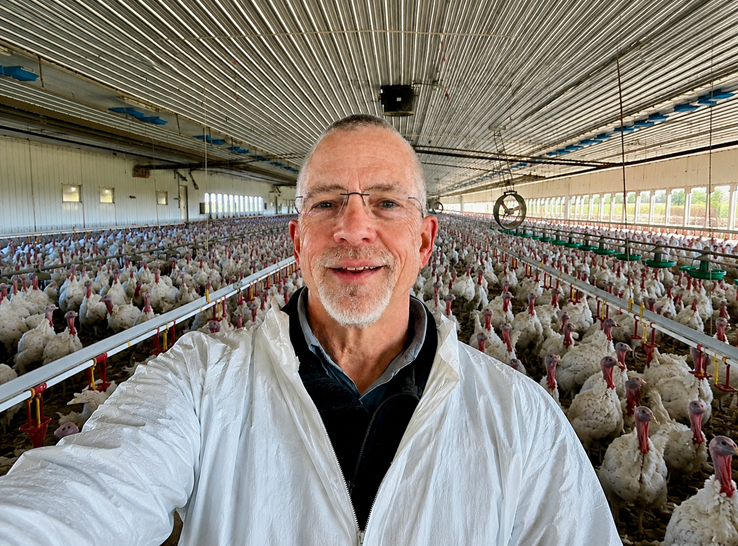
Avian metapneumovirus (aMPV), highly pathogenic avian influenza (HPAI) and a lack of effective treatment options are the top health concerns facing the US turkey industry, according to an industry survey.
The Turkey Industry Annual Report, which gathers perspectives from producers and veterinarians working in the US industry, ranked aMPV, lack of efficacious drugs and HPAI as the top three management concerns among 39 reported issues.[1] It marks the second year that aMPV has been highlighted as a top issue for the industry, after previously being the lowest-ranked concern.
A joint response to standout disease
Report author Steven Clark, DVM, veterinary technical service manager, turkeys, for Huvepharma, said he was not surprised by the trends, which reflect the significant disease pressures facing producers.
“aMPV continues to stand out not only for its clinical impact, but also for the speed of emergence and geographic spread, reinforcing the need for coordinated industry response,” Clark explained.
He said USDA approval for the emergency import of live vaccines used in Europe to tackle the disease was “amazing,” noting it bypassed the usual system, whereby products must be US-manufactured – a process that can often take 4 to 5 years.
“That was a substantial change and an important listen from USDA. It also required everybody to collaborate. It’s a big positive,” he said.
No change on new drugs, HPAI
The lack of drugs troubles the industry, and the report underscores that bacterial challenges are the issue prompting producers and veterinarians to seek a broader toolbox.
“The industry recognizes that the number of approved and available efficacious drugs is limited and is asking for the FDA to support and encourage poultry-labeled drug development and approvals,” Clark said.
Now in its fifth year, the US HPAI outbreak continues to affect turkey producers, with some having to undergo the strain of multiple depopulations as part of the government’s stamping-out policy. While vaccines remain under discussion, “we don’t see anything in the short term suggesting that those would be available for the industry,” Clark said.
Reovirus on the rise
Reovirus also ranked highly in the survey, with turkey reovirus digital flexor tendon rupture and turkey hepatitis reovirus appearing high on the list of the turkey industry’s worries. Clark noted that the virus could also be implicated in the more general category of “leg problems,” which ranked eighth in the survey.
“The pathogen continues to move, change and adapt in our industry and continues to cause health and welfare issues, with no approved vaccines available,” Clark said.
“Not only did it change and become adapted to the tendons, but after a while, we found that it was showing up as liver disease or hepatitis. Now, we’ve also had some recent diagnoses of reovirus that have been isolated in the brain.”
Reovirus problems are spread by contaminated farms and flocks, as well as by infected breeders and the number of poults and eggs moved around the country, Clark said. Limited turkey-specific diagnostics also make outbreaks more difficult to diagnose and control.
The report also showed that clostridial dermatitis and colibacillosis continue to be significant contributors to morbidity and production loss, although rankings shifted slightly year to year. Meanwhile, respiratory diseases made up five of the industry’s top 10 concerns.
“Overall, the findings highlight a continued shift toward respiratory and complex, multifactorial disease challenges, alongside ongoing gaps in available control tools,” explained Clark.
Collaboration key, but questions remain
Clark said the aim of the report is to guide research priorities, field strategies and industry dialogue, while supporting alignment across production, academia and regulators.
“It’s encouraging to see how the survey continues to support shared understanding and collaboration, especially during evolving health challenges. It’s an honor to be able to help by communicating that,” he said.
Looking ahead to next year, Clark expects to see movement on US-designed and manufactured vaccines against aMPV, as well as greater clarity for the turkey industry around HPAI.
“The industry needs more assistance and direction, particularly on the ability to effectively use vaccines,” he added. “Other questions are emerging about how sustainable the government’s HPAI stamp-out policy is. There’s still got to be some discussion on that.”
1 Clark, S., Froebel, L., Cremers, C., 2025. 2025 Turkey Industry Annual Report—Current Health Issues Facing the US Turkey Industry.
Editor’s note: Content on Modern Poultry’s Industry Insights pages is provided and/or commissioned by our sponsors, who assume full responsibility for its accuracy and compliance.
The post aMPV, HPAI and lack of drug options top turkey industry concerns appeared first on Modern Poultry.
Apa Reaksi Anda?
 Suka
0
Suka
0
 Kurang Suka
0
Kurang Suka
0
 Setuju
0
Setuju
0
 Tidak Setuju
0
Tidak Setuju
0
 Bagus
0
Bagus
0
 Berguna
0
Berguna
0
 Hebat
0
Hebat
0