



















Neurochemicals, not just cortisol, affect stress response in poultry
Assessing welfare in poultry is complex and should involve not just behavioral observations but also neurochemical measurements, according to Greg Fraley, PhD, associate professor in the Department of Animal Sciences at Purdue University.
Measuring how birds, or any animal, respond and adapt to stress is difficult, he noted, especially because the body tries to achieve and maintain homeostasis.
He presented research from his lab on neurotransmitters and neurohormones associated with affective states in avian species at the April 2026 Poultry Extension Collaborative webinar, which focused on assessing poultry welfare using brain indicators.
Adaptations to environmental changes
Fraley said the bodies of birds and mammals adapt to environmental changes in two ways: allostasis and rheostasis. Allostasis is an active physiological or behavioral process that enables the body to adjust to unpredictable changes and return to homeostasis. For example, birds shelter during a storm.
Rheostasis is an adaptive internal process that helps the body cope with predictable changes, such as increased feeding prior to migration. Fraley pointed out that as animals adapt to normal environmental changes, cortisol levels can rise.
Although many researchers measure cortisol to substantiate that animals are stressed, Fraley said that cortisol actually regulates glucose metabolism and that high levels of cortisol are common when animals are adapting to changes, even when not stressed.
In one study he conducted, he found much higher corticosterone levels in feed-restricted breeder ducks than in non-feed-restricted grow-out ducks. He noted that the increase in corticosterone was linked to maintaining glucose balance during restricted feeding rather than poor welfare.
In that study, he also observed high corticosterone levels in ducklings experiencing intense storms and that were feather pecking. “It’s possible to see changes in corticosterone without there being an actual stressor,” he explained.
He cautioned researchers against misinterpreting normal metabolic adaptation as evidence of stress.
Fraley believes that brain chemistry and multiple time-based measurements of neurohormones are better indicators of stress and welfare.
Time — an important parameter
He warned that a single blood sample can lead to inaccurate conclusions. In a 3-week chronic heat-stress study of ducks, corticosterone levels spiked early during heat exposure but later returned to normal, even though the birds were still experiencing heat stress, as indicated by behavioral responses.
Interestingly, results showed differences in the response of drakes and hens. Although corticosterone levels increased with chronic stress in both sexes, levels in hens were higher and rose sooner than in drakes.
“If all we did was collect at a single time point, we could be misled,” Fraley said. He explained that a single late-stage sample could falsely suggest that birds had fully adapted, and he emphasized that repeated sampling over time and behavioral evaluation are essential for assessing stress physiology.
Brain neurotransmitters as welfare indicators
Fraley believes that neurotransmitter activity is a better indicator of stress and welfare. However, he noted, “simply measuring concentration doesn’t indicate what the neurotransmitter is actually doing.”
Rather than measuring total neurotransmitter concentration, he evaluates “turnover,” or the ratio between the neurotransmitter and its metabolite, which reflects how actively the brain is using those specific signaling systems.
To better measure chronic stress and affective state, Fraley studied serotonin and dopamine activity. Serotonin, he explained, is involved in mood regulation, sleep, memory, social behavior, vasoconstriction and other processes. Dopamine is associated with emotion, reward, motivation, aggression, learning and movement.
Research shows that increased turnover is associated with lower levels of both serotonin and dopamine and poorer affective states. Conversely, higher turnover indicates higher levels of these chemicals and improved affective states. However, in very young birds, the reverse is true.
Isolation study
Issabella von Seggern, one of Fraley’s graduate students, investigated age differences and fear responses in laying hens exposed to isolation in light and dark environments. “Issabella wanted to determine whether environmental conditions or age affect fear responses due to different neuronal activation,” he said.
She examined laying hens at 12 days old, 12 weeks, 26 weeks (peak lay) and 70 weeks (old birds out of lay). Control birds were from enriched cages and were immediately euthanized. The brains of all the hens were dissected into five regions and examined.
“Looking at serotonin turnover in chicks, she found that turnover increased with isolation, but no difference was observed in pullets. At peak lay and in geriatric birds, serotonin activity indicated that isolated birds had poorer welfare than the controls.
“All isolated birds expressed fear when isolated, but the expression varied with age,” Fraley said.
Changes in dopamine turnover were not observed. When corticosterone turnover was measured, only 26-week-old hens showed a stress response.
“Like in humans and pets, bird brain serotonin activity can reflect relative affective states, but this doesn’t hold true for corticosterone,” Fraley noted.
Von Seggern’s findings suggest that birds of different ages may express stress through distinct physiological pathways, underscoring the need for a multidimensional welfare assessment.
Duck egg study
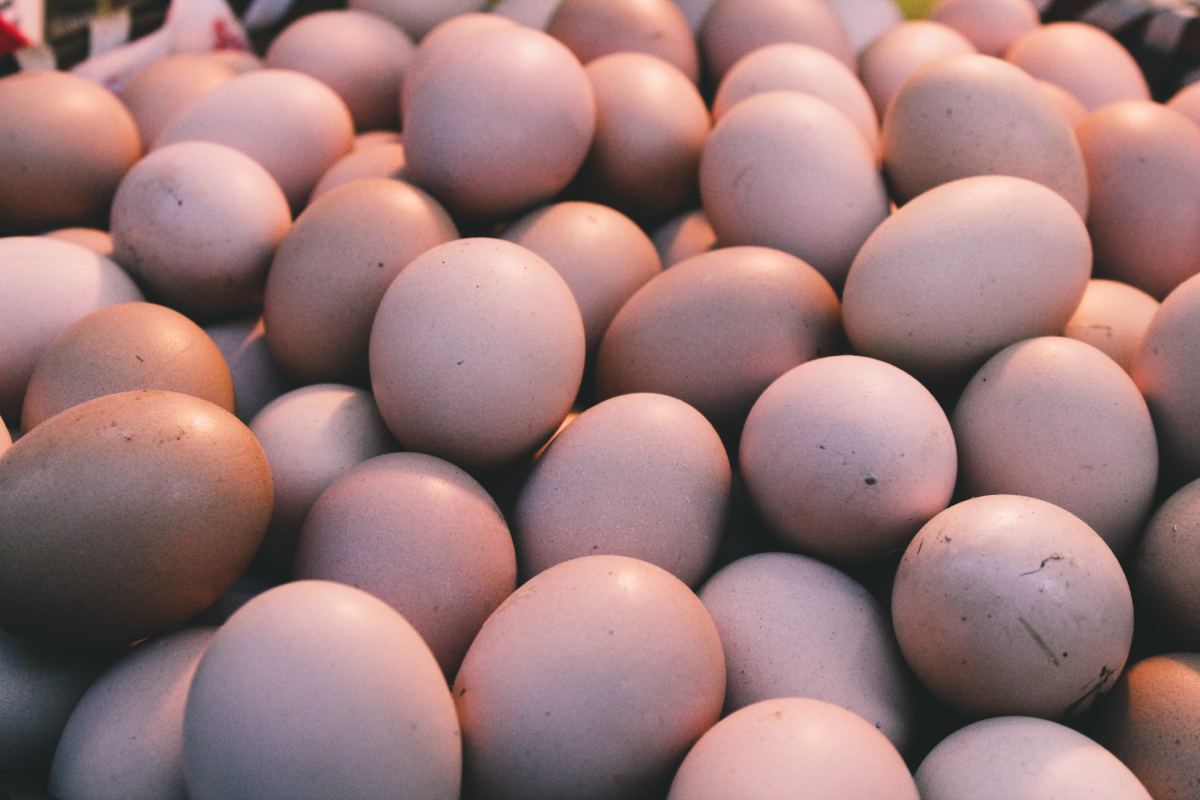
Fraley also examined corticosterone levels in duck eggs and detected it in the albumin using ELISA. He wondered what impact the glucocorticoids in eggs have on developing ducklings, but when he grew out those ducklings, he didn’t note any impact.
However, when they grew out the ducklings from heat-stressed parents, they found the ducks exhibited more fear at every age than those from non-chronically stressed parents. Examining the literature on wild birds, he found similar findings.
“Stressed parents have more fearful chicks. This could be a way for parents to genetically pass information to their chicks, preparing them for a high-stress environment,” Fraley said. “Wild birds that are more fearful may be more cautious and take fewer risks, which could influence survivability. Fear in domestic poultry may not have positive results, depending on the specific conditions.”
Practical applications
The research in Fraley’s lab highlights the danger of relying on a single biomarker to assess welfare. “Birds do experience higher cortisol levels under chronic stress, but those levels also rise because of normal adaptations to their environment,” he noted.
He advised researchers to include behavioral observations and multiple measurements of hormones and neurochemical indicators over time when conducting welfare assessments.
The broader message in Fraley’s work is that poultry welfare is biologically complex. Understanding how birds adapt — not just whether hormone levels rise — may lead to more accurate welfare-assessment tools and better-informed management decisions.
The post Neurochemicals, not just cortisol, affect stress response in poultry appeared first on Modern Poultry.
Apa Reaksi Anda?
 Suka
0
Suka
0
 Kurang Suka
0
Kurang Suka
0
 Setuju
0
Setuju
0
 Tidak Setuju
0
Tidak Setuju
0
 Bagus
0
Bagus
0
 Berguna
0
Berguna
0
 Hebat
0
Hebat
0