






















Early Nutrition: Building the Foundation for Salmonid Performance
Sponsored content │ ADM for Aquaculture Magazine · By Sjoerd Bakker, Product Manager Global Hatchery
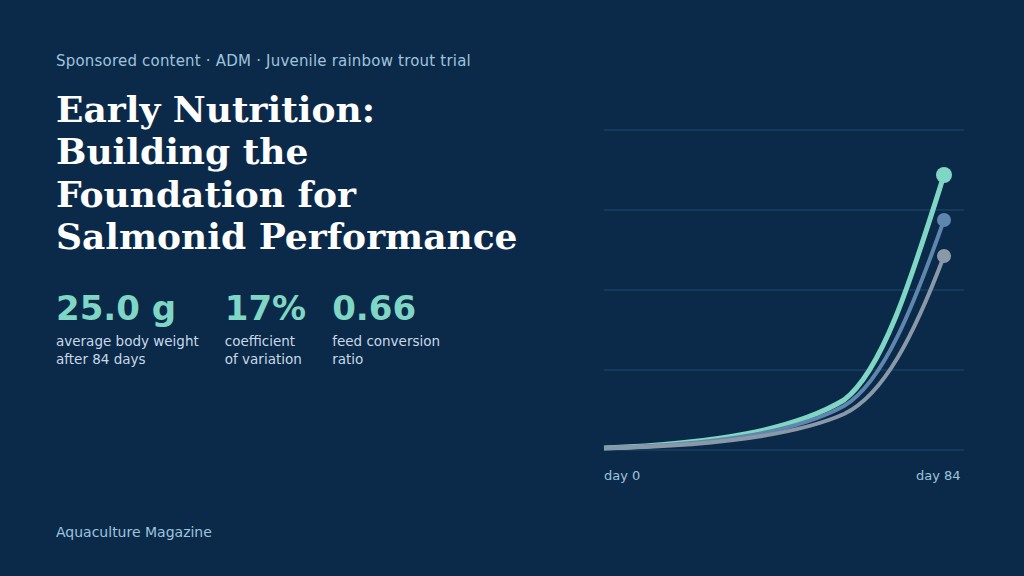
In a 90-day feeding trial in France, juvenile rainbow trout fed NURSal, ADM’s cold-extruded starter feed, reached an average body weight of 25.0 g after 84 days, 17% higher than a micro-extruded feed and 33% higher than a crumble feed, with an FCR of 0.66 and a more uniform population.
Hatchery and nursery are among the most critical phases of salmonid production. During these early stages, fish undergo major physiological and developmental changes. They transition from relying on yolk reserves to external feeding, while their digestive and immune systems develop and mature. At the same time, muscle and skeletal growth accelerate, and fish begin active swimming and schooling behavior.
This early period is also particularly important for establishing the foundation for future muscle growth. Muscle growth occurs through two complementary processes: hyperplasia, which is an increase in the number of muscle fibers, and hypertrophy, which is an increase in the size of existing muscle fibers. Hyperplasia is especially important during the early stages of development, while hypertrophy becomes increasingly important as fish grow.
This makes early nutrition much more than simply providing enough energy and nutrients for survival. Optimizing nutrition during this critical window can support hyperplastic growth and increase the fish’s capacity for subsequent muscle development and growth (Zimmerman et al., 1999).
Early nutrition can also influence long-term growth performance, feed efficiency, robustness and health. In practical terms, what happens during the first weeks and months of production can set the pace for the entire production cycle.
In practical terms, what happens during the first weeks and months of production can set the pace for the entire production cycle.
NURSal, a cold-extruded feed for juvenile salmonids
To support the specific needs of young salmonids, ADM has developed early nutrition solutions based on cold extrusion and marumerization technology.
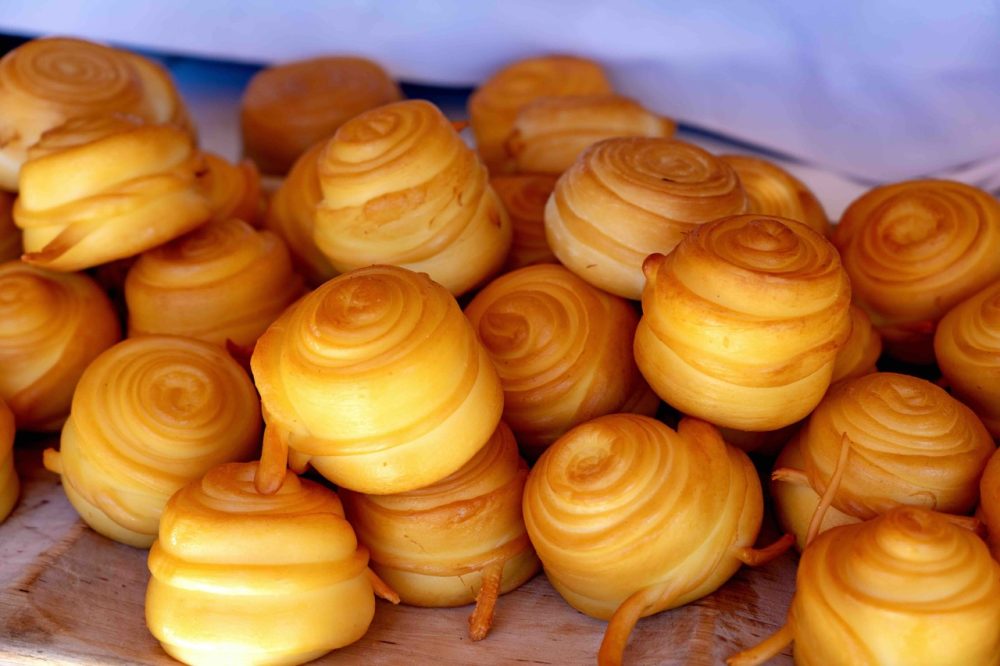
During conventional feed production, heat and mechanical pressure can affect some nutrients and feed components, as temperatures reach 100 to 120 °C. Cold extrusion offers a gentler alternative. In this process, feed is produced at temperatures below 70 °C, helping to limit protein denaturation and protect heat-sensitive nutrients such as vitamins and other bioactive compounds.
Following extrusion, the feed undergoes marumerization. The extrusion material passes over a high-speed rotating plate, resulting in highly spherical pellets with a smooth outer surface. The resulting cold-extruded and marumerized pellets exhibit excellent pellet integrity, water stability, water behavior, and feed size homogeneity, criteria that are critical for highly active juvenile salmonids.
Continue reading: trial results
The rest of this article covers the NURSal performance trial in rainbow trout. Complete this short form to read it in full.
Your details are stored by Aquaculture Magazine (DP International Inc.) and shared with ADM, sponsor of this content. You can ask us to delete them at any time.
NURSal Performance Trial in Rainbow Trout
To evaluate the practical benefits of this approach, a 90-day feeding trial was conducted in France comparing NURSal with two commercially available starter feeds: a micro-extruded feed (Competitor 1) and a crumble feed (Competitor 2).
The trial used triploid rainbow trout reared in 12 tanks of 500 L, with 850 fish per tank, at a water temperature of 15 °C. Three dietary treatments were tested, with four replicate tanks per treatment.
Fish were fed four times per day. Feeding rates were adjusted every two weeks based on biomass sampling and observed appetite, allowing the feeding program to follow changes in fish growth and feed demand throughout the trial.
The results showed clear differences in growth performance, population uniformity and several indicators of the gut microbiome.
Faster growth with NURSal
After 84 days, fish fed NURSal reached an average body weight of 25.0 g. This compared with 21.4 g for Competitor 1 and 18.7 g for Competitor 2, as shown in Figure 1. NURSal therefore produced a 17% higher final body weight than the micro-extruded competitor and 33% higher body weight than the crumble feed.
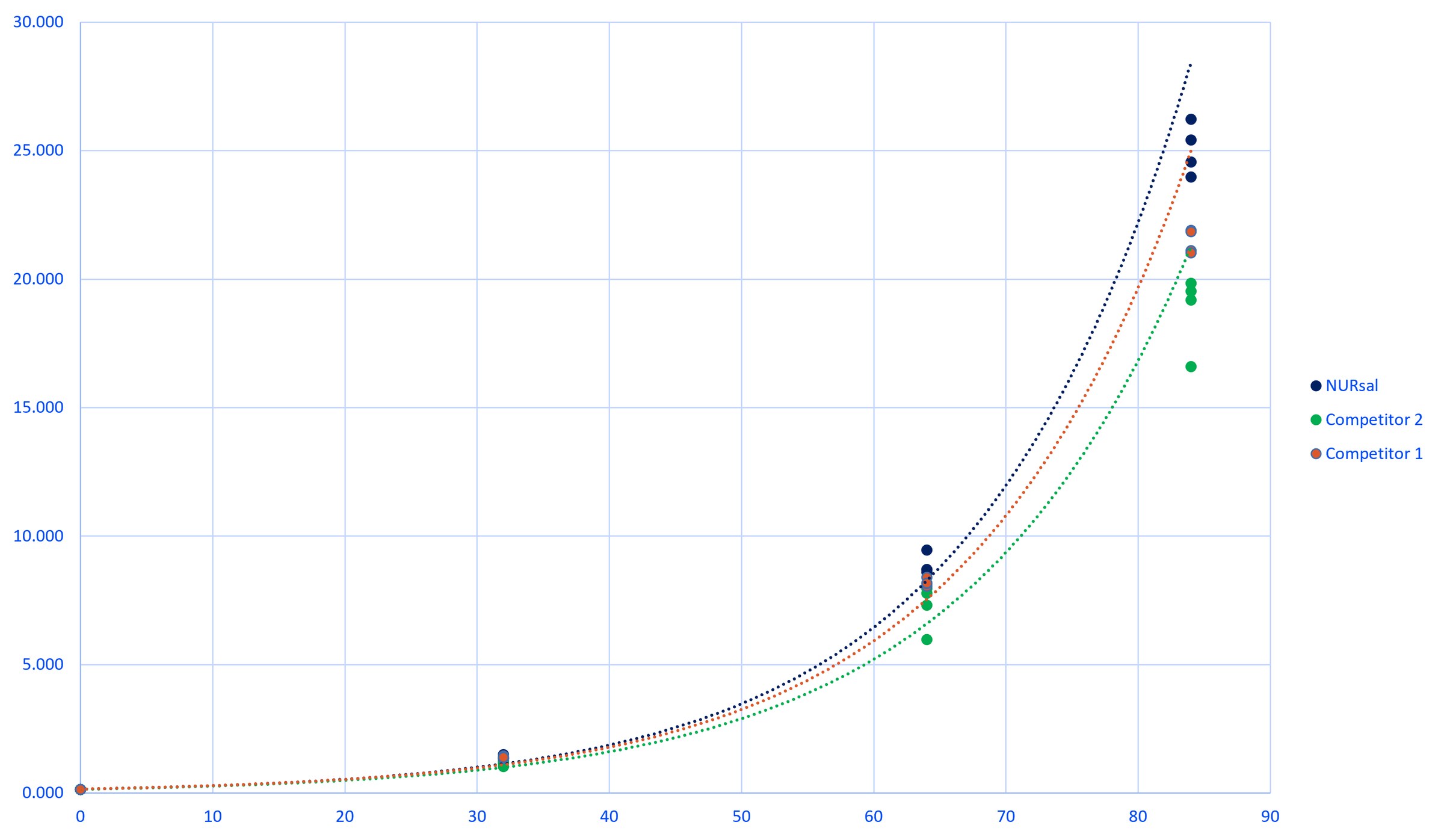
Figure 1. Growth performance of juvenile rainbow trout. Source: ADM.
The higher growth performance observed with NURSal was associated with strong feed palatability and attractiveness, supporting high voluntary feed intake while maintaining an excellent feed conversion ratio (FCR) of 0.66, statistically identical to the two other treatments, although animals fed NURSal were significantly larger (Figure 2). This combination is particularly important during early development. Increasing feed intake alone is not sufficient if it results in poorer feed efficiency. The objective is to encourage young fish to consume enough feed to support rapid growth while maintaining efficient nutrient utilization. The results of the trial suggest that NURSal can provide this combination of high feed attractiveness, strong growth and efficient feed conversion.
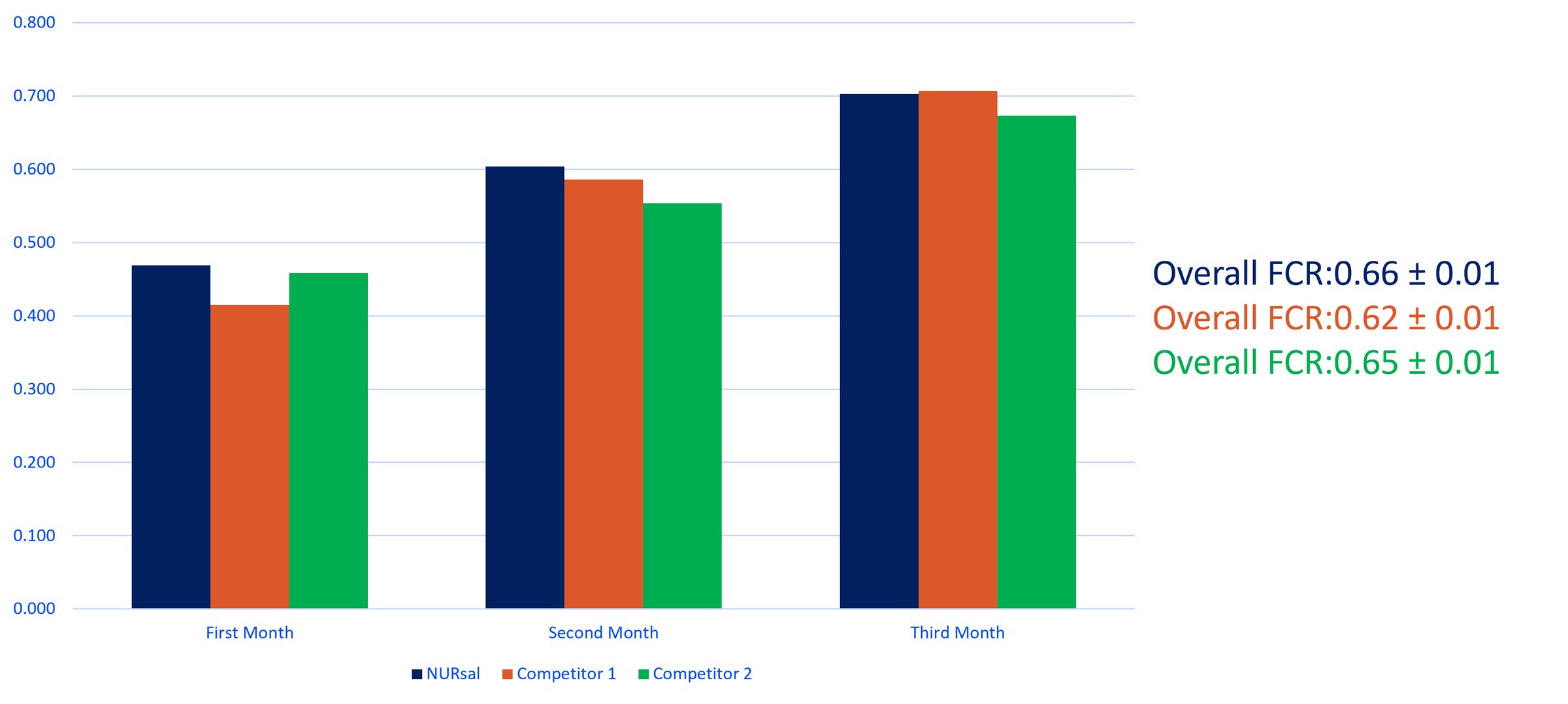
Figure 2. Feed conversion ratio (FCR) of juvenile rainbow trout. Source: ADM.
High Palatability Drives Faster Growth
Population uniformity is also an important factor that determines the efficiency of hatchery operations. In the trial, NURSal produced a more uniform population, with a coefficient of variation (CV) of 17%, compared with 23% for Competitor 1 and 25% for Competitor 2, as shown in Figure 3.
A more uniform population can provide several practical advantages. When fish are closer in size, grading can be easier and size-related competition can be reduced. More uniform populations can also make subsequent production stages easier to manage and contribute to more consistent performance downstream.
For hatcheries and nurseries, this can translate into better use of tank capacity and a more predictable supply of juveniles for the next stage of production.
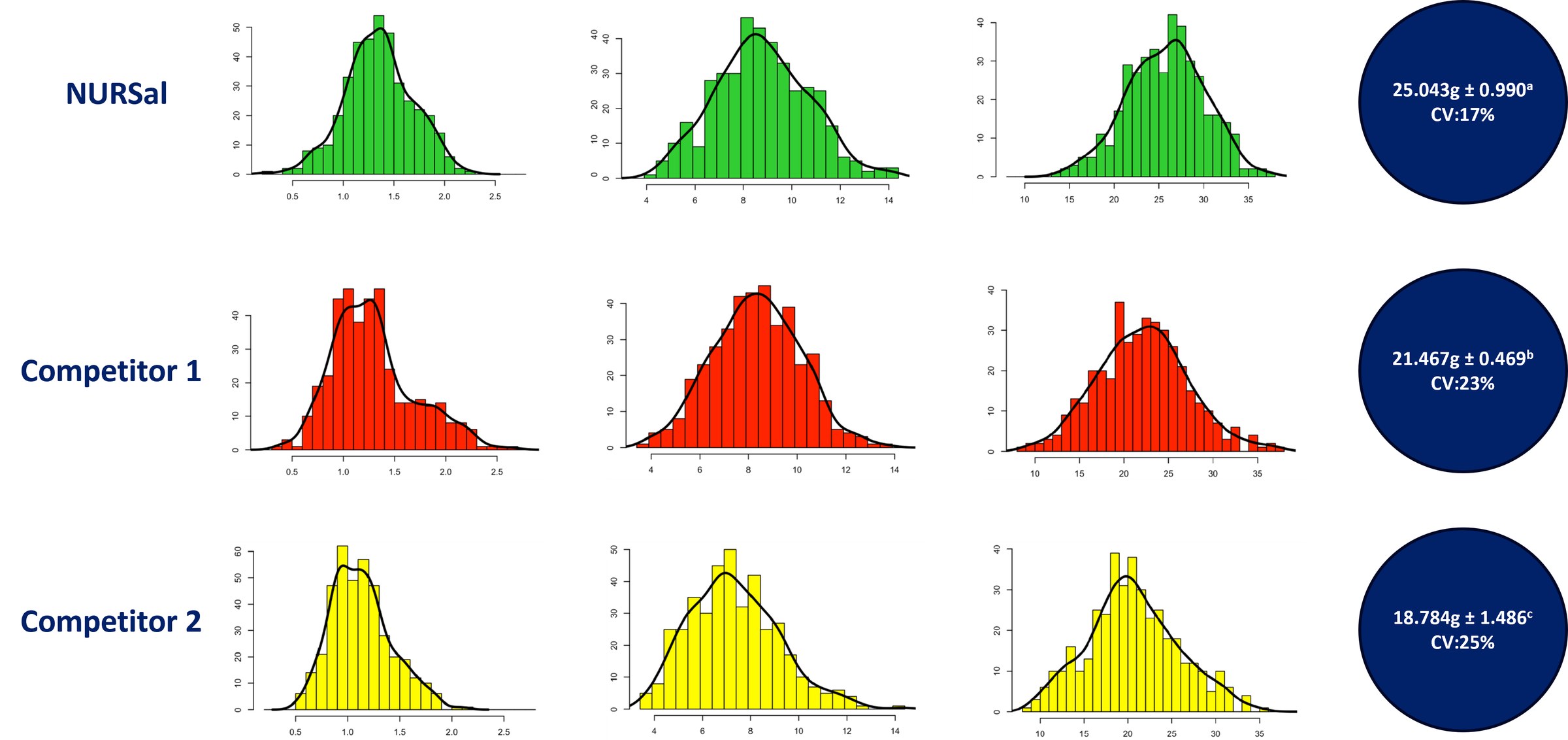
Figure 3. Body weight distributions and population uniformity of juvenile rainbow trout. Source: ADM.
Supporting the gut microbiome
The early life stages are also an important period for the development of the fish’s gut microbiome. The microbial community in the digestive tract can interact with digestion, nutrient utilization and the overall health status of the animal. As part of the trial, the gut microbiome of the fish was evaluated. Samples from 20 fish per treatment were analyzed by Kytos BV using flow cytometry fingerprinting.
The results showed clear differences in microbiome composition and activity between the dietary treatments. The alpha diversity score, which reflects both the richness (number of distinct microbial cell types detected by flow cytometry) and the evenness (how evenly those cell types are distributed within the community), was significantly higher in the NURSal and Competitor 2 groups (adjusted p < 0.001). Low diversity indicates that the microbial community is dominated by only a few cell types, making it more vulnerable to the introduction and overgrowth of pathogenic bacteria.
NURSal also showed a significant reduction in opportunistic bacterial populations compared with Competitor 2, based on the Growth Risk Index (adjusted p < 0.05), an indicator that can be used to detect whether the community is shifting towards an enrichment in larger, opportunistic bacteria.
Taken together, these findings indicate that the NURSal diet supported a gut microbial environment with favorable characteristics during this important developmental stage.
The LifeDefense® concept
One possible contributor to these results is the LifeDefense® concept incorporated into NURSal. LifeDefense® is ADM’s Animal Nutrition functional feed concept, designed to support animal health and performance at different stages of production. In early nutrition, the concept focuses on maintaining a favorable gut microbial environment. LifeDefense® in NURSal supports a diverse and balanced bacterial community in juvenile rainbow trout. In practical terms, LifeDefense® in NURSal consists of a combination of two proven ADM specialties and a dedicated premix.
An opportunity for RAS production
The faster growth observed with NURSal also has practical implications for modern hatchery production. In the trial, NURSal enabled fish to reach the target weight of 25 g approximately seven days earlier than fish fed the competing diets. When this difference is translated into a full production year, it represents a potential saving of approximately 31 production days.
This can be particularly valuable for hatcheries operating recirculating aquaculture systems (RAS). RAS facilities require substantial investment in tanks, water treatment, pumps, filtration and other infrastructure. CAPEX and OPEX per million juveniles are major KPIs, and production capacity is closely linked to how quickly fish can move through each production stage. Reducing the time required to reach a target size can therefore allow the existing infrastructure to be used more efficiently.
Why NURSal?
Early nutrition represents an opportunity to influence several aspects of salmonid performance at the same time. Growth, feed efficiency, uniformity, gut health and robustness are closely connected, and the quality of the feed provided during this period can have consequences well beyond the hatchery phase.
NURSal is an innovative feed for juvenile salmonid production and combines cold micro-extrusion, precise particle sizing, high palatability and functional nutrition to address these requirements.
The results of the rainbow trout trial demonstrate the potential of this approach, with NURSal supporting faster growth, excellent feed conversion, greater population uniformity and favorable microbiome characteristics compared with the two reference diets. For hatcheries and nurseries, these benefits can extend beyond the first weeks of life. Faster and more uniform growth can improve production planning, while efficient feed conversion and shorter production times can help make better use of increasingly valuable RAS infrastructure.
Ultimately, early nutrition is an investment in the entire production cycle. By providing young salmonids with the right nutrients, in the right form, at the right time, producers can help fish make better use of their genetic potential and establish the foundation for strong performance throughout the rest of their production life.
Ultimately, early nutrition is an investment in the entire production cycle.
Frequently asked questions
What is NURSal?
NURSal is an ADM feed for juvenile salmonid production that combines cold micro-extrusion, precise particle sizing, high palatability and functional nutrition. It is produced at temperatures below 70 °C and marumerized into highly spherical pellets.
How did NURSal perform in the rainbow trout trial?
After 84 days, fish fed NURSal reached an average body weight of 25.0 g, compared with 21.4 g for a micro-extruded feed and 18.7 g for a crumble feed: a 17% and 33% higher final body weight.
What feed conversion ratio did NURSal achieve?
Fish fed NURSal had an FCR of 0.66, statistically identical to the two other treatments, although animals fed NURSal were significantly larger.
How uniform was the NURSal population?
NURSal produced a more uniform population, with a coefficient of variation of 17%, compared with 23% for Competitor 1 and 25% for Competitor 2.
Why is NURSal relevant for RAS hatcheries?
In the trial, NURSal enabled fish to reach the target weight of 25 g approximately seven days earlier, a potential saving of approximately 31 production days over a full production year.
Aquaculture Magazine is an English-language trade publication covering the global aquaculture industry, with technical articles, news and analysis for producers, nutritionists and suppliers, at aquaculturemag.com.
Apa Reaksi Anda?
 Suka
0
Suka
0
 Kurang Suka
0
Kurang Suka
0
 Setuju
0
Setuju
0
 Tidak Setuju
0
Tidak Setuju
0
 Bagus
0
Bagus
0
 Berguna
0
Berguna
0
 Hebat
0
Hebat
0