


















Could green feed cues give poults a stronger start?
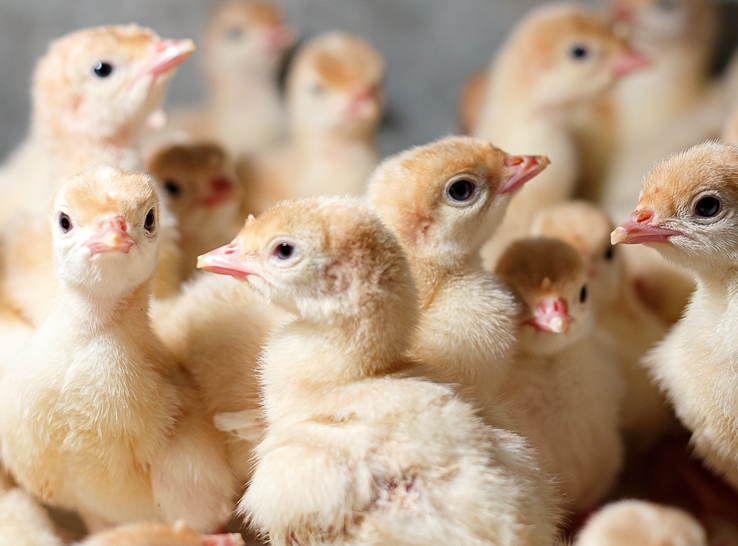
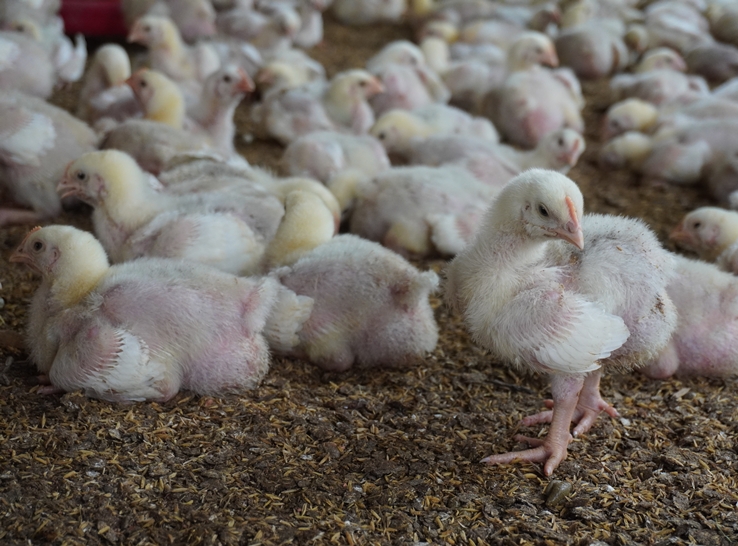
Helping turkey poults find feed and water soon after placement is one of the first steps in supporting early growth, health and welfare.
New research from the University of Arkansas Division of Agriculture suggests that green, moisture-rich feed attractants may help turkey poults find feed sooner, forage earlier and gain more weight during the first 10 days after placement.
The findings point to a practical opportunity for turkey producers: using visual feed cues not only to draw poults to feed, but also to deliver hydration support and other early-life additives during a critical window in poult development.
Why early feed discovery matters
Commercial turkey poults may go through hatchery processing, handling and transport before they reach feed and water in the brooder. During that window, they rely on residual yolk reserves for hydration and nutrients. However, that reserve is limited.
Delayed access to feed and water can contribute to dehydration, reduced body weight, altered metabolism and impaired early tissue development. For turkey producers, helping poults find feed quickly after placement can support a stronger, more uniform start.
That challenge has researchers searching for practical ways to encourage poults to engage with feed sooner.
Testing a green visual attractant
The Arkansas study, led by graduate student Victor Oyeniran and published in the Journal of Applied Poultry Research, evaluated whether green alginate beads used as a feed top dressing could attract day-of-hatch turkey hen poults to starter feed.
The project brought together the work of Danielle Graham, MS, PhD, in early nutrition and gut health and the work of Shawna Weimer, MS, PhD, in poultry behavior and welfare to understand how birds respond to their environment and how behavioral responses relate to performance.
The beads were moisture-rich and contained electrolytes, vitamins C and D and betaine, making them a potential carrier for early-life additives and a visual cue.
Turkey hen poults were placed into three treatment groups. Control pens received untreated feed flats. A treated group received green beads on both feed flats. A preference group received one treated feed flat and one untreated feed flat, allowing researchers to evaluate whether poults showed a behavioral preference when both options were available. (Figure 1)
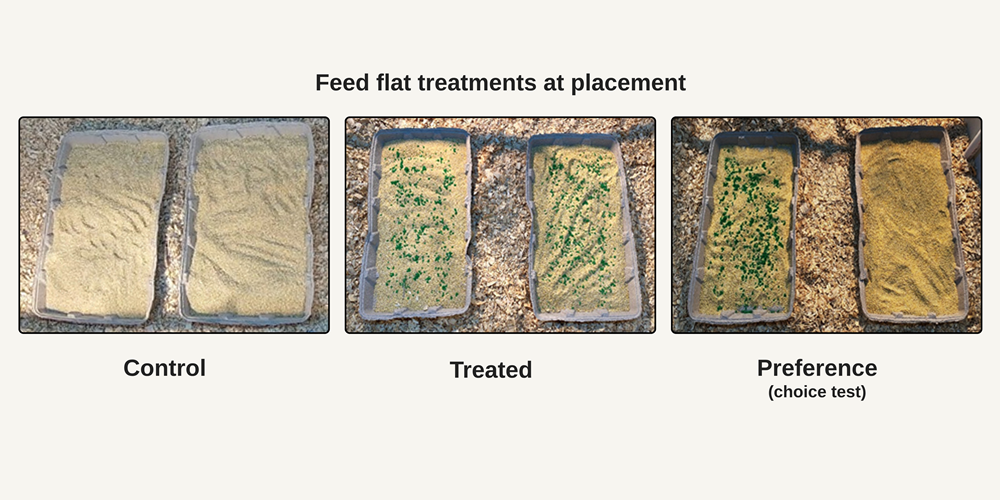
Figure 1.
“Turkey poults are naturally curious. But getting them to engage with feed quickly after placement can still be a challenge,” Weimer said. “We were interested in whether a green attractant could help stimulate that first feeding behavior.”
Poults preferred treated feed flat
The preference treatment provided one of the study’s most compelling behavioral results.
When poults had access to both a treated and an untreated feed flat, more birds were observed on the feed flat with the green attractant. More poults were also actively engaged on the treated flat, with more observed walking, standing or foraging rather than sitting or resting.
That distinction is important. The birds were not simply gathering randomly on the feed flats; they showed greater interest in the treated feed source and were more active when they got there.
“We saw evidence that the green beads drew poults to the feed and encouraged active engagement,” Graham said. “That early activity is important because the sooner poults begin exploring and consuming feed, the better positioned they may be for early growth.”
Across treatment groups, poults exposed to the green attractant were also more active on feed flats during the first hour after placement compared with poults in the control group.
Beads consumed quickly
The green attractant was consumed rapidly after placement.
In the treated group, beads were found in the crop of 50% of sampled poults within 15 minutes and in 100% of sampled poults by 45 minutes. Beads were also detected in the lower ileum within the first hour, showing rapid movement through the gastrointestinal tract.
At 24 hours after placement, crop fill was similar among treatments. Most poults across all groups had soft, full crops, indicating they had consumed feed and water. That finding suggests the green attractant did not interfere with normal feed and water intake.
Growth improved by day 10
The early behavioral response was reflected in performance.
By day 10, poults with access to the green attractant were heavier than control poults. Poults in the treated and preference groups averaged about 124 grams, compared with about 118 grams for controls. Body weight gain followed a similar pattern, with poults exposed to the attractant gaining about 6 to 7 grams more than control poults during the first 10 days.
Feed conversion ratio and mortality were not statistically different among treatments, suggesting the attractant improved early growth without negatively affecting feed efficiency or livability.
Implications for turkey production
The results point to two potential opportunities for turkey production.
First, green visual attractants may be a practical way to encourage poults to find and interact with feed shortly after placement. That could be especially useful during the critical early brooding period, when producers focus on hydration, feed intake, livability and flock uniformity.
Second, moisture-rich beads may offer a delivery platform for targeted early-life additives. In addition to attracting poults to feed, the beads could potentially carry ingredients such as electrolytes, vitamins, energy sources or other functional additives designed to support gut health, immune readiness and resilience to placement stress.
The researchers noted that the current study followed poults only through 10 days of age, so additional studies are needed to determine whether early improvements carry through a full commercial turkey production cycle.
Still, the findings suggest that a simple visual cue may do more than catch a poult’s attention. It may help poults get off to a better start during one of the most important windows in production.
The post Could green feed cues give poults a stronger start? appeared first on Modern Poultry.
Apa Reaksi Anda?
 Suka
0
Suka
0
 Kurang Suka
0
Kurang Suka
0
 Setuju
0
Setuju
0
 Tidak Setuju
0
Tidak Setuju
0
 Bagus
0
Bagus
0
 Berguna
0
Berguna
0
 Hebat
0
Hebat
0