































From seasonal farming to year-round production: is poultry modernization worth it for Zimbabwe’s small-scale broiler farmers?
Modernization can help Zimbabwe’s small-scale broiler farmers, but only when it improves efficiency, not just equipment. It shows that better brooding, ventilation, housing design, and climate control can raise profitability and support year-round production.
Introduction
Many poultry farmers expand their operations expecting higher bird numbers to translate into higher profits. However, increasing flock size without improving housing, heating, ventilation, and management systems often creates new production challenges. What works for 1,000 or 2,000 birds may become inefficient at 5,000 birds or more.
In Matabeleland, broiler producers must manage birds through three distinct seasonal conditions: the cold, dry season; the hot, dry season; and the hot, humid season. Each season affects bird performance differently and requires adjustments in management, housing, and environmental control.
The most successful poultry farmers are not necessarily those with the largest houses, but those who consistently maintain bird performance throughout the year. Modernization therefore goes beyond purchasing new equipment. It involves improving efficiency, strengthening management systems, and making practical investments that support profitable year-round production.
Efficiency: the foundation of profitability
In commercial broiler production, profitability is ultimately determined by efficiency. Most commercial small-scale farmers operate on an 8.5 to 9-week production cycle, including downtime for cleaning and preparing the poultry house for the next batch. Under ideal conditions, this allows up to six production cycles per year.
Achieving this level of efficiency depends on birds reaching target market weights on schedule while maintaining good flock health, acceptable mortality, and optimal feed conversion. One of the earliest indicators of future performance is seven-day chick weight. Chicks that achieve good early growth are more likely to reach market weight on time, while poor first-week performance can affect the entire production cycle.
Every delay in growth increases feed costs, extends the production cycle, and delays the placement of the next batch. Efficiency is therefore not simply about growing birds quickly, but about achieving the right market weight at the right age.
Seasonal challenges such as poor winter brooding, heat stress during hot weather, and disease pressure during humid conditions can all reduce flock performance and profitability. For farmers looking to expand, improving efficiency should be the first priority. Sustainable growth is achieved when production capacity, management practices, and flock performance improve together.
Heating and brooding: the first major challenge
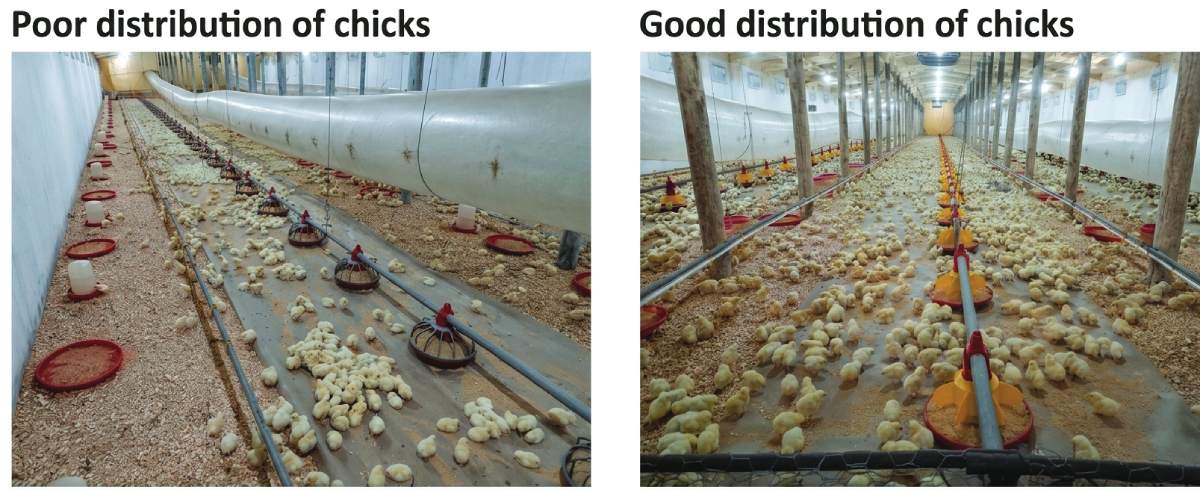
The cold, dry season presents one of the biggest challenges for commercial broiler farmers in Matabeleland. During this period, successful brooding becomes critical because the first week of a broiler chick’s life often determines the performance of the flock throughout the entire growth cycle.
Temperature management is essential to ensure chicks are comfortable and able to achieve optimum feed and water intake. Chick behaviour remains one of the best indicators of whether brooding temperatures are correct. Equally important is ventilation, which supplies fresh oxygen, removes harmful gases such as ammonia and carbon dioxide, and helps regulate temperature within the brooder.
One of the most common observations on small-scale commercial farms is that chicks are placed before houses have reached the recommended floor temperature of 28–30 °C. In an effort to reduce heating costs, farmers often shorten pre-heating periods. The result is poor early feed intake, uneven growth, and reduced seven-day weights. In most cases, birds never fully recover the growth potential lost during the first week.
Many farmers continue to face challenges such as:
- high heating fuel costs;
- inefficient heating systems for their capacities;
- inadequate pre-heating before chick placement;
- poor ventilation during brooding.
When chicks are exposed to cold conditions, growth rates slow down and market readiness is delayed. This not only increases feed costs but also disrupts future batch placements, consequently reducing the number of profitable batches a farmer can produce annually.
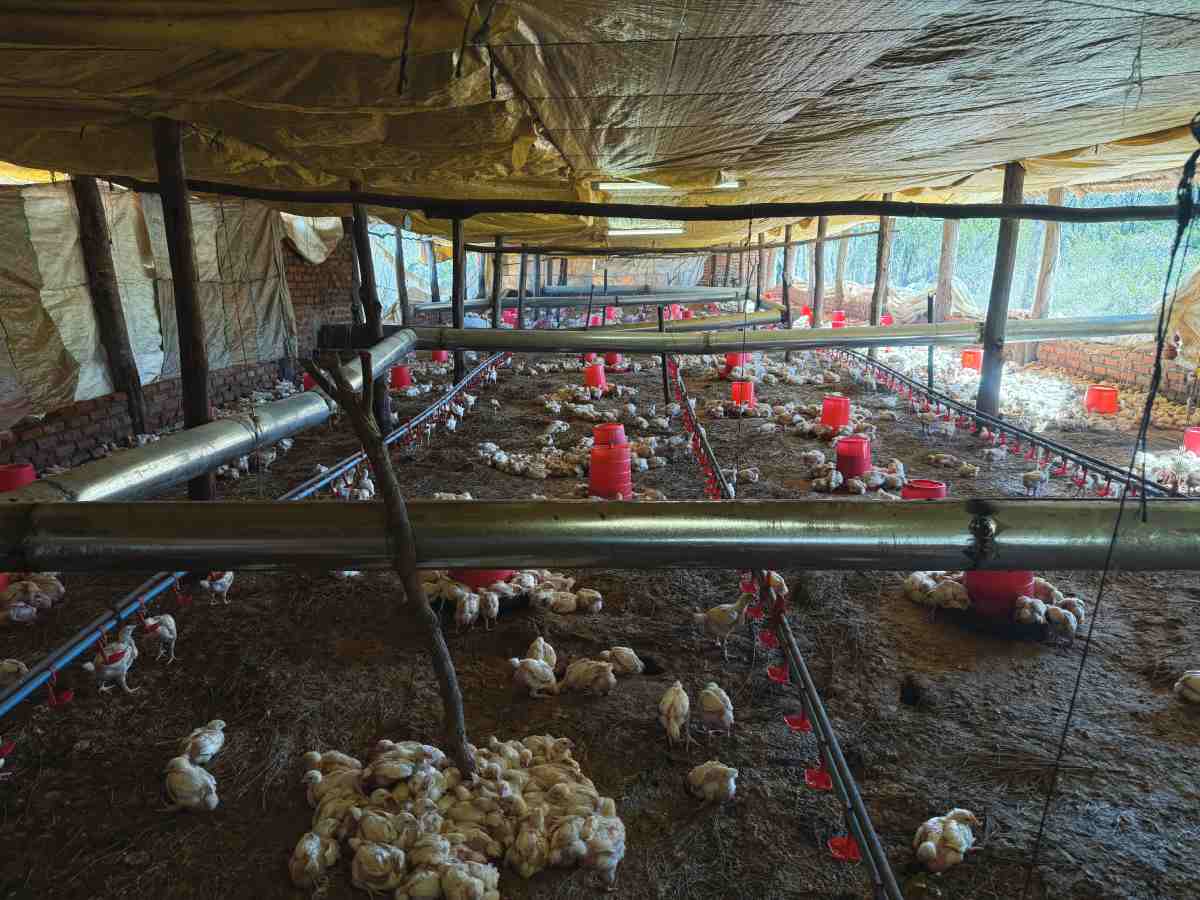
Poor ventilation during brooding can also contribute to respiratory challenges and conditions such as ascites. Many farmers using open-sided poultry houses focus heavily on heating while overlooking the importance of maintaining adequate airflow. However, heating and ventilation should work together. Warm birds still require fresh air.
Lessons from the field: matching heating capacity to flock size
In my experience, one of the greatest challenges faced by farmers transitioning from small-scale to commercial production is heating capacity. A heating system that performs well when brooding 1,000-2,000 chicks may become inadequate when flock numbers increase to 5,000 or more birds.
Most small-scale commercial poultry farmers use flue-pipe systems, drum heaters, or gas brooders, while only a few have automatic coal-powered heating systems. These systems can be effective, but expansion without matching heating capacity often leads to performance challenges.
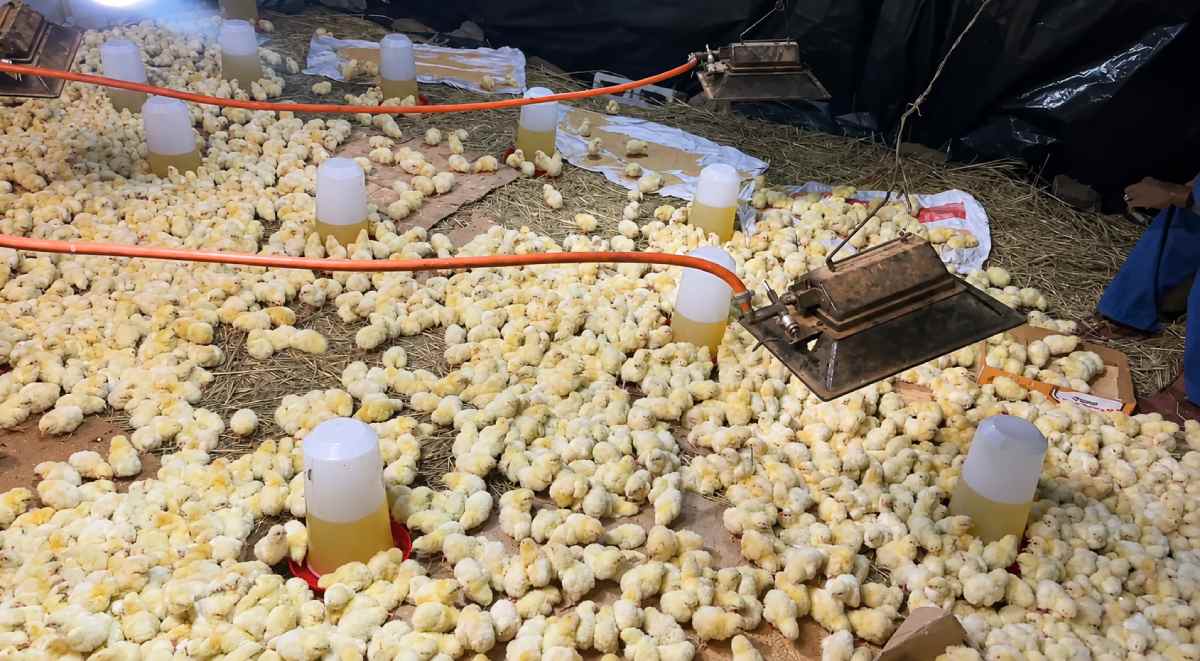
A case in point is a farmer who successfully brooded approximately 2,000 chicks using a flue-pipe system before expanding capacity and installing a new gas heating system. Additional feeders and drinkers were added as part of the farm’s modernization strategy, yet performance failed to improve because the heating requirements of the larger flock had not been adequately assessed. Figure 3 illustrates the challenge.
The lesson was simple: modernization is not about replacing equipment for the sake of change. It is about improving technical efficiency.
Before investing in new equipment, farmers should ask themselves:
- Will this improve bird performance?
- Has it been tested successfully on a smaller scale?
- Can it support my planned production capacity?
- Will it be practical and sustainable to operate?
For many farmers, modernization does not require a complete overhaul of existing systems. A more practical approach may be to gradually improve current heating systems by adding supplementary drum heaters or gas brooders as flock capacity increases. As production expands further, more advanced heating technologies can then be introduced when they are justified by flock size and production requirements.
Modernization is therefore not a single event but a gradual process. The most successful farmers are often those who build on what already works, making incremental changes that improve efficiency without placing unnecessary risk on the business.
Emerging challenges: heat stress, humidity and housing efficiency
While inadequate heating remains a concern in the cold season, commercial broiler farmers are increasingly facing challenges linked to high temperatures and humidity. With climate variability intensifying, environmental management has become central to maintaining flock performance and profitability.
Heat stress has a direct impact on profitability, especially in birds nearing market age, when most feed costs have already been incurred. At this stage, reduced feed intake, slower growth, poor feed conversion, and increased mortality can significantly erode returns.
In many cases, heat stress is not only a weather issue but also a housing design challenge. Poor house orientation is a common problem. Ideally, poultry houses should be aligned east to west to reduce direct sunlight during peak heat. Incorrect orientation increases heat load, forcing birds to crowd in shaded areas and reducing effective stocking capacity.
For existing structures, shade cloth along the sides of the house can help reduce sun penetration without limiting ventilation. Roof design is also critical. Low roofs tend to trap and radiate heat, increasing internal temperatures. Raising roof height, improving insulation, and enhancing airflow can significantly reduce heat build-up. Some farmers also use fans or roof sprinklers, although these must be assessed for cost and water availability.
These interventions may appear minor, but they represent practical modernization that directly improves efficiency. Insulation, ventilation improvements, and cooling systems can provide significant gains during extreme heat without requiring full-scale automation.
Additionally, humidity presents additional challenges, particularly during the rainy season, when wet litter, high bacterial loads, and increased disease pressure affect flock performance. Poor litter conditions reduce bird comfort and air quality while increasing management difficulties.
As farms expand, housing infrastructure becomes more critical. While earth floors may be manageable at low stocking densities, they become less effective at a larger scale. Concrete flooring, though a significant investment, improves hygiene, simplifies cleaning and disinfection, and reduces risks associated with wet conditions. It is therefore a key long-term upgrade for improving efficiency and consistency.
Across all hot, cold, and humid conditions, the key lesson is that modernization is not always about expensive technology. More often, it involves improving housing design, environmental control, and infrastructure. These gradual, practical upgrades often deliver the greatest gains in efficiency and allow farmers to maintain production throughout the year.
Is modernization worth it?
The simple answer is yes, but modernization should not be confused with expensive automation or replacing all existing farm systems. The main challenges facing commercial small-scale broiler farmers are often not a lack of technology, but inefficiencies in flock management across seasons and production cycles.
For many farmers, modernization starts with getting the basics right: improved brooding, reliable heating, proper ventilation, effective lighting, better housing design, litter management, and stronger biosecurity. These often deliver higher returns than costly equipment upgrades.
Successful farmers are not necessarily those with the most advanced technology, but those who make targeted improvements that address specific production constraints. This may include adding supplementary heating in winter, using shade cloth to reduce heat stress, improving roof insulation, or upgrading from earth to concrete floors.
Modernization should therefore be a gradual process rather than a once-off investment. As production expands, farmers must continuously assess whether their housing and systems can support higher flock sizes efficiently.
The key question is not “What is the latest technology?” but “What change will most improve bird performance, welfare, and profitability?”
In this sense, modernization is less about spending more and more about investing in efficiency.
Conclusion
The future of small-scale commercial poultry farming in Zimbabwe depends on producing birds efficiently and consistently throughout the year. Seasonal challenges will always exist, but farmers who adapt their management systems, housing, and infrastructure are better positioned to maintain profitability.
The lessons from the field are clear: increasing bird numbers alone does not guarantee growth. Heating, ventilation, housing design, litter management, and overall flock management must evolve alongside production capacity. Ultimately, successful poultry businesses are built on efficiency rather than scale alone. Modernization is most effective when it focuses on practical improvements that enhance bird performance, welfare, and profitability.
Note: these are general guidelines based on practical experience in Zimbabwe’s poultry industry. Farmers are encouraged to consult their local poultry technical expert for advice tailored to their specific circumstances.
Apa Reaksi Anda?
 Suka
0
 Kurang Suka
0
 Setuju
0
 Tidak Setuju
0
 Bagus
0
 Berguna
0
 Hebat
0