






























There is no winner when poultry welfare concerns arise
By Manoella Alves
Global Director of Sustainability, Zinpro
Board Member, US Roundtable for Sustainable Poultry & Eggs (US-RSPE)
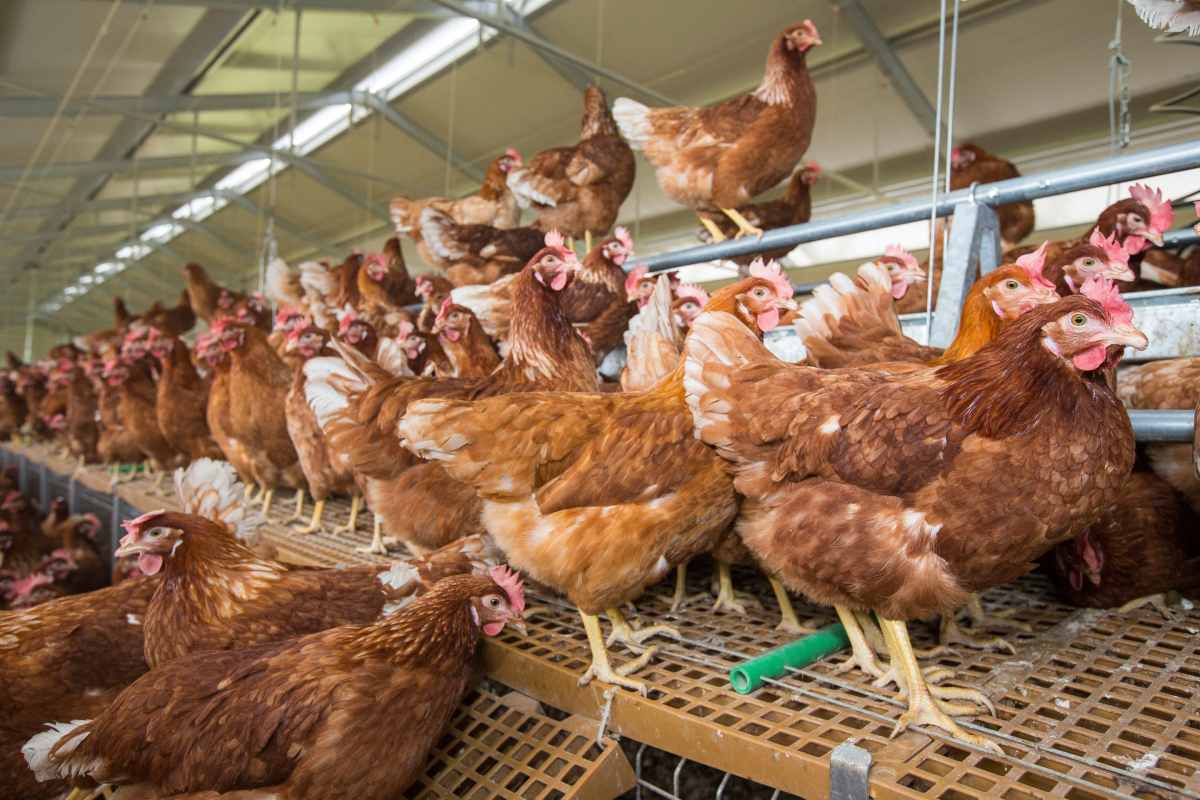
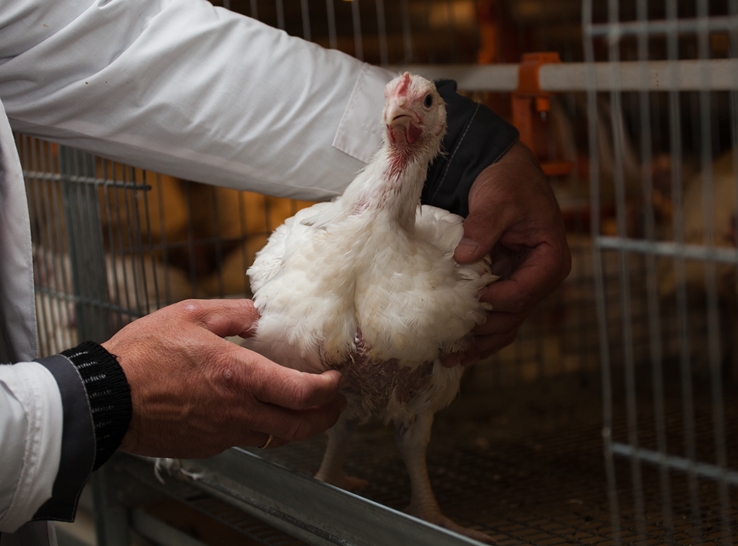
Over time, productivity gains in poultry production have improved feed efficiency while reducing land use and emissions per pound of chicken produced. However, decades of intensive selection for production traits also introduced some challenges, including leg and footpad disorders, skin lesions and other welfare-related conditions.
In addition, management equipment, such as mechanical harvesters, poses new risk points for welfare. These challenges affect not only the birds themselves but also the efficiency of the entire value chain. Poultry producers lose revenue when birds fail to reach market weight or experience health problems, processors face losses from condemned carcasses, and buyers and retailers depend on a reliable supply of safe poultry products. Ultimately, reduced performance and wasted resources create costs across the whole poultry production chain.
Today, animal welfare is increasingly recognized as both an ethical and economic priority. This is driven not only by evolved consumer expectations and sustainability pressures; welfare has become essential for maintaining production performance, public trust, market access and the long-term resilience and sustainability of the poultry sector.
Going for more balanced breeding
Within modern breeding programs, substantial amounts of data are recorded for each bird, including body weight, feed efficiency, physical leg assessments and gait scores. These measurements are combined with the birds’ pedigree information to support selection decisions.
However, breeding for both production performance and animal welfare is complex. This is because negative relationships, or antagonisms between traits, are often observed between production or environmental impact traits and health, welfare or reproductive traits.
As a result, improvement in one trait must always be considered in the context of its effects on other important traits. These antagonisms are managed by simultaneously evaluating multiple traits within the breeding objective and selecting birds with breeding values that are superior to the population average across the trait spectrum.
Through this balanced approach, gradual genetic improvement can be achieved in multiple traits at the same time. For example, this strategy, known as balanced breeding, has been applied for many years in Aviagen’s broiler and turkey breeding programs (Aviagen Group, 2024, Decades of Breeding for Welfare and Sustainability).
The industry has already taken great steps and has moved beyond focusing solely on efficiency gains toward a more balanced approach that advances productivity while safeguarding bird welfare. Breeding programs now increasingly use multi-trait selection strategies that incorporate both production and welfare outcomes. Major genetics companies have integrated welfare indicators into breeding objectives to help ensure that improvements in growth and efficiency do not come at the expense of animal health (see box).
Who defines bird welfare?
It is encouraging to see that poultry welfare has become an increasingly important priority within the industry over recent years. However, meaningful progress requires clear and measurable goals. For example:
- What level of footpad dermatitis or wet litter prevalence should be considered acceptable in commercial flocks?
- What targets should be set for the prevalence and severity of common myopathies such as woody breast and spaghetti meat?
- What about air quality in the barn?
Equally important is understanding how to measure these welfare indicators and hence translate observations and data into actionable improvements at various levels of the production chain. Addressing these questions is essential to establish effective welfare benchmarks and make them easy to understand and use.
Historically, many poultry-welfare benchmarks have been established by industry leaders such as major integrators and food service companies. This is great, and we need these early adopters to inspire others and set the example. But the industry also needs empirical evidence that can inform decision-makers.
This is where the International Poultry Welfare Alliance (IPWA) plays a key role. IPWA is a multistakeholder organization with members who share a common interest in improving poultry welfare. Its goal is to provide science-based evidence regarding poultry welfare so that people can make informed decisions. It shares joint leadership with the US Roundtable for Sustainable Poultry & Eggs (US-RSPE), utilizing their respective memberships and committee structures to drive improvement in the poultry industry.
Creating a common welfare narrative
In recent years, the IPWA has focused on building outcomes-based key welfare indicators (KWIs) and providing educational and networking opportunities through webinars, web resources and “icebreakers” that facilitate meaningful discussions about poultry welfare throughout the value chain.1 These KWIs are important because currently, different welfare programs and standards are used around the world.
Although this diversity may be manageable in the context of voluntary welfare reporting, welfare indicators are expected to become increasingly mandatory in the coming years and integrated into broader sustainability reporting requirements for the poultry sector. The KWIs are supported by standardized instructions for the measurements that can be used across different poultry species (broilers, layers and turkeys) and production stages. They provide retailers, processors, integrators and farmers with practical and consistent tools to assess, benchmark and improve animal welfare outcomes.
Objective, data-driven approaches are essential for assessing positive — not only less negative — components of welfare. Sensor-based monitoring systems, for example, can continuously assess bird behavior, health, welfare and air quality, enabling earlier detection of problems and faster intervention. However, other challenges, including wooden breast, leg disorders and poor flock uniformity, become visible only at slaughter.
Traditionally, carcass-scoring data were used primarily to determine penalties for the condemned carcasses, with little further analysis (regarding external and internal lesions). However, science has shown that some welfare-related carcass defects, such as bruises, blood splash and hematomas, are linked to bird health and nutrition, making the processing plant an ideal point to assess welfare outcomes.
Over the years, therefore, these carcass-evolution data have increasingly been fed back (and improved) into production systems to make better decisions on nutritional interventions, among others.
Role of feed is often overlooked
New tools are helping bring technology and nutrition together to create unique data to help improve poultry welfare. For example, one evaluates carcass defects at the processing plant and helps identify the nutritional, health and management factors behind them.
By tracing abnormalities back to their root causes, producers can implement targeted improvements that enhance welfare, reduce losses and increase productivity. Years of data — from 85,500 carcasses, 900 flocks, coming from 40 countries and 235 companies to date — demonstrate that processing plants often reveal the complete welfare picture and that bird welfare can be owned and supported at every step. This provides opportunities to link and further communication between stakeholders across the poultry supply chain.
The data also show that we do not always have to look for new products, solutions or new data. They are often already there; we just must connect the dots. The role of animal feed is often overlooked here. Yet, nutritional solutions that have been around for decades, such as specialty feed additives and trace minerals, can significantly improve welfare outcomes but remain underutilized across the value chain. Adding certain trace minerals helps optimize performance, health, welfare and meat quality. Zinc, for example, is known to influence skin strength, elasticity, inflammatory response and healing.
Trials showed that broilers given trace-mineral supplementation had 30% less footpad dermatitis. Broilers receiving supplementation also showed increased breast and thigh yield, along with reduced breast meat drip loss, lameness, and the need for antibiotics. Improved embryo survival was reported in breeder flocks receiving trace-mineral supplementation.
These performance improvements suggest that nutrition can help improve animal welfare from the inside out while reducing financial losses in carcass quality by 35% to 40% (Source: Zinpro). Extrinsic welfare lesions, due to equipment, management and harvesting, among others, are addressed with the help of poultry professionals.
Conclusion
Animal welfare is rapidly evolving from a desirable practice to a fundamental business requirement across poultry production. Over the next 5 years, poultry companies that prioritize welfare will be better positioned to achieve stronger production performance, healthier and more resilient animals and more stable supply chains. In contrast, those that fail to invest in welfare improvements are likely to face growing challenges related to disease, production inefficiencies, regulatory requirements and market expectations.
At the same time, increasing consumer scrutiny and sustainability demands will make transparency and measurable welfare outcomes essential for maintaining market access and stakeholder trust. As welfare metrics become more standardized and integrated into sustainability frameworks, poultry producers, processors, retailers and suppliers will need to demonstrate continuous improvement across the value chain.
The work from IPWA and its industry members is crucial in this process and drives standardization, best practices and establishes a common language for assessing and improving poultry welfare.
Reference
1. Weimer SL, Myhre E, Nieuwenhoven AN, Arreaga R, Barger K, Newberry RC, Tarrant KJ, Fraley GS. Research and innovation perspectives: poultry welfare in 2050. Poult Sci. 2025 Nov;104(11):105799. doi: 10.1016/j.psj.2025.105799. Epub 2025 Sep 8. PMID: 40946649; PMCID: PMC12683112.
Editor’s note: Content on Modern Poultry’s Industry Insights pages is provided and/or commissioned by our sponsors, who assume full responsibility for its accuracy and compliance.
The post There is no winner when poultry welfare concerns arise appeared first on Modern Poultry.
Apa Reaksi Anda?
 Suka
0
Suka
0
 Kurang Suka
0
Kurang Suka
0
 Setuju
0
Setuju
0
 Tidak Setuju
0
Tidak Setuju
0
 Bagus
0
Bagus
0
 Berguna
0
Berguna
0
 Hebat
0
Hebat
0