






































Routine serological, molecular monitoring helps prevent aMPV outbreaks

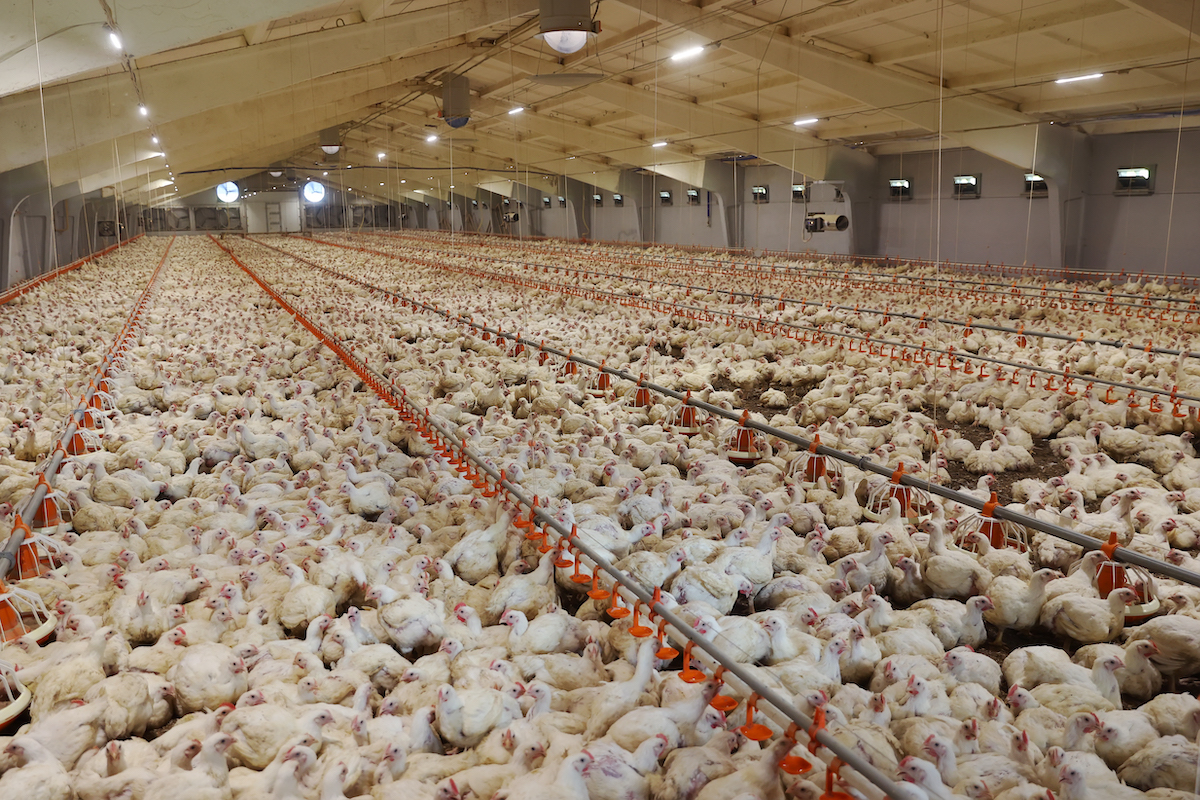
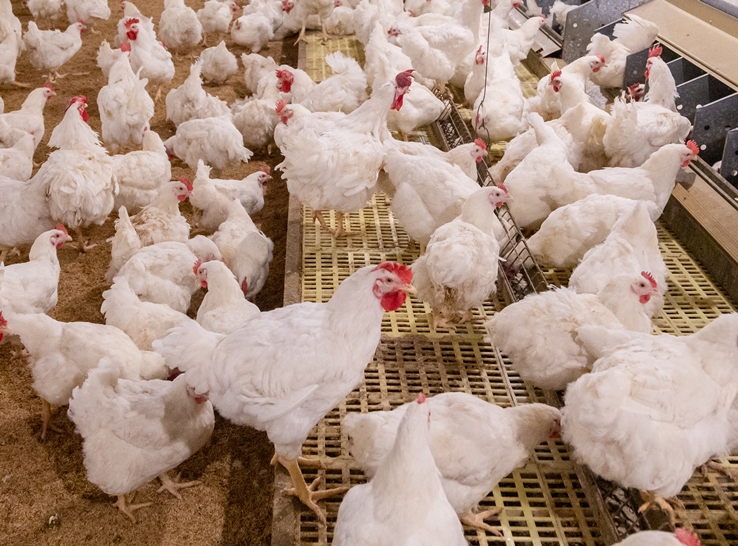
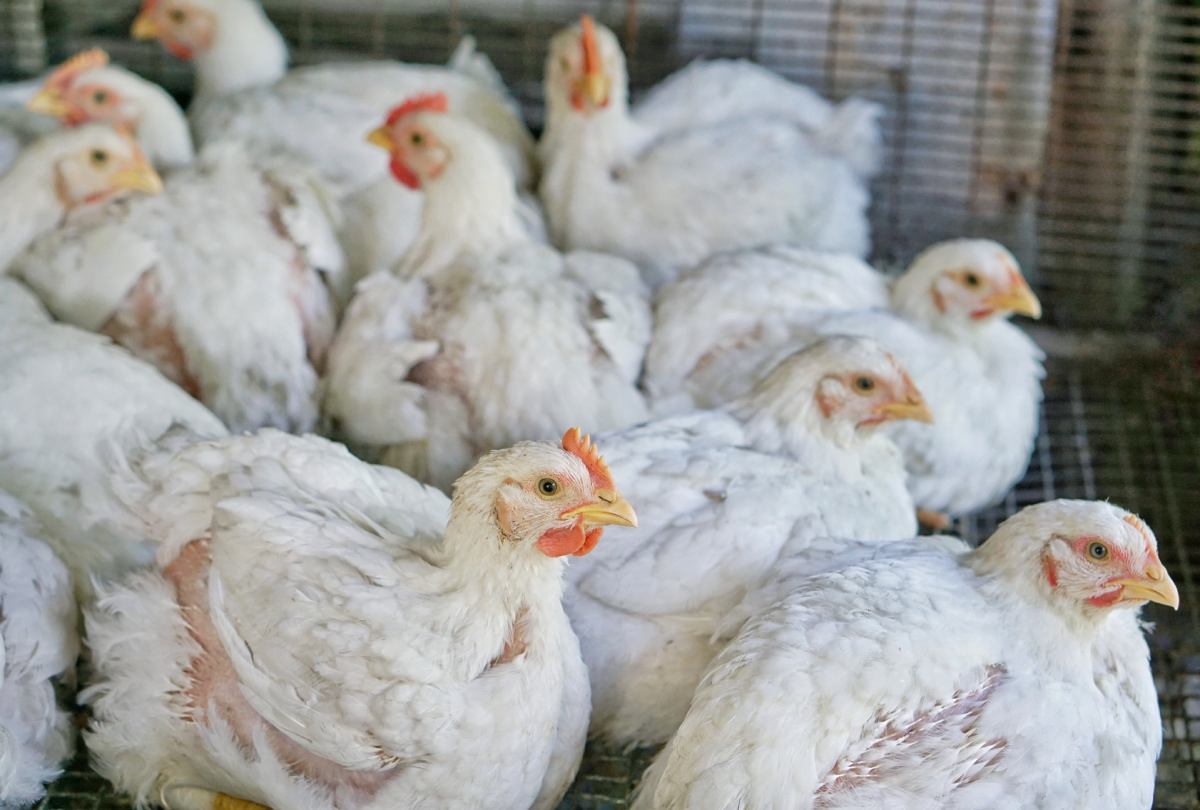
Routine surveillance of poultry flocks for avian metapneumovirus (aMPV) offers a path forward for poultry farms to control outbreaks of the fast-moving respiratory disease.
“The economic consequences of this virus due to mortality, poor performance and egg production losses are extensive,” reported Reshma Ramachandran, DVM, PhD, professional services veterinarian-poultry, IDEXX. “Secondary diseases further add to the cost of an aMPV outbreak.”
To prevent these outbreaks, Ramachandran recommends using a combination of serology and molecular tools to accurately diagnose the disease and maintain healthy flocks.
She discussed aMPV surveillance techniques during a May 2026 webinar hosted by the American Association of Avian Pathologists.
Diagnostic tools for aMPV
“It is very important to have accurate diagnostic tools for aMPV, especially for differentiating aMPV from secondary diseases like mycoplasma, infectious bronchitis virus or Newcastle disease,” Ramachandran said.
“Both serological testing and molecular diagnostic tools are available,” she continued. “For serological tests, enzyme-linked immunosorbent assay (ELISA) is the primary one used to detect antibodies against aMPV in serum, indicating either prior exposure or immune response after vaccination. Multiple commercial ELISA tests are available.”
Molecular detection using polymerase chain reaction (PCR) identifies viral RNA to confirm active infection by subtype. Ramachandran noted that PCR offers other advantages, such as differentiating the type of infection. Many in-house and commercial PCRs are available, including the one from IDEXX that can differentiate subtypes A and B.
For best results, ELISA and PCR techniques should be integrated. “I highly recommend combining serology and molecular techniques to enhance the accuracy of disease diagnosis and to efficiently manage the poultry flock,” she said.
Timing for diagnostics
The key to integrating PCR and serology is timing: when to use each technique to achieve accurate results.
“An aMPV infection is acute, and the incubation period is short — 3 to 7 days,” Ramachandran said. “Viremia and viral shedding are very high during the first day of infection and in the first week.
“Antibody development occurs after the first week of infection, and no detectable antibodies against aMPV have developed in the blood,” she added. “As a result, the ELISA test is negative, and the PCR test is positive.
“Clinical signs vary significantly after the first week of infection. The ELISA should be positive by the second or third week, when antibody levels in the blood are very high and viral load extremely low. Then PCR turns negative, and ELISA is positive.”
By this time, birds may recover and show no clinical signs. But ELISA tests will indicate the birds experienced chronic infection or were exposed to aMPV.
Correct serological sampling
Regular serological monitoring in poultry operations will help poultry farms better manage aMPV. But it will require statistically accurate, random sampling and proper blood serum collection, Ramachandran said.
“If you have multiple houses on a farm, it is important to collect samples from all houses, if possible,” she explained. “But if not, randomly collect 23 to 30 samples from the first house, the middle two or three houses and the last house on the farm. This number of samples should accurately reflect the vaccination status with at least 90% to 95% confidence.”
When collecting blood samples, she emphasized keeping birds as calm as possible and collecting no more than 1% of bodyweight. Each blood draw goes into a sterile tube without an anticoagulant and is kept at room temperature until a clot forms. Then the samples are cooled and kept cold through handling and shipping until testing.
Using the IDEXX-APV ELISA test, results are provided as follows:
- Titer groups 0 to 18
- Geometric mean titers (GMT) from 0 to >20,000
- Negative or positive with antibody concentration.
“Any titer below 397 is negative with no detectable level of antibody — group 0,” Ramachandran explained. “When the titer goes above 397, samples are positive. The next titer group is 1 to 4, with GMT 397 to <4,000 and low antibody concentration.
“The next titer group is 5 to 8 and GMT 4,000 to <10,000 with average antibody concentration. For groups 9 to 13, the GMT is 10,000 to <20,000 with high antibody concentrations. Finally, for groups 14 to 18, the GMT is >20,000 with very high antibody levels in the serum,” she said.
Interpreting ELISA results
Ramachandran discussed several aMPV vaccine studies to help explain the meaning of high and low titers and antibody concentration in the serum.
In one study, chicken flocks were vaccinated with either an inactivated type A or type B or B1 vaccine. Samples were analyzed by IDEXX APV ELISA.
“The birds receiving type B vaccines were all positive up to day 35,” she said. “For type A and type B1 vaccines, birds were 100% positive initially but gradually declined on the following days. For type B, the average mean titer was 1,500 to 2,500, and for vaccines A and B1 it was 1,000 to 2,000.
“The diagnostic sensitivity of the ELISA test was up to 43 days. It was able to detect antibodies produced from day 16 post-vaccination to day 43 post-vaccination.”
Turkey vaccine test
Another study involved turkey flocks vaccinated with a live type A or type B vaccine at day 1 of age. Blood samples were collected at 3, 6 and 12 weeks of age. A booster live vaccine was administered at 12 weeks and a killed vaccine at 33 weeks. The final blood samples were taken at 33 weeks of age.
“What we observed with vaccine A at 3 weeks of age was a really low percentage of positivity,” Ramachandran said. “It could be due to an interference with maternal-derived antibodies. But after that, the percentage of positives increased.
“Following the inactivated vaccine at 33 weeks of age, there was 100% seroconversion,” she continued. “Vaccine B was the one showing the highest seroconversion right from the beginning. In both groups, following the vaccine A and B administration, the GMT was between 9,000 and 12,000.”
Type C vaccine test
“In the next study, seven chickens were vaccinated intramuscularly with the commercially available type C APV vaccine,” Ramachandran said. Samples were collected at 0, 4, 7, 11, 14, 17, 21 and 28 days post-vaccination.
“At day 14 post-vaccination, seroconversion was close to 100%, and the titer was close to 1,000,” she added. “There was a gradual increase in the GMT, reaching as high as 7,400.
“Overall, we were able to detect antibodies as early as 11 days post-vaccination.”
Based on other studies in Europe, Ramachandran said, “With aMPV, the maternal antibodies do not usually interfere with the vaccine, including day-old vaccination.
“But at the same time, you cannot rely on maternal antibodies to have protection for the day-old birds,” she added. “So it is very important to start vaccination from day-old birds.”
Develop baselines, surveillance
“From these examples, I wanted to show that titers are not consistent,” Ramachandran explained. “There’s a lot of variability between flocks and farms. It is important to develop your own baseline for your complex to derive your own conclusions.”
Developing a baseline involves these actions:
- Collecting data from a homogeneous sample of 10 flocks
- Gathering information from past ELISA tests when flocks were healthy
- Establishing a range of titers (high, medium and low) from the flocks to use as reference points for new samples
- Periodically updating the baseline.
“It is very important to identify what goes on in your flocks and store the data to track it and interpret your results,” she said.
“Proactive monitoring is very important, and serology plays an important role in identifying prior exposure and the immune status of the vaccine,” Ramachandran continued. “At the same time, it is important to combine serology with PCR for accurate diagnosis and effective disease management.
“You need routine surveillance so that you know the trend of your flock. This information will help prevent outbreaks,” she concluded.
The post Routine serological, molecular monitoring helps prevent aMPV outbreaks appeared first on Modern Poultry.
Apa Reaksi Anda?
 Suka
0
 Kurang Suka
0
 Setuju
0
 Tidak Setuju
0
 Bagus
0
 Berguna
0
 Hebat
0