

































Beyond Protein Digestion: Supporting Poultry Performance Through Intestinal Resilience

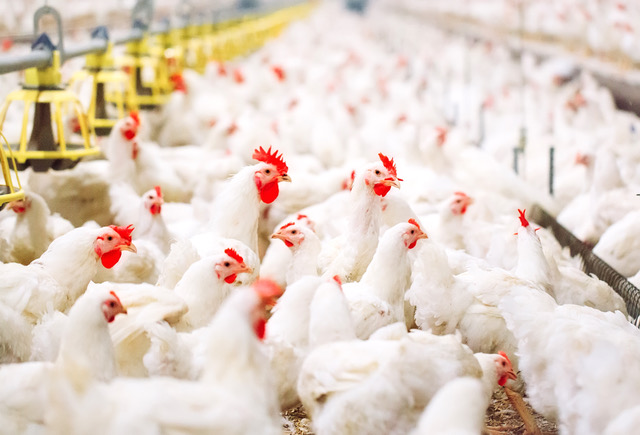
Poultry meat plays an important role as an affordable and widely available source of animal protein across the Middle East and Africa. However, producers face high temperatures, intensive stocking conditions, persistent disease pressure, variable feed quality, and increasing demands to reduce routine antibiotic use. Under these challenging conditions, improving nutrient utilization while maintaining intestinal health is essential for consistent poultry production.
A Protease Originating from Korea’s West-Coast Mudflats
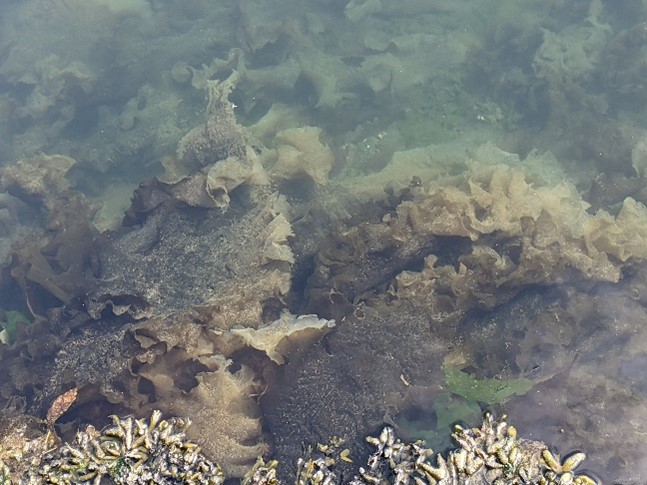
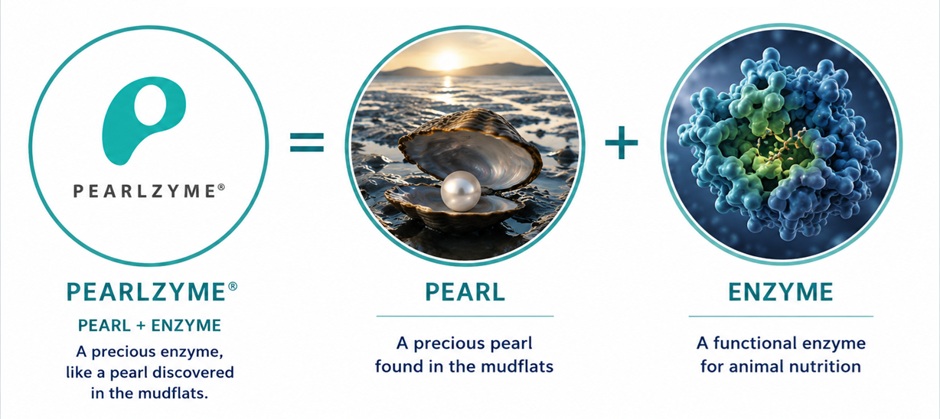
PEARLZYME® was developed from a protease produced by Bacillus clausii, a microorganism isolated from the tidal mudflats of Korea’s west coast. Mudflats are dynamic natural environments where temperature, salinity, oxygen availability, moisture, and other conditions continually fluctuate (Figure 1).
Figure 1. The Meaning Behind PEARLZYME®
Enzymes originating from microorganisms adapted to harsh or highly variable environments are often referred to as extremozymes. Inspired by this concept, the protease in PEARLZYME® was developed for animal nutrition with a focus on stability and improved protein utilization.
Feed enzymes encounter varying temperatures during feed processing and different pH conditions within the gastrointestinal tract. As an environmentally robust, extremozyme-type protease, PEARLZYME® demonstrates excellent heat and pH stability, helping maintain enzyme activity and support protein digestion under a wide range of conditions. In addition to its primary protease function, PEARLZYME® also contains a probiotic component.
Connecting Protein Digestion with Gut Health
Efficient protein digestion offers benefits beyond amino acid availability. When protein is not sufficiently digested in the upper gastrointestinal tract, more undigested protein reaches the hindgut, where it may serve as a substrate for undesirable microbial fermentation and disturb the intestinal environment.
By supporting the breakdown and utilization of dietary protein, PEARLZYME® helps reduce the amount of undigested protein entering the lower intestine. This can contribute to a more balanced intestinal environment while supporting feed efficiency and productive performance. This is particularly valuable when feed costs are high or protein ingredient quality is variable. For producers facing variable raw materials, improved nutrient utilization can also support more flexible feed formulation.
Potential Demonstrated in a Broiler Study
A controlled broiler study conducted at the University of Georgia evaluated PEARLZYME® and a probiotic-enriched PEARLZYME® formulation with an increased level of its probiotic component. The study assessed nutrient utilization and growth performance, as well as intestinal responses under an immune challenge using lipopolysaccharide (LPS). The findings have been accepted for publication in Poultry Science.
PEARLZYME® significantly improved energy utilization during days 14–21. Compared with the control, apparent metabolizable energy (AME) increased from 2,863 to 2,962 kcal/kg, while nitrogen-corrected AME (AMEn) increased from 2,727 to 2,824 kcal/kg. Gross energy digestibility improved from 72.7% to 74.6%, and dry matter digestibility increased from 71.7% to 73.5%. All four improvements were statistically significant (P < 0.05; Table 1).
Table 1. Effects of PEARLZYME® Formulations on Energy Utilization in Broilers (d 14–21)
| Item | Control | PEARLZYME® | Probiotic-Enriched PEARLZYME® | P-value |
| AME (kcal/kg) | 2,863ᵇ | 2,962ᵃ | 2,937ᵃ | 0.003 |
| AMEn (kcal/kg) | 2,727ᵇ | 2,824ᵃ | 2,792ᵃ | 0.003 |
| GE digestibility (%) | 72.7ᵇ | 74.6ᵃ | 74.3ᵃ | 0.014 |
| DM digestibility (%) | 71.7ᵇ | 73.5ᵃ | 73.7ᵃ | 0.002 |
ᵃᵇ Different superscripts indicate significant differences (P < 0.05).
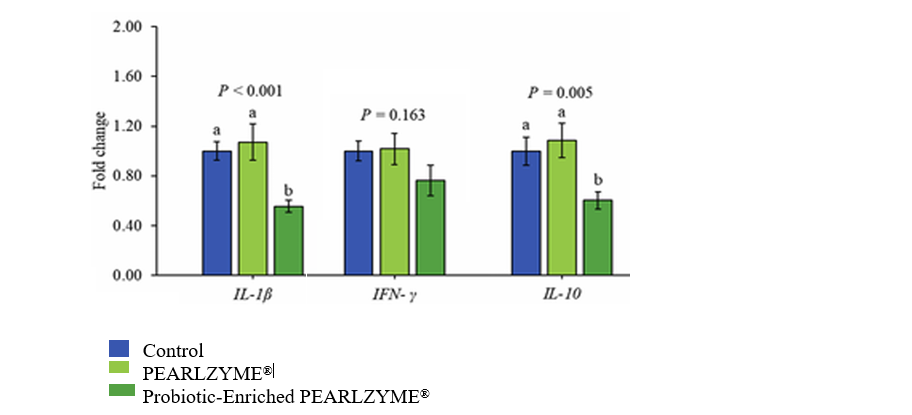
The Probiotic-Enriched PEARLZYME® formulation showed additional responses under the LPS challenge. Birds receiving this formulation had lower expression of selected inflammatory cytokines, including IL-1β, together with improved growth during the later phase of the study. The researchers suggested that the higher probiotic level may have contributed to intestinal homeostasis and inflammatory resilience beyond the direct nutrient-hydrolyzing effects of protease (Figure 2).
Figure 2. Effects of PEARLZYME® Formulations on Selected Ileal Cytokine Expression Following LPS Challenge
 These findings reinforce PEARLZYME®’s established role in nutrient utilization while highlighting the potential benefits of further enhancing its probiotic component to support intestinal resilience. This broader approach may be particularly relevant where birds are exposed to multiple nutritional, environmental, and physiological challenges at the same time.
A Practical Strategy for Challenging Production Conditions
Heat stress, disease pressure, variable feed quality, and reduced antibiotic use can weaken intestinal resilience and affect poultry performance.
PEARLZYME® is a highly stable, mudflat-derived protease that supports efficient protein digestion and nutrient utilization. Building on these benefits, PEARLZYME®-based formulations show potential to support intestinal resilience and consistent performance under challenging production conditions.
For more information, contact: yjlee@soltonbiochem.com
Apa Reaksi Anda?
 Suka
0
Suka
0
 Kurang Suka
0
Kurang Suka
0
 Setuju
0
Setuju
0
 Tidak Setuju
0
Tidak Setuju
0
 Bagus
0
Bagus
0
 Berguna
0
Berguna
0
 Hebat
0
Hebat
0