





































Feeding the modern turkey breeder
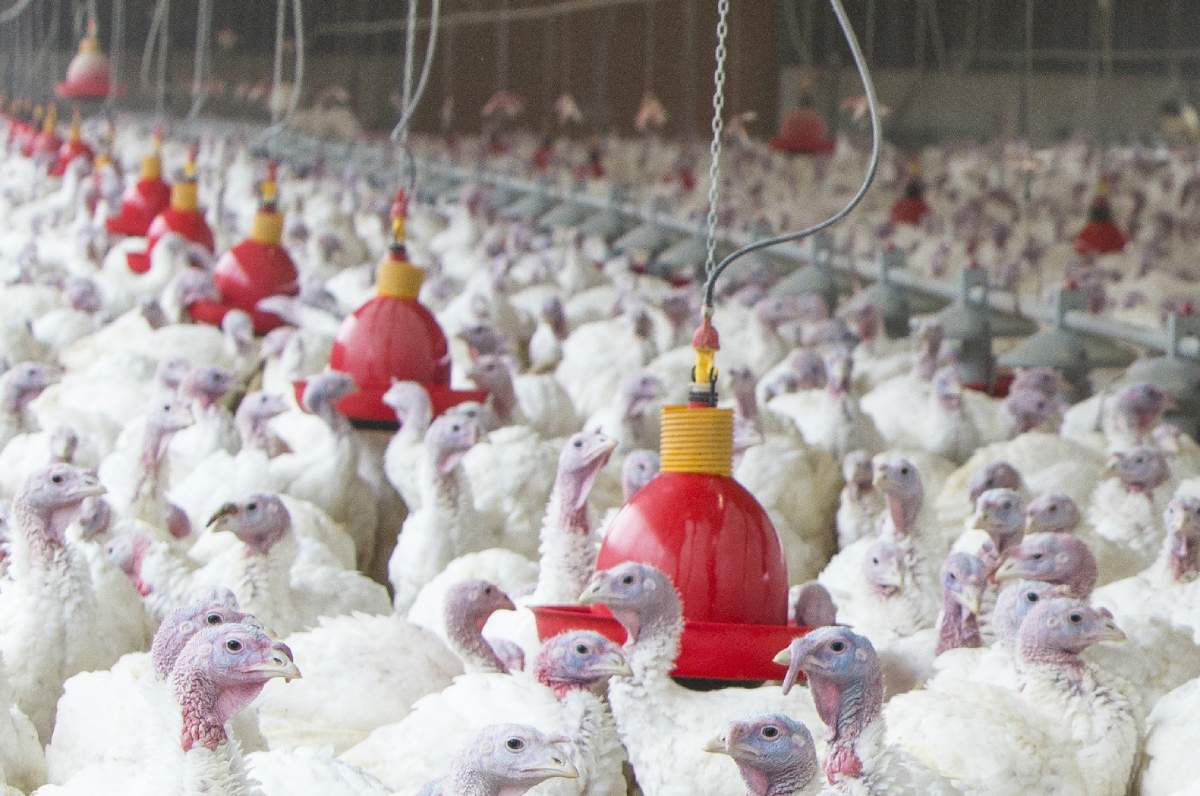
The modern breeder is capable of expressing excellent productivity; however, achieving this is contingent on providing the breeder with sufficient nutrients in both the rearing and laying period to support its genetic potential.
Body-weight management
Maintaining breeding birds to the breed body-weight standard at all ages is critical in order to achieve production targets. Flocks that are excessively over or under body-weight target are less likely to achieve their reproductive potential. However, maintaining flocks to target body-weight in rear can be challenging with some flocks experiencing significantly higher body-weight relative to the breed standard. Analysis of flock data shows growth can be as much as 20% to 25% in excess of the body-weight standard in the early rearing period. This reflects the continuous improvement in genetic progress for higher and more efficient growth at the commercial generation.
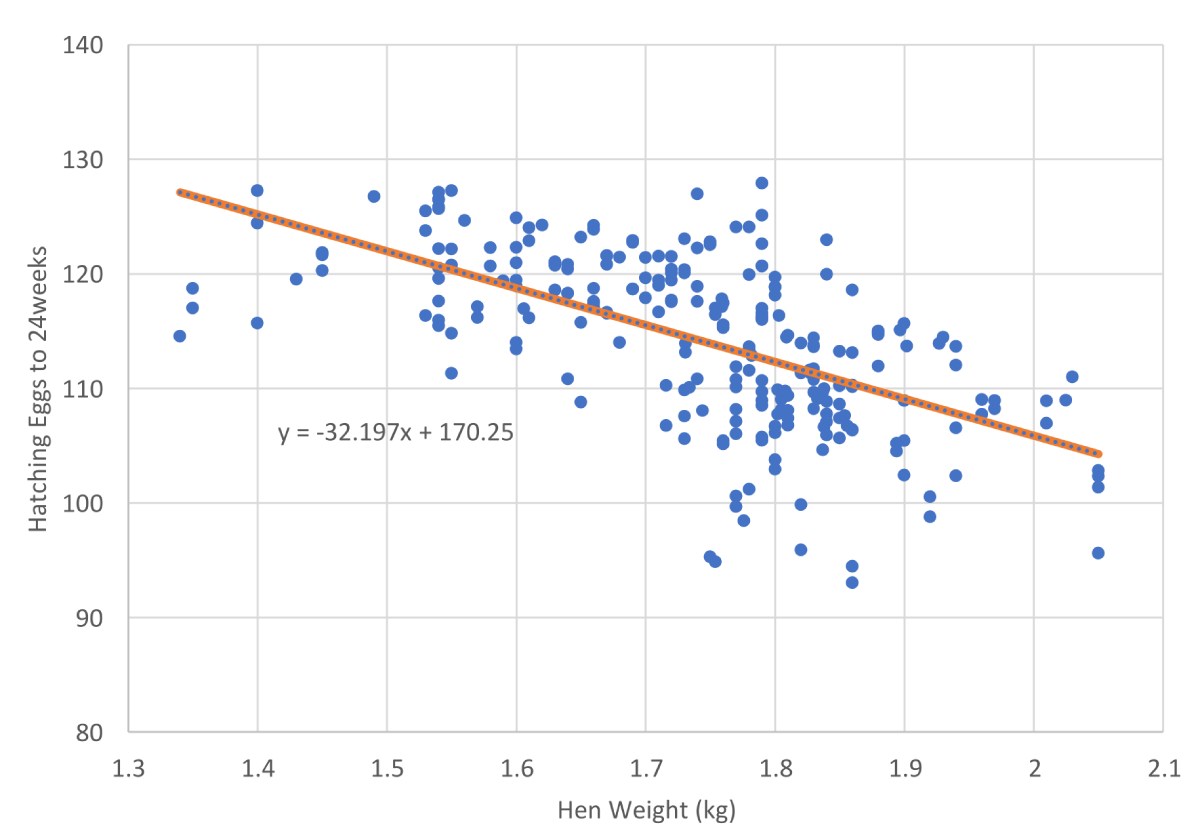
The impact of excessive growth in the early rearing period on reproductive function has been quantified (Ramsay, L., 2026); every 100 g of excessive growth at 6 weeks of age relates to 3.2 eggs lost in the production period (see Figure 1). This negative relationship between excessive growth and egg production has been identified across a range of ages, from 4 to 9 weeks of rear.
Attempts to control such excessive body-weight usually involve introduction of lower density diets at earlier ages. This aggressive approach is considered to have a negative impact on system development, more particularly reproductive organ development.
Avoiding excessive early growth through use of lower density starter diets is becoming more common with reductions in protein and amino acid density proving effective in controlling growth. Table 1 shows a typical starter diet nutrient specification level and an adjusted diet specification with a 3.5% reduction in protein and amino acid density.
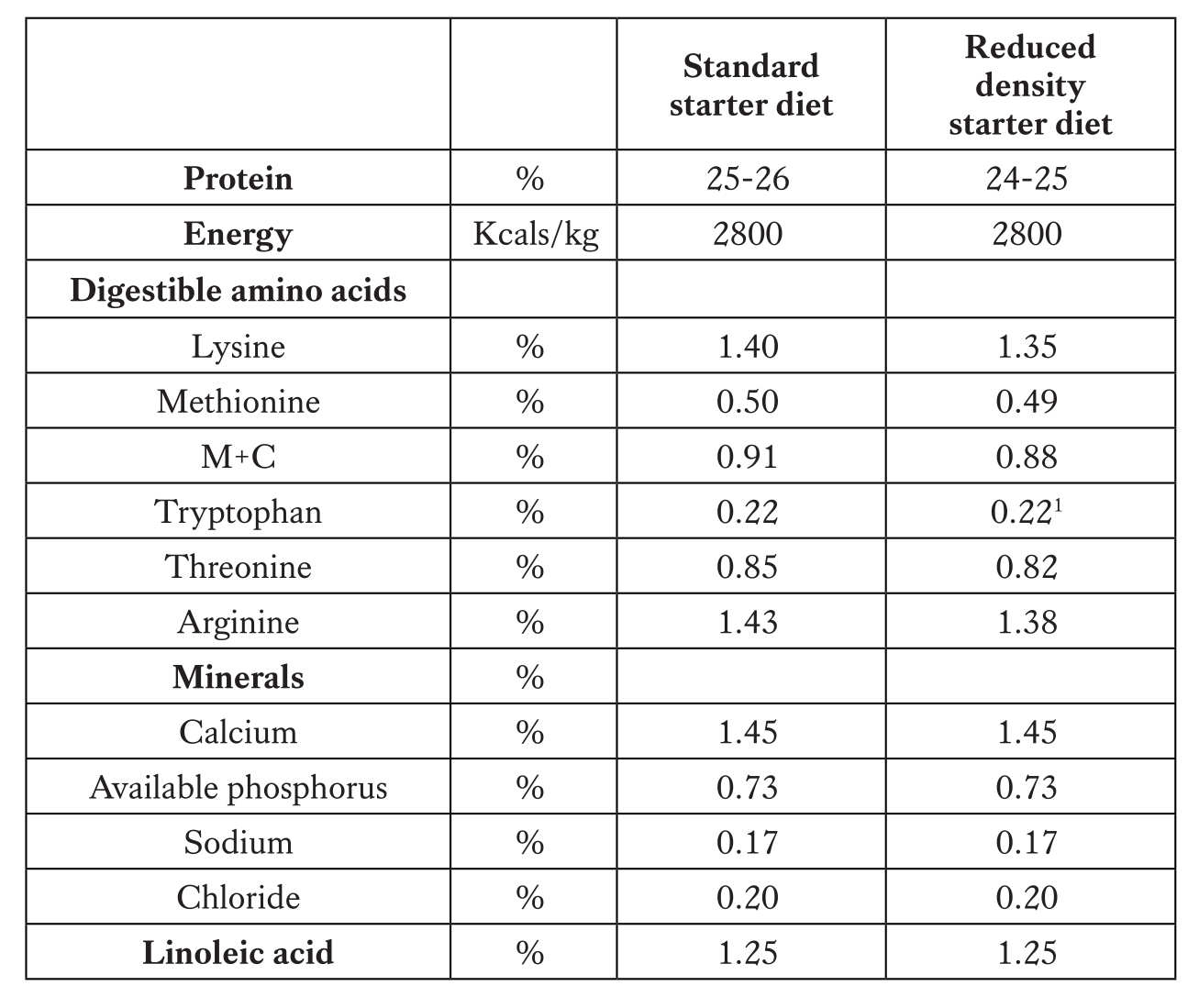
1 Higher tryptophan levels can support more positive behavioural attributes.
Use of mini-pellets in the first few weeks of rear tends to stimulate feed intake but can also be associated with excessive growth. High quality crumb-based starter diets, containing minimal levels of fine particles (<1mm), help to ensure consistent feed intake while maintaining stable growth.
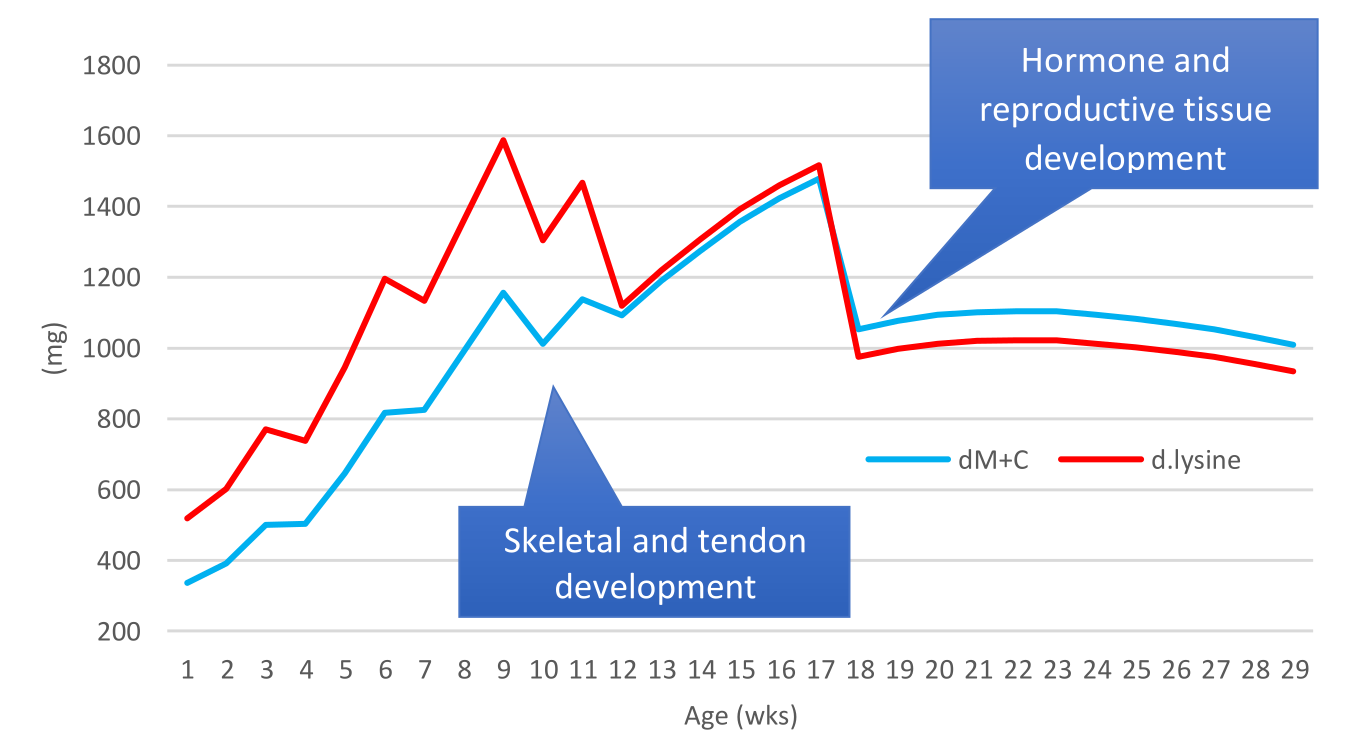
Transition from the starter crumb diet to the next stage diet (lower nutrient density) should be supported through use of a short-cut pellet. The objective is to maintain feed intake during the transition from one diet to the next; this will support consistent growth during this period. Dynamic changes in growth rate, either positive or negative, should be avoided as these periods need to be corrected through use of different density diets to force growth back to the target objectives. This results in aggressive changes in nutrient intake in rear during periods in which critical systems are developing. Figure 2 shows the impact of early introduction of low-density diets on essential amino acid intake during periods of development of the skeletal and reproductive system.
Farm managers should monitor and adapt the feeding programme based on the flock’s actual body-weight. Growth through the rest of the rearing period should be controlled through adjustment of the feeding programme. Heavy flocks should move to the next stage diet sooner, while lighter flocks should stay on the higher density diet for longer. The decision to move to the next stage diet should be based on a defined threshold, for example a 5% deviation relative to the breed target is typically used as a “cue” for a diet change. Table 2 shows an approach to managing body weights in rear.
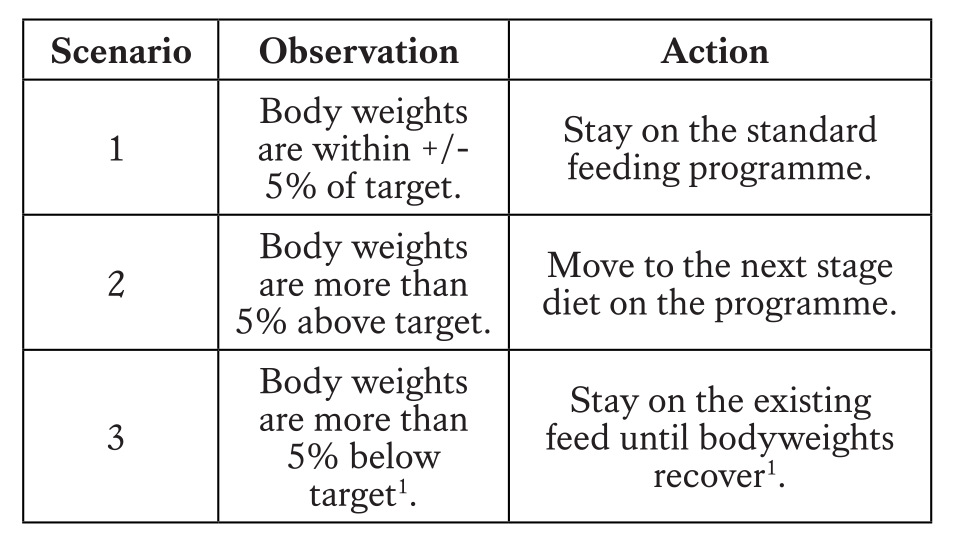
1 Never revert to a previous, higher density diet, such an approach can lead to uncontrolled growth and, potentially, complications in reintroduction of a coccidiostat.
Achieving consistent growth from 22 weeks of age through to light stimulation is critical as this is a period in which reproductive tissue matures and the bird becomes conditioned for the laying period. Consistent growth can be achieved through continued use of a low-density feed from 22 weeks of age onwards. Aim to achieve an average body-weight gain of 0.53 kg per bird per week. The emphasis in this period is on achieving consistent growth, if body-weights are above target at the beginning of this period, then continue to keep to target body-weight gain. Aiming to control excessive growth through introduction of a lower density diet at this age can be problematic. Providing a 9% to 11% low protein density diet is challenging as, typically, there are limited materials available in the feed mill that can provide the degree of nutrient dilution required. If such materials are available, there are sometimes issues with their consistency which may result in a more variable finished product. This emphasises the need to avoid excessive growth in earlier periods in order to avoid reliance on introduction of low-density diets later in rear.
Entering the laying period, the key focus is on supporting production and body condition as much as possible. Young breeding birds tend to be less efficient in transferring nutrients to the egg/embryo relative to older breeders. Use of elevated levels of vitamins can assist in supporting hatchability and poult viability of young breeders. Table 3 shows a comparison of a typical commercial breeder vitamin specification along with additional vitamins.
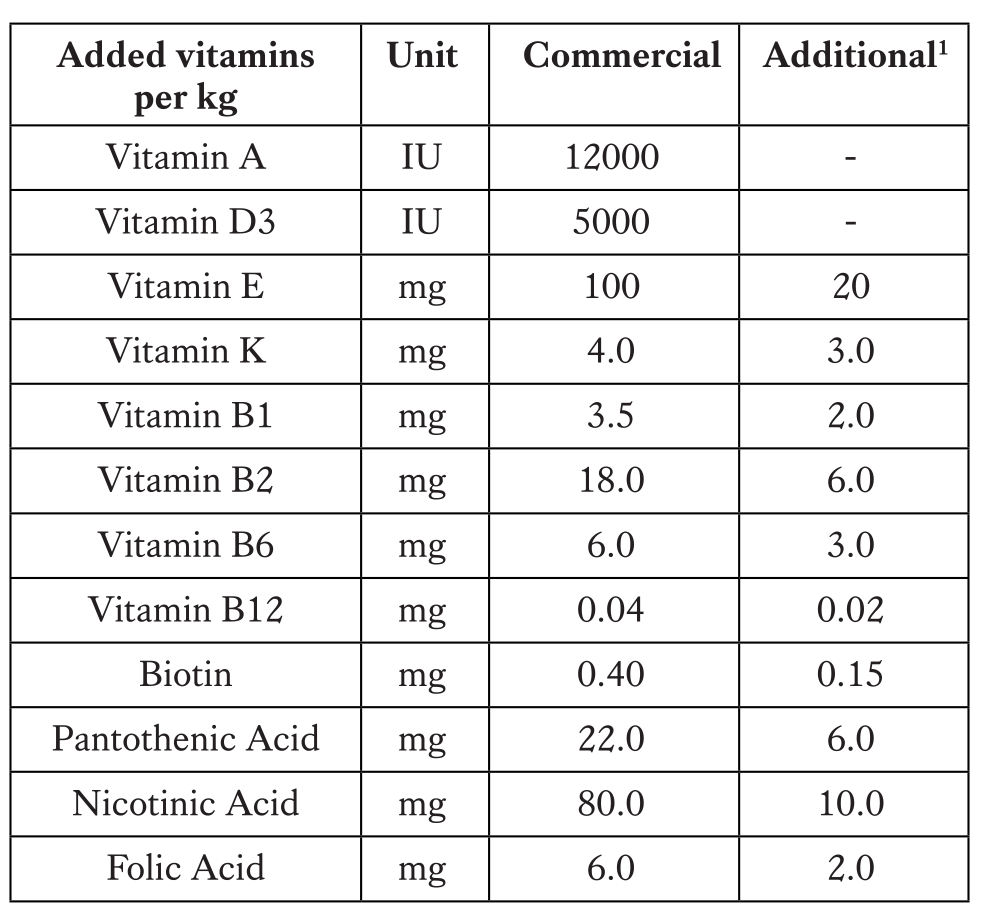
1,2 ensure compliance to regulatory levels of vitamins.
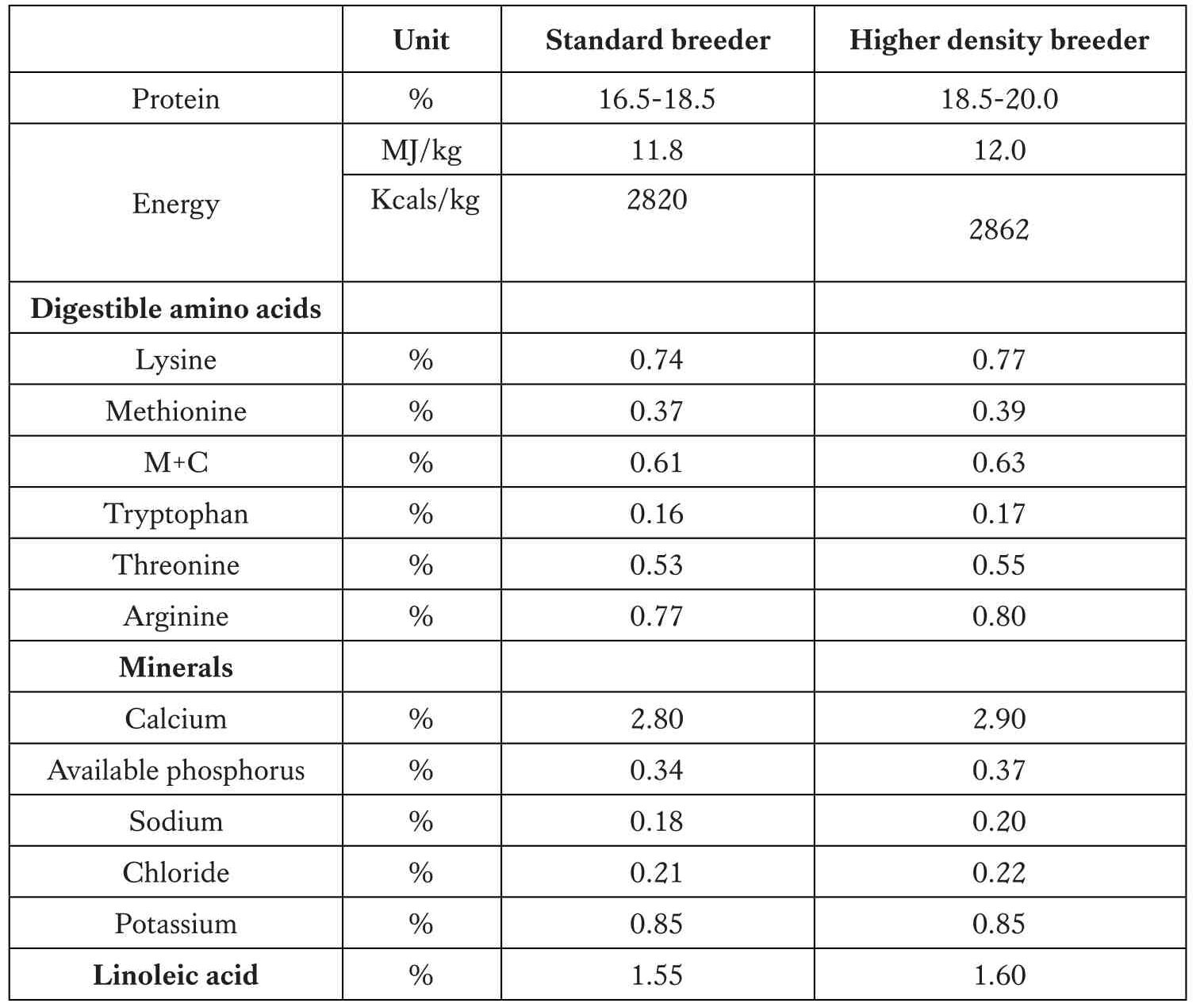
Many flocks are highly productive in this period, laying above the breed standards, such flocks may require additional support to maintain persistency in lay. An assessment of top-performing flocks in Europe suggests that higher performing flocks tend to feed higher density breeder diets; energy density averages 1.5% higher while amino acid density averages 4.0% higher relative to lower-performing flocks. Provision of a higher density breeder diet may be necessary to support the bird’s genetic potential; a typical specification is provided below.
Males continue to perform well when fed to achieve the target body-weight at selection and subsequently fed a quantitatively controlled diet in the breeding period. Incorporation of organic trace minerals in male diets is advisable given the benefits on fertility and overall health of males.
Summary
- The modern breeder is capable of achieving higher production than ever before; this genetic capability must be supported with a well-managed feeding programme in rear and adequate nutrient provision in the breeding period.
- Along with improvements in higher productive traits the breeder is also capable of expressing higher growth more efficiently in rear.
- Rearing diets and feeding programmes must be arranged to manage the propensity for more efficient growth in modern breeders.
- Anecdotal evidence shows higher nutrient density breeding diets are associated with top performing flocks.
- Use of organic trace minerals in breeder diets will contribute to reproductive performance and poult viability.
Source
Ramsay, L. (2026). Managing bodyweight in the modern female turkey breeder: Effects on growth and egg production. Proceedings of the 18th Turkey Science and Production Conference (pp. 91–96), March 10–12, 2026.
This article is provided by © Aviagen Turkeys
Apa Reaksi Anda?
 Suka
0
 Kurang Suka
0
 Setuju
0
 Tidak Setuju
0
 Bagus
0
 Berguna
0
 Hebat
0