





















Can increasing physical activity improve leg health in broiler chickens?
By Shengyu Zhou, PhD, and Marisa Erasmus, PhD, Purdue University
Leg health remains one of the most important welfare issues of commercial broiler production. Leg problems can cause pain, limit access to feed and water, and often result in culling. Growth rate influences both activity and walking ability (Riber and Wurtz, 2024), and nutrition, housing, and disease also contribute to leg health issues (Lisiecka et al., 2026). See Vol. 71 for an overview of lameness causes and gait assessment.
In this article, we focus primarily on functional leg health, particularly a bird’s ability to stand and walk normally. We distinguish these functional outcomes from bone characteristics and skin lesions, which provide related but different information. Disorders of the leg bones, joints, and tendons, such as tibial dyschondroplasia, are direct causes of poor leg health. Bone properties such as strength or thickness, and skin lesions such as footpad dermatitis, may be related to leg health, but they are not measures of leg health on their own.
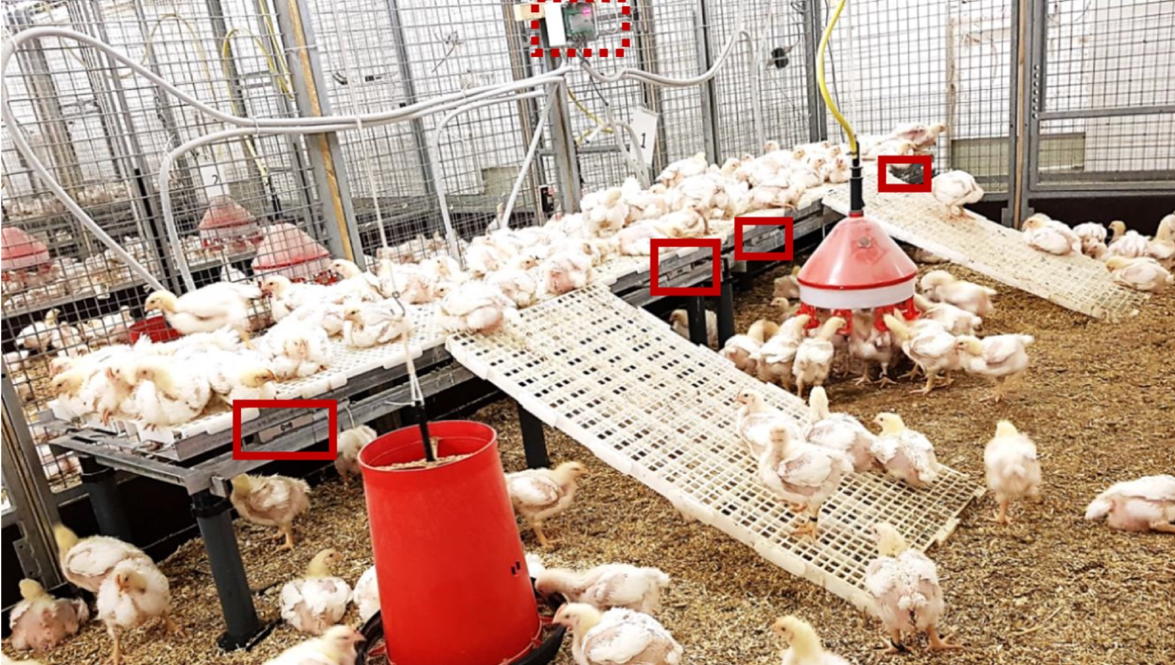
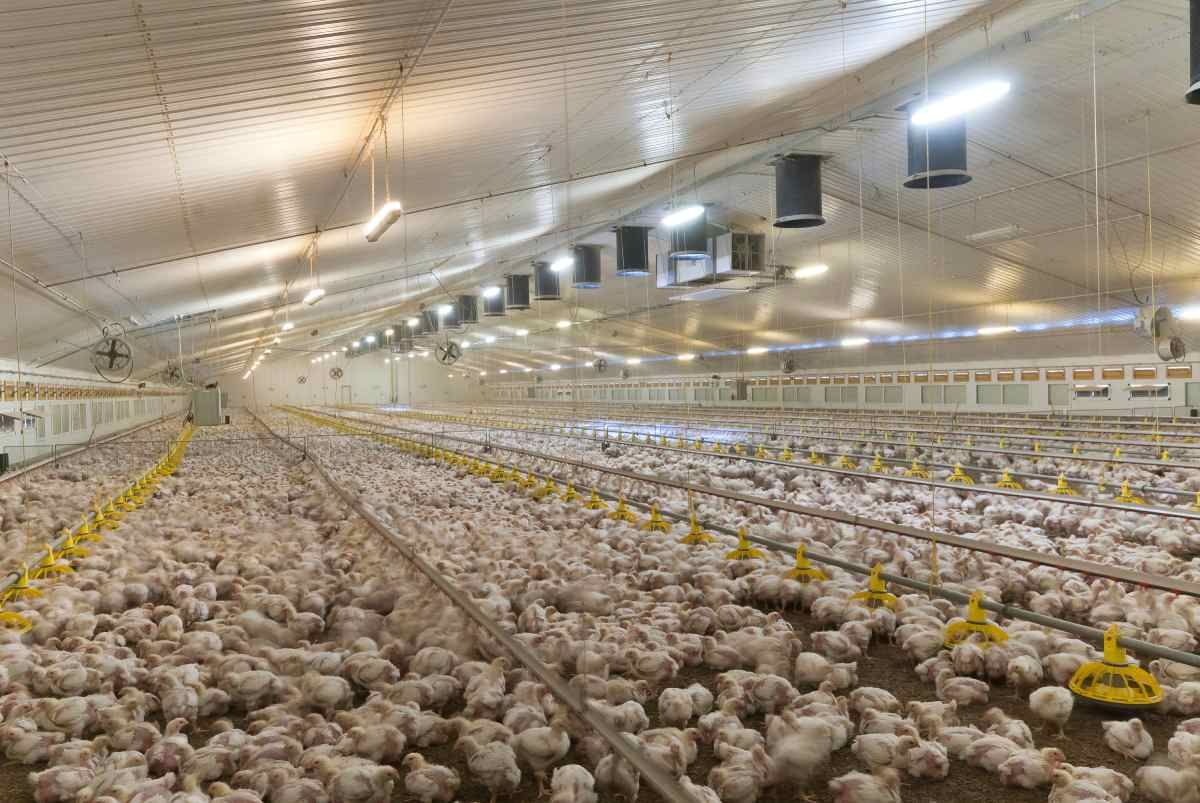
Figure: Broiler chickens using elevated platforms with ramps. Red boxes mark weighing equipment from the original study. Photo Credit: Schomburg et al. (2023) under a CC BY-NC-ND 4.0 license. Click photo to enlarge.
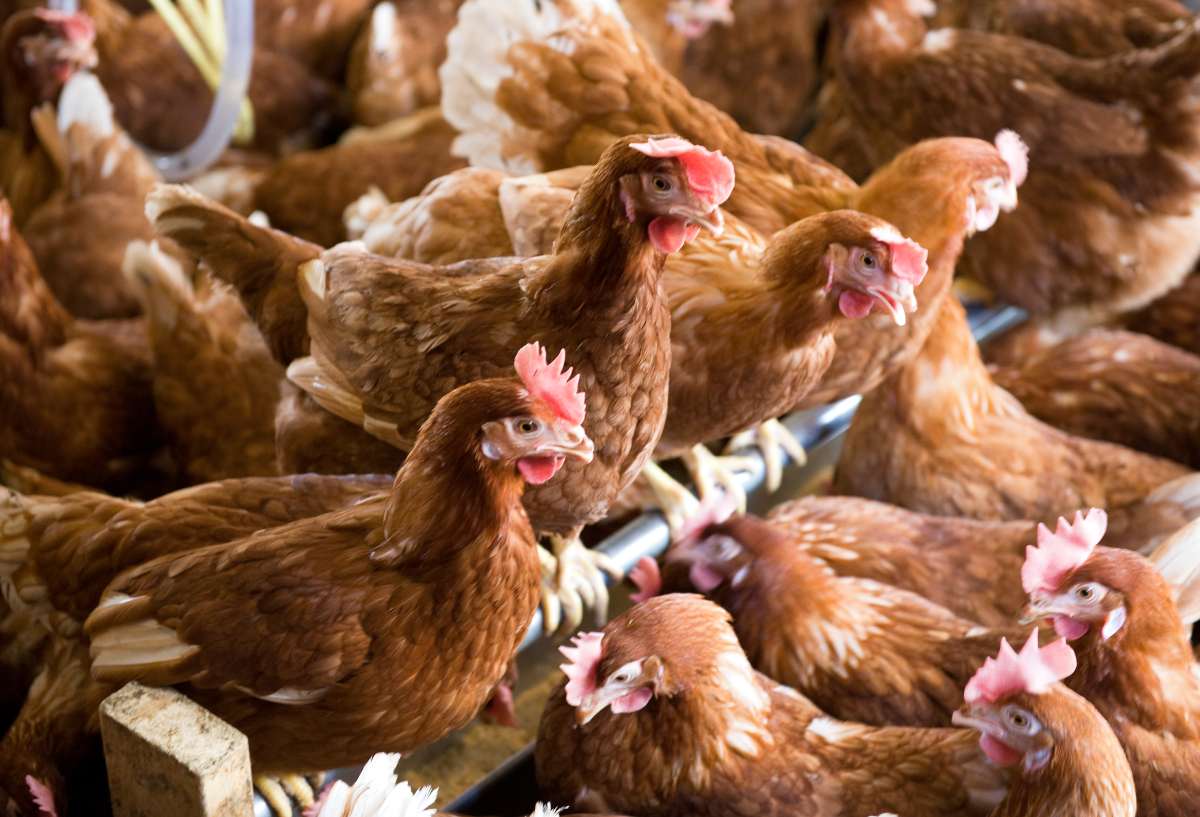
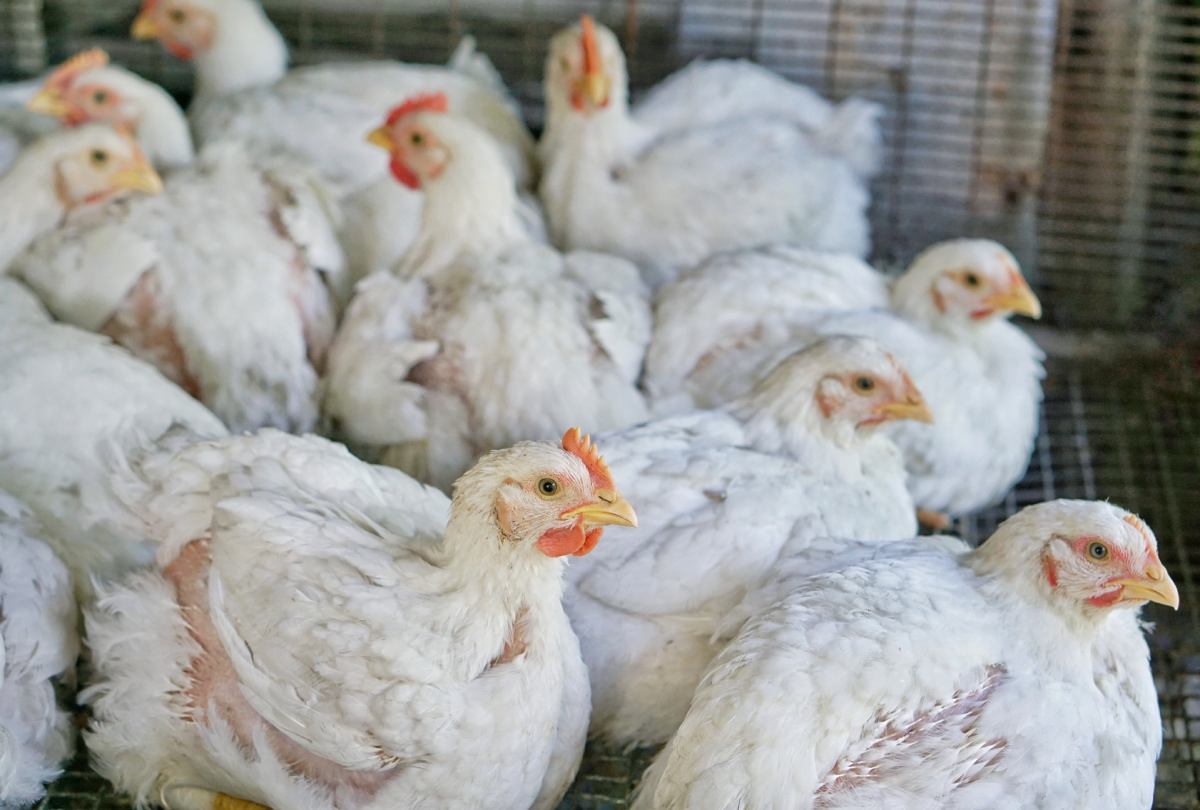
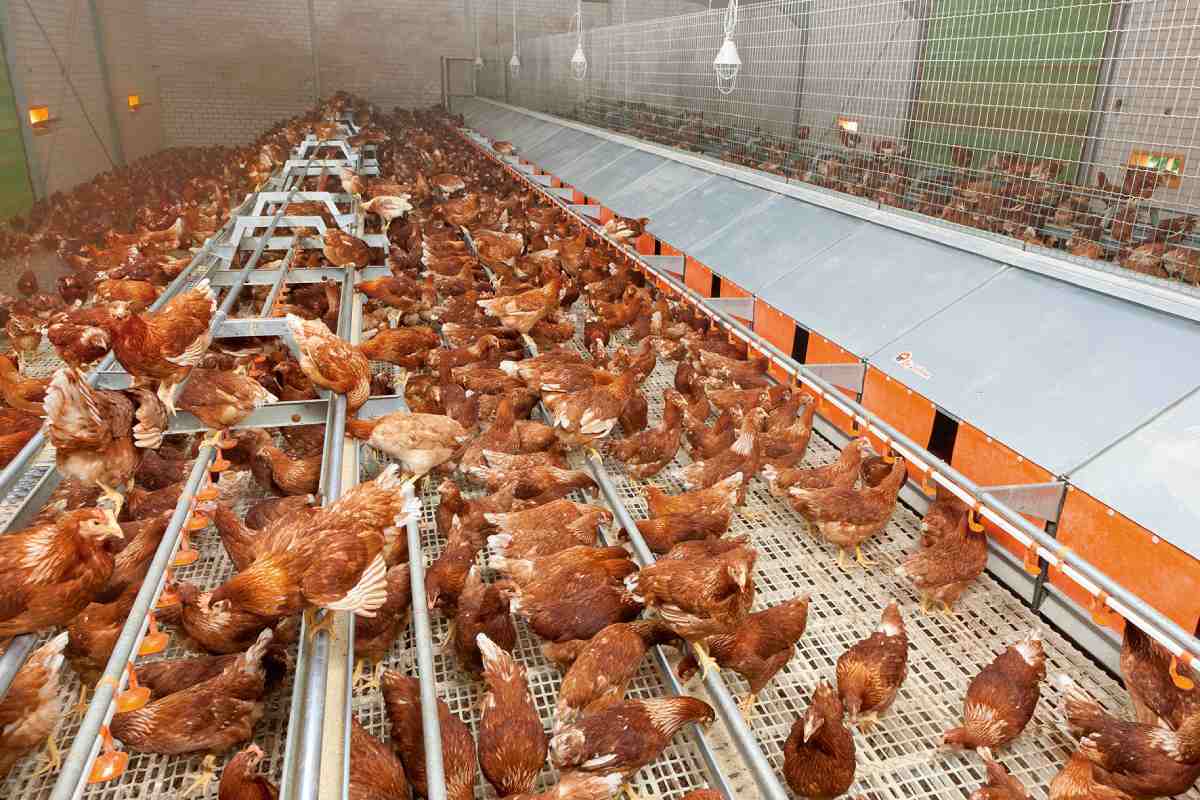
Conventional broiler chickens spend most of their day sitting, and inactivity increases as birds get older and heavier (Bokkers and Koene, 2003; Dawson et al., 2021). Leg problems reduce activity even further: birds with walking difficulty spend more time sitting, walk less, and visit the feeder less often, though they stay longer at each visit (Weeks et al., 2000). Lame birds move less, but does encouraging movement help prevent leg problems? If we encourage birds to move more, will their legs be healthier?
Researchers have tested this mainly through environmental enrichment and changes to housing layout. Enrichment has many benefits beyond its potential to improve walking ability (see Vol. 5 for a discussion of enrichment for broilers). However, interventions intended to increase activity have had mixed results for leg health. A small number of studies reported better gait or fewer leg disorders with raised platforms or greater distances between feeders and drinkers (Kaukonen et al., 2017; Reiter, 2004), but these results have not been consistently repeated (Tahamtani et al., 2020). Other enrichments increased activity, but gait did not clearly improve (de Jong et al., 2021). In one study, almost every bird scored as walking normally, so the gait test was unlikely to show an improvement (Meyer et al., 2020).
Why activity may matter for leg health
This section describes how activity might act on the legs; these are possible mechanisms rather than measures of leg health. Bones respond to the forces created by body weight and muscle contractions. As a bird moves, these changing forces load leg bones and can stimulate changes in bone structure, so exercise is one influence on bone development alongside nutrition and other management conditions (Naeem, 2025). In a small treadmill study, trained fast-growing birds had less angulation (bending deformity) of the upper tibia than untrained birds, and birds of one of the two fast-growing strains also had a thicker tibial cortex (the outer layer of the leg bone) (Reiter and Bessei, 2009). However, a thicker bone is not necessarily a stronger one, because resistance to breaking also depends on how well the bone is mineralized and how its internal structure is organized, not only on its size. Also, changes in bone conformation alone do not tell us directly whether a bird walks normally.
Movement is not the only influence on bone; the load the legs carry also matters. In a small experiment (12 birds per group), a harness-and-pulley device carried half of each chick’s body weight from 5 to 19 days of age. In the second week, these birds walked about 37% farther than unharnessed birds (338 vs. 246 m per 22 hours), yet their tibia stiffness (resistance to bending under load) did not differ, and their leg bones were lighter relative to their length (Rutten et al., 2002). The authors suggested that the extra walking may have strengthened bone while the reduced load may have weakened it, so the two effects may have offset each other.
Inactivity can also harm legs indirectly. Birds that sit for long periods have more contact with litter, which raises the risk of footpad dermatitis and hock burns, especially when litter is wet (see Vol. 9). Painful lesions can reduce activity as birds are less willing to walk. Footpad dermatitis and hock burns can contribute to gait problems (see Vol. 71), but they are skin lesions of the foot and hock rather than disorders of the leg bones, joints, or tendons.
Management strategies that encourage broilers to move
Raised platforms with ramps
On commercial farms (about 40 kg/m² at slaughter), broilers used raised platforms frequently but rarely used conventional wooden perches. Compared with control flocks without platforms, flocks with platforms had slightly better average gait scores, fewer moderate gait abnormalities, and less frequent and less severe tibial dyschondroplasia, a growth-plate cartilage disorder. Severe gait impairment and bone mineral content did not improve significantly (Kaukonen et al., 2017). Walking distance was not measured, so it is unclear whether the gait and tibial dyschondroplasia benefits came from extra exercise or from having an elevated resting area.
A later study, in experimental pens of about 500 birds at a similar stocking density (40 kg/m²), did not find the same improvement in gait: at 35 days, birds given 30 cm platforms with ramps had similar gait scores as control birds (Tahamtani et al., 2020). Several features of that study may explain this. Few birds were lame: at 35 days, only 3.6–7.7% of birds in each group had a gait score of 3 or higher (an obvious gait defect), which may have left little room for improvement. Birds that could not walk were also culled during daily checks. Finally, neither study showed that platforms made birds walk more: walking was not measured in the earlier study, and in the later study many birds used the platforms to rest (Bach et al., 2019).
Feeder and drinker layout
In one trial, moving feeders and drinkers 12 m apart instead of 2 m increased the time birds spent walking (3.9% vs. 1.3% of observations), improved gait scores (2.11 vs. 3.13 on a 1–5 scale), and reduced deaths and culls due to leg problems (1.3% vs. 3.2%), with no significant difference in final body weight or feed conversion (Reiter, 2004). Results from other studies have been less consistent. In two experiments in small pens at low stocking density, placing feed and water farther apart (up to 6.6 m in the first experiment and 8 m in the second experiment) had little effect on tibial breaking strength and did not change gait scores in the second experiment. However, birds with feed and water 8 m apart and no ramp between them stood about twice as long as birds in the other groups in a latency-to-lie test at day 49 (a measure of how long a bird can stay standing; see Vol. 71); distance had no effect on this test in the first experiment (Ruiz-Feria et al., 2014). In the same experiment, birds that had to cross a ramp (31 cm high) to move between feed and water ate about 5% less feed, were about 4% lighter at 42 days, and had lower tendon breaking strength than birds without a ramp, whereas distance alone did not reduce body weight or worsen feed conversion.
In a later study at a commercial stocking density (40 kg/m²), feed and water were placed 3.5 or 7 m apart instead of the usual 1.5 m. Birds with the 7 m distance were the most active of all groups at 6 days of age, and birds with the 3.5 m distance were more active than most other groups at 13 days, but neither distance increased walking (Bach et al., 2019), and gait at 35 days did not improve (Tahamtani et al., 2020). The 3.5 m distance was kept until the end of the study, but the 7 m distance was reduced to 1.5 m from 22 days of age because the growing birds filled most of the pen and the researchers wanted to make sure all birds could reach feed and water.
When enrichment did not clearly improve walking
In the studies below, either activity increased without a clear improvement in gait, or the enrichment did not increase walking in the first place.
- Combined enrichment. Platforms with ramps, barrier perches, a dustbathing area with live insect larvae, and a 3 m feed–water distance, all provided together, increased activity, but gait scores did not differ significantly (de Jong et al., 2021). Gait scores averaged about 2 on a 0–5 scale in all groups, a score that indicates a slight but unidentifiable defect that does not hinder movement (see 71), and footpad dermatitis and hock burns were nearly absent, leaving little room for improvement in these experimental pens.
- Same enrichments, bone measures. Using the same combination of enrichments, enriched birds foraged more but did not walk more and had greater tibial bone volume; bone strength, gait, and tibial dyschondroplasia were unchanged (Güz et al., 2021). The authors noted that the low stocking density (10 birds/m²) may explain why tibial dyschondroplasia did not differ.
- Moving laser. In a six-week study, moving red laser dots were projected onto broiler pen floors for four 4-minute periods each day. During these periods, laser-exposed birds walked about four times as far as controls on day 1 and 2.5 times as far in week 2. The increase in walking distance remained significant through week 5 but was no longer significant in week 6 (Meyer et al., 2020). Laser-exposed birds also spent more time at the feeder at several time points, while a companion study reported greater weight gain and improved feed conversion (Meyer et al., 2019). However, gait-score distributions did not differ significantly between treatments. Across weekly gait assessments of 70 birds over six weeks, 95.2% of scores were 0 (no visible lameness during a 1.5 m walk), leaving little room to detect further improvement. Moreover, gait scores were pooled across weeks, so final-week scores were not reported separately, making it difficult to assess whether laser enrichment affected walking ability near market age (Meyer et al., 2020).
- Ramps that require climbing. Birds that had to climb a ramp (a 31 cm high triangular prism) between feed and water had lower tendon breaking strength (Ruiz-Feria et al., 2014). Climbing up and down the steep (about 38°) slopes may put extra strain on the legs, which is a different demand from walking on a flat floor.
Growth type also shapes the response. Fast-growing strains use enrichment less than slower-growing strains (Dawson et al., 2021; de Jong et al., 2021).
These results should be interpreted with caution. Only a few studies directly measured how much birds walked, and in some studies, increased activity was accompanied by slower growth, which itself may improve gait (Bizeray et al., 2002b). Many studies used small pens at low stocking densities, assessed gait in relatively few birds, or found few leg problems, limiting their ability to detect improvements. On commercial farms, common enrichments such as perches, bales, and platforms produced little or no increase in walking (de Jong and Gunnink, 2019; Vasdal et al., 2019). In a larger study at a commercial stocking density, none of eight enrichment treatments improved gait (Tahamtani et al., 2020) or reduced leg disorders detected at post-mortem examination (Pedersen et al., 2020). However, only 3.6–7.7% of birds had obvious gait abnormalities at day 35, leaving limited room for improvement.
Taken together, these studies suggest that providing enrichment does not necessarily increase walking, and increased activity does not consistently lead to better gait. Greater feeder–drinker distance and sequential feeding were associated with improved gait, although the slower-growing breed used in the latter study makes it difficult to attribute the improvement to activity alone (Bizeray et al., 2002b; Reiter, 2004). In contrast, moving laser dots increased walking distance during stimulation periods without a significant improvement in gait, although nearly all gait assessments indicated normal walking (Meyer et al., 2020). Similarly, combined enrichment increased overall activity but did not significantly improve gait (de Jong et al., 2021). Whether increased walking itself improves leg health, and under what conditions, therefore remains uncertain.
The table below summarizes how different interventions affected broiler activity and leg health.
| Study | What was changed | More activity? | Results |
| Kaukonen et al. (2017) | Raised platforms with ramps | Not measured | Slightly better mean gait (2.2 vs. 2.3 on a 0–5 scale); fewer birds with moderate lameness (score 3); less tibial dyschondroplasia; no change in severe lameness or bone minerals |
| Reiter (2004); same trial also reported in Reiter and Bessei (2009) | Feeder and drinker 12 m vs. 2 m apart | Yes | Better gait (2.11 vs. 3.13 on a 1–5 scale); fewer leg-related deaths and culls |
| Ruiz-Feria et al. (2014) | Greater feed–water distance; ramp between feed and water | Not measured | Distance: longer latency to lie only in the 8 m, no-ramp group (one of two experiments); no change in gait or tibial strength. Ramp: lower tendon breaking strength, feed intake, and body weight |
| Bizeray et al. (2002b) | Sequential feeding (low- and normal-lysine diets alternated, days 2–12) | Yes, mainly days 7–8 (more walking and foraging) | Better gait, but birds were 4.6% lighter at slaughter; no change in leg deformities or bone ash |
| Reiter and Bessei (2009) | Treadmill training | Yes | Less upper-tibia angulation in both fast-growing strains; thicker tibial cortex in one; gait not assessed |
| de Jong et al. (2021) | Combination: platforms with ramps, barrier perches, dustbathing area, live larvae, 3 m feed–water distance (fast- and slower-growing strains) | Yes | No significant change in gait, footpad dermatitis, or hock burn; dermatitis nearly absent in all groups |
| Güz et al. (2021) | Same combination as de Jong et al. (2021) | More foraging, not more walking | Greater tibial bone volume; no change in bone strength, gait, or tibial dyschondroplasia |
| Meyer et al. (2020) | Moving laser | Yes, during laser periods (day 1 and weeks 2–5) | No difference in gait; about 95% of scores in both groups were 0 (no lameness) |
| Bizeray et al. (2002a) | Moving light, scattered wheat, or barriers (tested separately) | Not measured | Poorer gait with moving light and wheat; barriers widened tibia without better strength or gait |
| Bach et al. (2019); Tahamtani et al. (2020); Pedersen et al. (2020) | Eight treatments, each compared with a control at 40 kg/m²: two feed–water distances, two platform heights, straw bales, panels, roughage, or a lower stocking density (34 kg/m²) | Yes, for feed–water distance, mainly weeks 1–2 | No treatment improved gait vs. control (30 cm platform gait was poorer than lower-density gait); no change in leg disorders or bone strength; lower density tended to improve gait |
Summary of studies reviewed. Shading: improvement in gait, latency to lie, or leg-related deaths and culls. In Ruiz-Feria et al. (2014), the improvement was limited to one group, and in Bizeray et al. (2002b), it was accompanied by slower growth. Gait scoring scales differed among studies, so scores should be compared only within a study. Unless noted, studies used fast-growing strains, and leg health was assessed near slaughter age (about 4–7 weeks). Blue text indicates studies that reported a leg-health benefit (better gait scores or longer latency to lie).
Practical tips
- If you add platforms, ramps, or other structures, check regularly whether birds are still using them as they grow older and heavier. A device that attracted young birds may no longer increase walking by week 6 (Meyer et al., 2020).
- Keep feed and water easy for every bird to reach. Birds with walking difficulty already visit the feeder less often (Weeks et al., 2000). If you test a greater distance between feed and water, increase it gradually, watch birds that walk poorly, and avoid placing ramps or obstacles in their path: a ramp between feed and water reduced feed intake and body weight in one study (Ruiz-Feria et al., 2014).
- When you try a change meant to increase activity, judge it by gait scores and leg-related culls, check footpad and hock condition, and track production records (body weight, feed conversion, mortality, and culls), not just whether birds simply look more active.
- Encouraging activity does not guarantee better leg health. Good litter management, nutrition, and disease prevention remain essential. Keep litter dry: fix leaking drinkers, maintain good ventilation, and top-dress wet areas with an absorbent material such as pine shavings. Check the feet of a sample of birds regularly (for example, 50 birds in a large flock) to catch footpad problems early (see Vol. 9). Follow the breeder’s nutrition recommendations, and work with your veterinarian to identify and control infectious causes of lameness, such as bacterial chondronecrosis with osteomyelitis (see Vol. 71).
- Use a lighting program with a daily dark period and avoid high stocking densities. Across many studies, these measures improved gait or footpad and hock condition more consistently than perches, platforms, or other structures added to the house (Pedersen and Forkman, 2019). Part of this benefit may come from slower early growth rather than from more activity.
Summary
Can more activity improve leg health? Possibly, but the evidence is limited: gait improved in the studies where birds walked clearly more and walking problems were common enough to measure, but not where nearly all birds already walked normally. In addition, most enrichments used so far did not increase walking much, none reliably reduced leg disorders, and leg health is also shaped by growth rate, nutrition, litter, and disease. A few studies reported benefits from raised platforms or greater feeder–drinker distance, while other enrichments increased activity without clearly improving how well birds walked, and the benefit of platforms was not found in every study. The impact of enrichment may depend on the broiler’s ability to walk in the first place, and improvements may not be seen in broilers that already have a reasonably good walking ability. Further, the type of enrichment and the age at which the enrichment is provided can have different influences on broiler activity and leg health. In some studies, enrichment changed bone shape or size without improving bone strength or gait, so bone measures alone cannot show whether leg health has improved. Until more research is available, a practical goal is to provide accessible opportunities to move and to judge any change using measures of how well birds stand and walk (such as gait scores and leg-related culls) and production outcomes, rather than activity alone.
References
- Bach MH, Tahamtani FM, Pedersen IJ, Riber AB. Effects of environmental complexity on behaviour in fast-growing broiler chickens. Applied Animal Behaviour Science. 2019;219:104840. doi:10.1016/j.applanim.2019.104840
- Bizeray D, Estevez I, Leterrier C, Faure JM. Influence of increased environmental complexity on leg condition, performance, and level of fearfulness in broilers. Poultry Science. 2002a;81(6):767-773. doi:10.1093/ps/81.6.767
- Bizeray D, Leterrier C, Constantin P, Picard M, Faure JM. Sequential feeding can increase activity and improve gait score in meat-type chickens. Poultry Science. 2002b;81(12):1798-1806. doi:10.1093/ps/81.12.1798
- Bokkers EAM, Koene P. Behaviour of fast- and slow growing broilers to 12 weeks of age and the physical consequences. Applied Animal Behaviour Science. 2003;81(1):59-72. doi:10.1016/S0168-1591(02)00251-4
- Dawson LC, Widowski TM, Liu Z, Edwards AM, Torrey S. In pursuit of a better broiler: a comparison of the inactivity, behavior, and enrichment use of fast- and slower growing broiler chickens. Poultry Science. 2021;100(12):101451. doi:10.1016/j.psj.2021.101451
- de Jong I, Gunnink H. Effects of a commercial broiler enrichment programme with or without natural light on behaviour and other welfare indicators. Animal. 2019;13(2):384-391. doi:10.1017/S1751731118001805
- de Jong IC, Blaauw XE, van der Eijk JA, et al. Providing environmental enrichments affects activity and performance, but not leg health in fast- and slower-growing broiler chickens. Applied Animal Behaviour Science. 2021;241:105375. doi:10.1016/j.applanim.2021.105375
- Güz BC, de Jong IC, Da Silva CS, et al. Effects of pen enrichment on leg health of fast and slower-growing broiler chickens. PLoS One. 2021;16(12):e0254462. doi:10.1371/journal.pone.0254462
- Kaukonen E, Norring M, Valros A. Perches and elevated platforms in commercial broiler farms: use and effect on walking ability, incidence of tibial dyschondroplasia and bone mineral content. Animal. 2017;11(5):864-871. doi:10.1017/S1751731116002160
- Lisiecka E, Kosciow W, Lukasiewicz Mierzejewska M. Locomotor health in modern broiler chickens: risk factors, major disorders, assessment methods, and implications for welfare and production efficiency. Animals (Basel). 2026;16(19):3051. doi:10.3390/ani16193051
- Meyer MM, Johnson AK, Bobeck EA. A novel environmental enrichment device improved broiler performance without sacrificing bird physiological or environmental quality measures. Poultry Science. 2019;98(11):5247-5256. doi:10.3382/ps/pez417
- Meyer MM, Johnson AK, Bobeck EA. A novel environmental enrichment device increased physical activity and walking distance in broilers. Poultry Science. 2020;99(1):48-60. doi:10.3382/ps/pez581
- Naeem M. Improving bone health in broiler chickens: integrating population density, housing, and nutritional strategies for enhanced welfare and productivity. Poultry Science and Management. 2025;2(1):14. doi:10.1186/s44364-025-00017-y
- Pedersen IJ, Forkman B. Improving leg health in broiler chickens: a systematic review of the effect of environmental enrichment. Animal Welfare. 2019;28(2):215-230. doi:10.7120/09627286.28.2.215
- Pedersen IJ, Tahamtani FM, Forkman B, Young JF, Poulsen HD, Riber AB. Effects of environmental enrichment on health and bone characteristics of fast growing broiler chickens. Poultry Science. 2020;99(4):1946-1955. doi:10.1016/j.psj.2019.11.061
- Reiter K. Effect of distance between feeder and drinker on exercise and leg disorders in broilers. European Poultry Science. 2004;68(3):98-105. doi:10.1016/S0003-9098(25)00029-3
- Reiter K, Bessei W. Effect of locomotor activity on leg disorder in fattening chicken. Berliner und Munchener Tierarztliche Wochenschrift. 2009;122(7-8):264-270. doi:10.2376/0005-9366-122-264
- Riber AB, Wurtz KE. Impact of growth rate on the welfare of broilers. Animals (Basel). 2024;14(22):3330. doi:10.3390/ani14223330
- Ruiz-Feria CA, Arroyo-Villegas JJ, Pro-Martinez A, et al. Effects of distance and barriers between resources on bone and tendon strength and productive performance of broiler chickens. Poultry Science. 2014;93(7):1608-1617. doi:10.3382/ps.2013-03421
- Rutten M, Leterrier C, Constantin P, Reiter K, Bessei W. Bone development and activity in chickens in response to reduced weight-load on legs. Animal Research. 2002;51(4):327-336. doi:10.1051/animres:2002027
- Schomburg H, Malchow J, Sanders O, Knöll J, Schrader L. Elevated platforms with integrated weighing beams allow automatic monitoring of usage and activity in broiler chickens. Smart Agricultural Technology. 2023;3:100095. doi:10.1016/j.atech.2022.100095
- Tahamtani FM, Pedersen IJ, Riber AB. Effects of environmental complexity on welfare indicators of fast-growing broiler chickens. Poultry Science. 2020;99(1):21-29. doi:10.3382/ps/pez510
- Vasdal G, Vas J, Newberry RC, Moe RO. Effects of environmental enrichment on activity and lameness in commercial broiler production. Journal of Applied Animal Welfare Science. 2019;22(2):197-205. doi:10.1080/10888705.2018.1456339
- Weeks CA, Danbury TD, Davies HC, Hunt P, Kestin SC. The behaviour of broiler chickens and its modification by lameness. Applied Animal Behaviour Science. 2000;67(1-2):111-125. doi:10.1016/S0168-1591(99)00102-1
To view all issues of Poultry Press, click here.
Editor’s note: Content on Modern Poultry’s Industry Insights pages is provided and/or commissioned by our sponsors, who assume full responsibility for its accuracy and compliance.
The post Can increasing physical activity improve leg health in broiler chickens? appeared first on Modern Poultry.
Apa Reaksi Anda?
 Suka
0
 Kurang Suka
0
 Setuju
0
 Tidak Setuju
0
 Bagus
0
 Berguna
0
 Hebat
0