






































Tips to Safely Walk Your Dog at Night
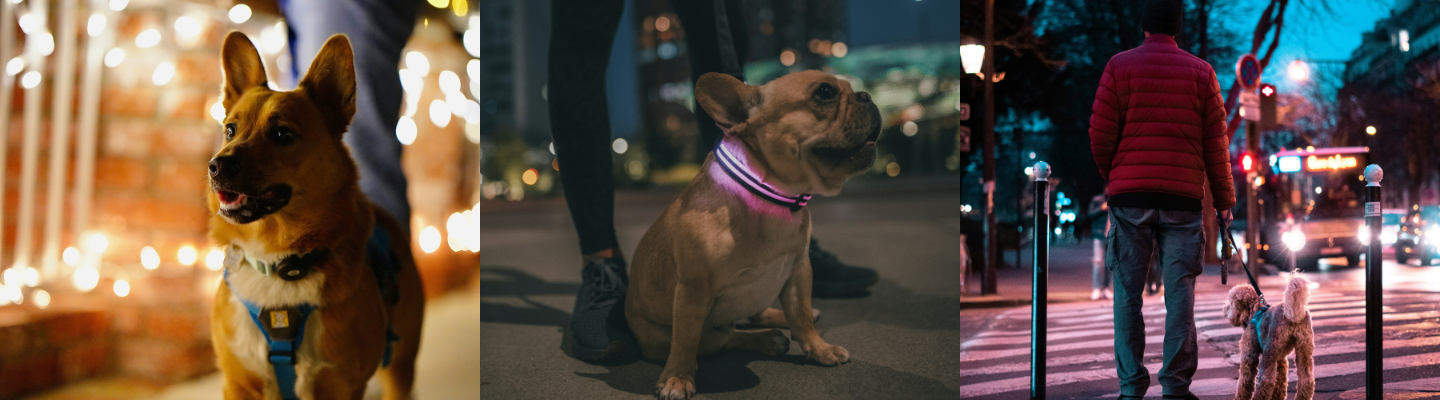
Days are getting shorter, and your dog’s walking schedule may start to look different, especially if you typically walk them in the evening. Extra preparation can help you and your pup stay safe and visible, making nighttime walks an enjoyable part of your routine.
In this post, we provide tips to safely walk your dog at night, which include:
- Add reflective gear to your dog for greater visibility
- Know which local wildlife you may encounter in your area
- Bring a flashlight, headlamp, or other light source
- Choose well-lit walking routes
- Avoid very thin or retractable dog leashes at night
- Pay attention to your dog’s body language on your walk
- Bring your dog to doggie daycare to reduce long nighttime walks
ADD REFLECTIVE GEAR TO YOUR DOG FOR GREATER VISIBILITY AT NIGHT
Staying visible is one of the most important considerations when walking your dog after dark. Drivers and cyclists may have a harder time seeing you and your pup on your walk, especially if parts of your routine have dim or limited lighting.
Some reflective options can include:
- Reflective leash or harness
- A light-up collar or clip-on light
- Reflective clothing for you and your pup
Expert tip: Reusing your dog’s reflective gear from previous years? Before heading out for a nighttime walk, check for fading, dirt, fraying, or other wear and tear that could reduce its effectiveness. Test reflective materials under a light source and replace any gear that no longer reflects clearly or is damaged, so your pup remains as visible as possible after dark.
KNOW WHICH LOCAL WILDLIFE YOU MAY ENCOUNTER AFTER DARK IN YOUR AREA
Darkness can make it more difficult to spot wildlife until they are relatively close. Depending on where you live, you could encounter raccoons, skunks, stray cats, deer, garter snakes, porcupines, or coyotes during an evening walk. Research any wildlife alerts that may be in your area and any common wildlife native to your area that may be more active during evening and nighttime hours.
Keep your dog close and give other animals plenty of space if you see them, especially if you have a reactive pup or one that gets overly excited when seeing other animals.
BRING ILLUMINATING ITEMS ON YOUR NIGHTTIME WALK
A leash and waste bags are likely your go-to on walks with your dog, but as it gets darker earlier, you do not want to be stuck outside in the dark. Bringing items like a flashlight or headlamp can help, since you can use them to illuminate the path ahead and safely clean up after your pup.
AVOID VERY THIN OR RETRACTABLE DOG LEASHES AT NIGHT
The type of leash you use can make a difference when walking your dog after dark. Very thin leash cords can be difficult to see, and a longer retractable leash can cause more distance between you and your pup, which may make it harder to bring them close to you when reacting to a potential hazard.
For nighttime walks, consider using a sturdy standard leash with reflective tape that keeps your dog within a comfortable distance and gives you better control when you need it.
CHOOSE A SAFE, WELL-LIT DOG WALKING ROUTINE
While summer may be a great time to explore new walking routes, fall and winter evenings are better suited for familiar, well-lit paths. As it gets dark more quickly, well-lit sidewalks and residential streets make it easier to see where you’re going and notice potential hazards faster, such as fallen branches, holes, and other obstacles.
PAY ATTENTION TO YOUR DOG’S BODY LANGUAGE ON YOUR NIGHTTIME WALK
Did you know dogs can see better in low light than humans? Their eyes have special features that help them make the most of limited light, including more rod cells in their retinas that are sensitive to light and motion, larger pupils that let in more light, and a reflective layer behind the retina called the tapetum lucidum. Dogs can often detect movement and activity in low light before we do. Your pup may notice another animal, person, or sound before you see it, so it is important to pay attention to their body language during nighttime walks.
If your dog suddenly becomes alert, stops, or stiffens, take a moment to see what caught their attention and consider changing your route to avoid any unwanted encounters.
BRING YOUR DOG TO DOGGIE DAYCARE TO REDUCE LONG NIGHTTIME WALKS
Shorter days can make it harder to fit enough exercise, enrichment, and socialization into your dog’s routine while there is still plenty of daylight. If you would rather avoid long walks after dark and stick to a quick nighttime potty break, doggie daycare can give your pup a chance to stay active, learn, and socialize with friends during the day so they come home relaxed and happily played out.
At Dogtopia, pups enjoy supervised activities designed to keep them moving and mentally engaged like agility-focused exercises and brain games. Regular dog daycare visits can contribute to a greater wellness routine, giving you more flexibility in the evening.
If you are ready to make dog daycare part of your pup’s fall and winter routine, reach out to your local Dogtopia today to book a visit.
The post Tips to Safely Walk Your Dog at Night appeared first on Dogtopia.
Apa Reaksi Anda?
 Suka
0
Suka
0
 Kurang Suka
0
Kurang Suka
0
 Setuju
0
Setuju
0
 Tidak Setuju
0
Tidak Setuju
0
 Bagus
0
Bagus
0
 Berguna
0
Berguna
0
 Hebat
0
Hebat
0