






























Visible-light-responsive photocatalytic reactor helps mitigate ammonia, control odor in broiler housing
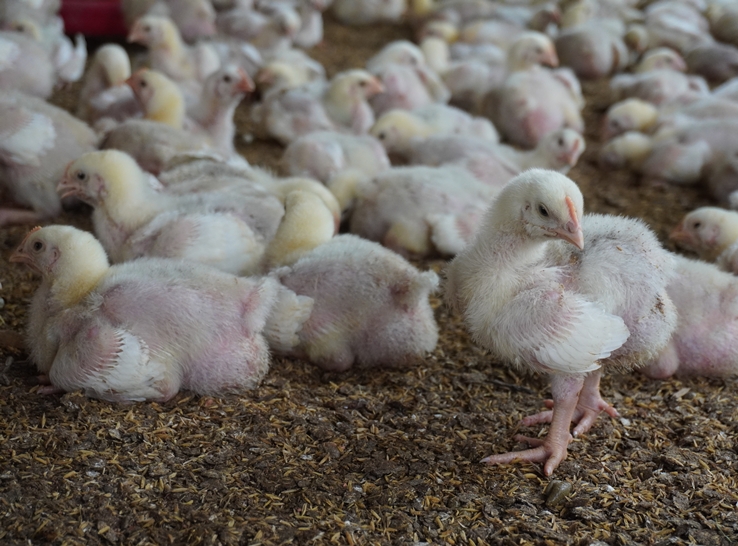
Ammonia and odor emissions from poultry production facilities continue to pose operational, environmental and regulatory challenges. Elevated ammonia levels negatively impact bird respiratory health, worker safety, equipment longevity and community relations.
Conventional mitigation strategies, such as ventilation management, biofiltration, chemical neutralization and odor masking, can reduce emissions. However, they often entail high costs, performance variability under changing environmental conditions, limited material lifespan and potential secondary-waste generation.
“These limitations highlight the need for durable, cost-effective and sustainable technologies capable of maintaining consistent ammonia control under commercial production conditions,” said Mohammadamin Ezazi, PhD, Georgia Southern University.
Study design
The objective of this project, led by Ezazi, was to develop and validate a visible-light-responsive photocatalytic reactor that integrates adsorption and catalytic degradation mechanisms to mitigate ammonia in poultry housing.
The system combines activated carbon as a high-surface-area adsorbent with silver phosphate, a visible-light-active photocatalyst that promotes oxidative degradation reactions under LED illumination. Activated carbon powder was produced from carbonized chicken feathers through controlled thermal treatment and activation, providing a value-added use for poultry processing byproducts.
The researchers also evaluated commercial activated carbon powder for comparison and characterized commercial silver phosphate powder to confirm visible-light photocatalytic activity.
Ezazi and his team conducted laboratory optimization studies in a custom chamber to determine the most effective activated carbon-to-silver phosphate ratio and light intensity. In this setup, a 40:60 (activated carbon:silver phosphate) powder ratio was identified as optimal, balancing rapid ammonia adsorption with sustained photocatalytic degradation. This synergistic approach addressed the saturation limitations commonly observed in adsorption-only systems by enabling continuous oxidative breakdown of captured ammonia under visible-light irradiation.
A prototype reactor was constructed using a 3D-printed frame with acrylic panels coated with the optimized powder formulation. Integrated LED arrays provided controlled visible-light activation, and inlet and outlet fans maintained continuous airflow through the chamber.
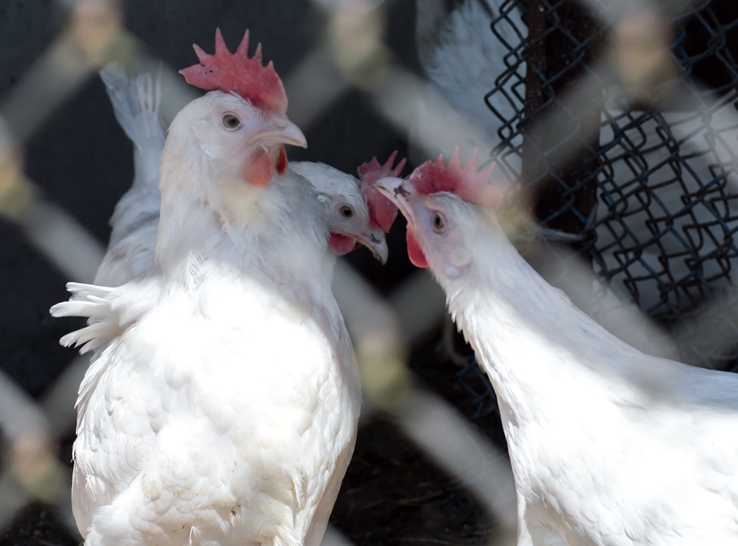
The system was tested in a large environmental chamber installed inside a full-scale commercial broiler house with birds present.
Key takeaways
Under real-world conditions in the broiler house, including variable temperature, humidity and organic load, the reactor achieved measurable and consistent reductions in ammonia concentration, demonstrating operational feasibility in commercial settings.
“Results indicate that coupling adsorption with visible-light-driven photocatalysis provides an effective and potentially longer-lasting ammonia mitigation strategy,” Ezazi said.
Short-term benefits include improved indoor air quality, enhanced bird welfare, reduced worker exposure and decreased odor-related pest pressure. Long-term advantages may include lower maaintenance costs, improved regulatory compliance, fewer community odor concerns and reduced dependence on chemical treatments. The use of poultry feathers as a precursor material further supports circular-economy principles and sustainable waste management within the industry.
“Overall, this project demonstrates the technical feasibility and practical applicability of a visible-light photocatalytic reactor to mitigate ammonia in commercial poultry facilities, providing a solid foundation for future scale-up and industry implementation,” Ezazi concluded.
The research was funded by USPOULTRY and the USPOULTRY Foundation. Click here to view the industry summary.
Editor’s note: Content on Modern Poultry’s Industry Insights pages is provided and/or commissioned by our sponsors, who assume full responsibility for its accuracy and compliance.
The post Visible-light-responsive photocatalytic reactor helps mitigate ammonia, control odor in broiler housing appeared first on Modern Poultry.
Apa Reaksi Anda?
 Suka
0
Suka
0
 Kurang Suka
0
Kurang Suka
0
 Setuju
0
Setuju
0
 Tidak Setuju
0
Tidak Setuju
0
 Bagus
0
Bagus
0
 Berguna
0
Berguna
0
 Hebat
0
Hebat
0