





























































 Large.jpeg?format=1500w#)








The 10 Best Exercises to Build Bigger and Stronger Lats


The best lats exercises combine at least one vertical pull with one horizontal row, then add variations that fit your equipment, experience, and ability to control each rep. That mix trains the lats through their main pulling roles without pretending one movement is best for everyone.
The latissimus dorsi, usually called the lats, spans much of the back and helps move the upper arm toward and behind the body. This guide compares ten practical latissimus dorsi exercises, shows how to perform and scale them, and gives you two simple ways to build a lats workout.
Key Takeaways: Choosing and Programming Lats Exercises
-
A useful lats workout pairs a vertical pull, such as a pull-up or lat pull-down, with a horizontal row, then adds an accessory only if it serves a clear purpose.
-
Choose exercises you can perform through a controlled range without swinging, shrugging, or changing torso position to finish each rep.
-
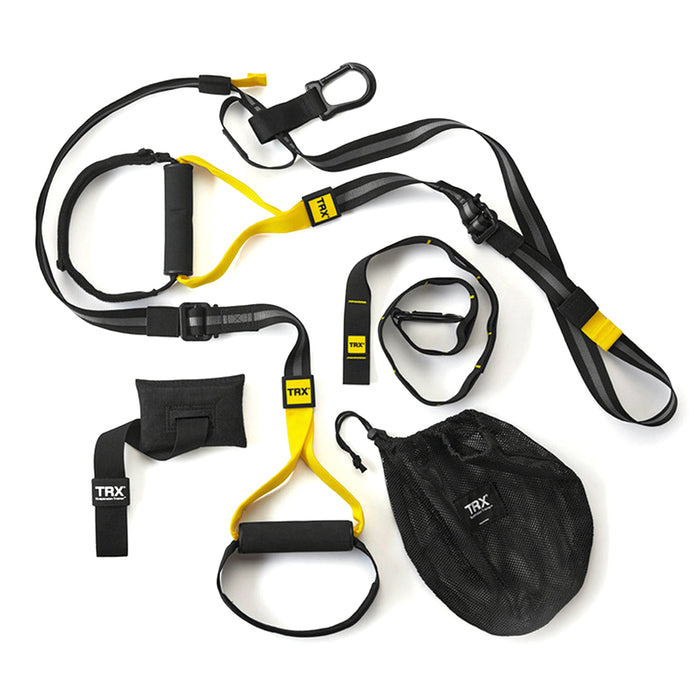
TRX Training’s Suspension Trainers let you increase or decrease resistance by changing your angle, so TRX Rows and Swimmer Pulls can become easier or harder without changing machines when you have a secure anchor and enough clear space.
-
Acute muscle-activation findings can help compare exercise setups, but they do not prove which movement will produce the most long-term strength or muscle growth for you.
These are the top lats exercises that you can add to your workout split. You can find other movements like the ones above at the TRX App: 
What Are the Lats?
The lats are broad back muscles that run from the lower spine, pelvis, and lower ribs to the upper arm bone. They help produce shoulder extension, adduction, and internal rotation, which is why pulling the arm down or back appears across rows, pull-ups, and pulldowns.
The lats work with other back, shoulder, and arm muscles rather than acting alone. Your grip, elbow path, torso position, and equipment change how a movement feels, so use anatomy as a selection guide instead of chasing a single "perfect" lats exercise.
What Do Lats Do?
The lats pull the upper arm toward the body and behind it while contributing to control around the shoulder and trunk. Their main roles in training include:
-
Shoulder adduction: bringing the upper arm toward the side of the body, as in a pull-up or lat pull-down.
-
Shoulder extension: moving the upper arm down and behind the torso, as in a row or straight-arm pull.
-
Internal rotation: turning the upper arm inward, one of several actions the lats can assist.
-
Pulling control: working with the biceps, trapezius, rhomboids, rear deltoids, and trunk muscles to manage a loaded pull.
The lats can participate in forced breathing under high inspiratory load. A small study of 11 healthy adults measured this accessory activity, but it does not show that breathing drills build the lats like resistance training does.
If stiffness elsewhere in the posterior chain affects your setup, lower back stretching exercises may be a separate mobility tool. Stretching is not a substitute for choosing a manageable load or getting qualified help when a movement causes pain.
Benefits of Exercising Lats
Training the lats strengthens pulling patterns and helps you build a more complete back program. The practical benefits depend on the movements you choose and how consistently you progress them.
-
Stronger pulling: Pull-ups, pulldowns, and rows let you train force production through different angles. A balanced plan can exercise your entire upper body without treating every back exercise as interchangeable.
-
More complete back training: Direct lats work can sit alongside upper-back and rear-shoulder work in a well-rounded back workout.
-
Physique goals: Developing the lats can contribute to a wider-looking upper back. Results depend on training history, nutrition, genetics, and total program design.
-
Sport-specific practice: Pulling strength and control can matter in activities such as swimming and rock climbing, but exercise selection should reflect the actual demands of the sport.
-
A clearer progression path: Using repeatable form, load, range, and rep targets gives you a practical way to judge when an exercise should become easier or harder.
The Best Lat Exercises
The best lat exercise list includes vertical pulls, horizontal rows, and a smaller amount of shoulder-extension or rotational pulling work. Start with one vertical pull and one row, then choose an accessory that fills a real gap instead of collecting near-identical variations.
A 2026 narrative review found that some pulldown and seated-row configurations produced higher acute lat EMG readings, but the authors warn that activation data is only a starting point and does not predict long-term results by itself.
|
Exercise |
Pattern |
Equipment |
Difficulty |
Best use |
Scaling option |
|---|---|---|---|---|---|
|
Pull-Ups |
Vertical pull |
Pull-up bar |
Intermediate |
Bodyweight vertical pull |
Use assistance |
|
Cable Row |
Horizontal row |
Cable station |
Beginner to intermediate |
Stable loaded row |
Reduce the stack |
|
TRX Row |
Horizontal row |
Suspension Trainer |
Beginner to advanced |
Angle-scaled bodyweight row |
Stand more upright |
|
Barbell Row |
Horizontal row |
Barbell |
Intermediate |
Heavy free-weight row |
Reduce the load |
|
Lat Pull-Down |
Vertical pull |
Cable station |
Beginner |
Vertical pull progression |
Reduce the stack |
|
Dumbbell Row |
Horizontal row |
Dumbbell and bench |
Beginner |
One-arm control |
Use a lighter weight |
|
Landmine Row |
Angled row |
Barbell and landmine |
Intermediate |
Fixed-path loaded row |
Remove plates |
|
Negative Pull-Up |
Vertical pull |
Bar and box |
Beginner to intermediate |
Eccentric pull-up practice |
Shorten the lowering phase |
|
TRX Swimmer Pull |
Shoulder extension |
Suspension Trainer |
Intermediate |
Straight-arm pulling |
Stand more upright |
|
TRX Power Pull |
Unilateral row with rotation |
Suspension Trainer |
Intermediate |
Pulling with rotation control |
Reduce angle and range |
Use the table to match each movement pattern to the equipment you already have. If your setup leaves a gap, TRX Training's back gym equipment collection places suspension tools, bands, and external weights side by side. That helps you compare whether your next progression should come from body angle or added load.
A 2014 laboratory study compared stable and suspension pulling tasks, muscle activity, spine load, and coaching effects. It helps explain why setup and technique matter, but it does not establish a universal best row or prove long-term muscle growth.
Take Our Training Quiz
10. Pull-Ups

Pull-ups are a demanding vertical pull that fits people who can control their body weight from a full hang. You need a secure overhead bar and enough shoulder comfort to move through your available range.
-
Hang from the bar with an overhand grip slightly wider than shoulder width.
-
Brace your trunk and draw your shoulders down without swinging.
-
Bend your elbows and pull until your chin approaches or clears the bar.
-
Lower under control until your arms are straight, then repeat.
Form cue: Think about driving your elbows toward your ribs instead of reaching your chin forward. Scale it down with an assisted machine or band, or build control with negative pull-ups.
9. Cable Row

The cable row is a stable horizontal pull that lets you adjust resistance in small increments. It is a useful choice when you want repeatable loading and a supported foot position among your pull exercises.
-
Sit at the cable station with your feet braced and knees softly bent.
-
Take the handle with your arms long, chest tall, and spine neutral.
-
Drive your elbows back and pull the handle toward your lower ribs.
-
Pause without leaning farther back, then extend your arms under control.
Form cue: Keep your torso quiet so the cable does not turn the row into a rocking motion. Reduce the weight if you cannot finish the pull without shrugging or leaning.
8. TRX Row

The TRX Row is a horizontal bodyweight pull that you can scale by changing your body angle. It fits home, gym, or travel setups when you have a secure anchor and enough clear space.
-
Set the TRX Suspension Trainer to a short length and face the anchor.
-
Hold the handles with your arms straight and walk your feet forward until the straps are taut.
-
Keep your head, ribs, hips, and heels aligned as you pull your chest toward the handles.
-
Lower with control until your arms are straight, then repeat.
Form cue: Keep your elbows low and avoid letting the hips drop. Stand more upright or walk your feet away from the anchor to make the row easier. Move your feet closer to the anchor to increase resistance while keeping the same alignment.
7. Barbell Rows

Barbell rows provide a free-weight horizontal pull for lifters who can hold a stable hip hinge. The exercise lets you load both sides together, but the torso position makes control as important as the weight.
-
Hold the bar slightly wider than shoulder width and hinge at the hips.
-
Brace your trunk and keep your spine neutral with the bar hanging below you.
-
Pull the bar toward the lower ribs while keeping your torso angle steady.
-
Lower the bar under control until your elbows are straight.
Form cue: Stop the set if your torso rises on each rep. Use a lighter load or a chest-supported row when the hinge limits your ability to train the pulling pattern.
6. Lat Pull-Downs

Lat pull-downs offer an adjustable vertical pull that works well before or alongside pull-ups. The machine supports your lower body, which can make the movement easier to learn and load consistently.
-
Sit with your thighs secured beneath the pad and take the bar just wider than shoulder width.
-
Lean back slightly, brace your trunk, and draw your shoulders down.
-
Pull the bar toward the upper chest by driving your elbows down.
-
Return the bar overhead under control without letting the weight stack slam.
Form cue: Keep the pull in front of your body and avoid turning it into a large backward lean. Reduce the load or use a neutral-grip attachment if that lets you keep cleaner control.
5. Dumbbell Rows

The one-arm dumbbell row lets you train each side separately with support from a bench. It is a practical horizontal row for beginners and experienced lifters because the load is easy to change.
-
Place one hand on a bench and plant both feet firmly.
-
Hold the dumbbell with your free arm long and keep your hips and shoulders square.
-
Lead with your elbow and pull the dumbbell toward your lower ribs.
-
Lower the dumbbell until your arm is straight without twisting your torso.
Form cue: Let the shoulder blade move naturally while the trunk stays controlled. Use a lighter dumbbell or shorten the range if you cannot keep your hips level.
4. Landmine Rows

The landmine row is an angled horizontal pull with a barbell anchored at one end. Its fixed path can feel more stable than a free barbell row while still allowing substantial external load.
-
Stand over the bar with your feet about shoulder width apart and hinge at the hips.
-
Attach a close-grip handle to the weighted end and lift it into position with your legs.
-
Brace your trunk and pull the handle toward your lower chest.
-
Pause briefly, then lower the bar without changing your torso angle.
Form cue: Keep the bar path smooth and avoid jerking the weight off the bottom. Remove plates until you can pause at the top without losing the hinge.
3. Negative Pull Ups

Negative pull-ups train the lowering phase of a vertical pull and can bridge the gap toward a full pull-up. You need a secure bar plus a box or bench that lets you start at the top without jumping wildly.
-
Use the box to place your chin above the bar with an overhand grip.
-
Brace your trunk and take your feet off the box.
-
Lower slowly for about three to five seconds until your arms are straight.
-
Step back onto the box, reset at the top, and repeat.
Form cue: End the rep if the shoulders lose control near the bottom. Shorten the lowering time or use more foot assistance before trying a longer descent.
2. TRX Swimmer Pull

The TRX Swimmer Pull uses a mostly straight-arm shoulder-extension pattern that complements rows and vertical pulls. The TRX Swimmer Pull requires a secure Suspension Trainer anchor, controlled body alignment, and room to lean away from the anchor.
-
Lengthen the straps to a mid or long position and stand facing the anchor.
-
Hold the handles near your thighs with your palms facing back and one foot slightly behind you.
-
Bend the back knee and lean away from the anchor while keeping a strong plank from head to heel.
-
With a soft bend in the elbows, sweep your hands down and back as you return to standing.
Form cue: Keep the ribs controlled and avoid turning the movement into an elbow-dominant row. Stand more upright to reduce resistance, or deepen the angle gradually when you can keep the same path.
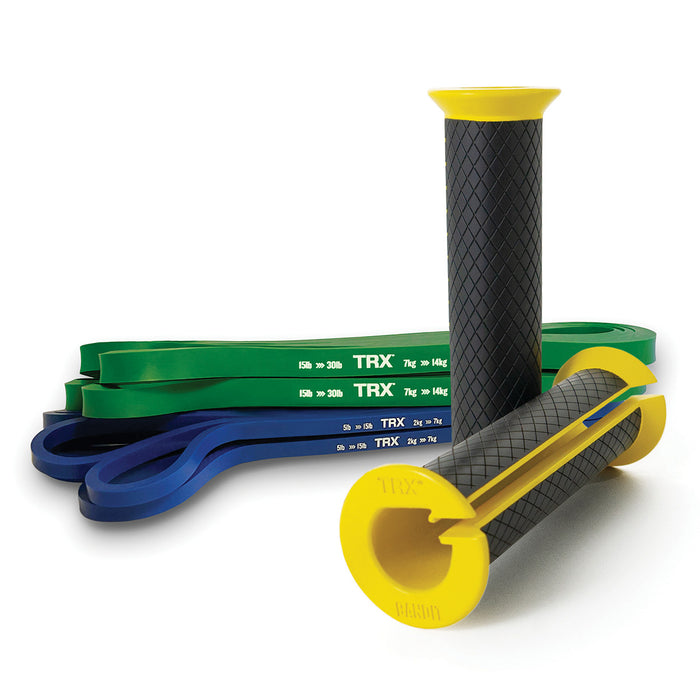
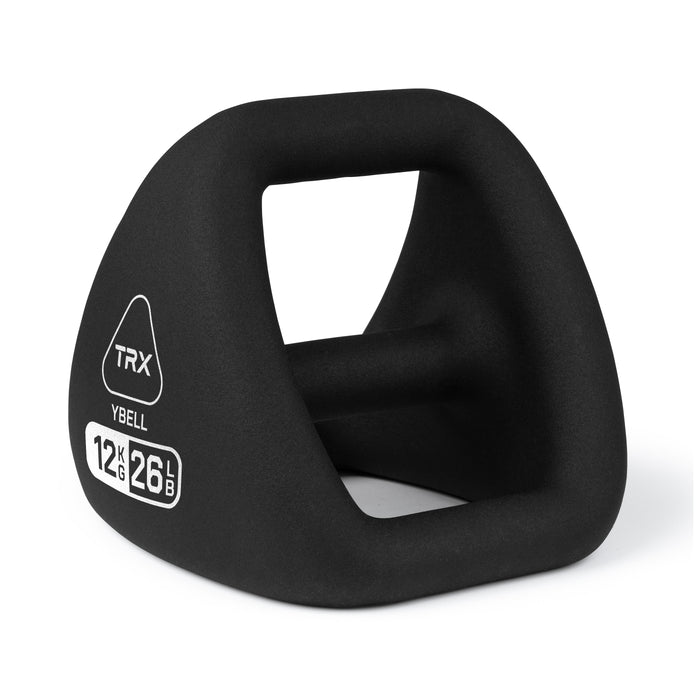
TRX Training designs Suspension Trainers for bodyweight exercises such as rows and straight-arm pulls, with resistance changed through body angle. That lets you scale both patterns without changing to a different machine. Check your anchor and clear space first, then compare the systems below.
1. TRX Power Pull

The TRX Power Pull combines a one-arm row with controlled trunk rotation, so it suits people who want a unilateral pulling challenge rather than another straight-ahead row. TRX describes the movement as a test of unilateral back strength plus rotational strength and control.
-
Hold both handles in one hand and stand facing the anchor with your working arm bent.
-
Extend the working arm as you rotate away from the anchor and reach the free arm back.
-
Drive the working elbow back and rotate your chest toward the anchor.
-
Finish tall and controlled, then reverse the motion for the next rep.
Form cue: Let the rotation come from a controlled turn through the trunk, not a yank from the shoulder. Stand more upright and reduce the reach to make the exercise easier.
Do Pushups Work the Lats?
Pushups involve the lats, but an eight-person EMG study of five pushup variations found greater pectoralis major and triceps activation with a narrow hand position. Choose a vertical pull or row when direct lat training is the goal, and keep pushups for pressing and trunk work.
Sample Lat Workouts
A simple lats workout needs one vertical pull, one horizontal row, and an optional accessory. Begin with a brief general warm-up and a basic shoulder mobility warm-up, then choose loads that let you keep the listed technique.
The 2026 ACSM position stand supports progressive resistance training for healthy adults and reports benefits from multiple approaches. The templates below use two or three sets as a practical starting point, not an individualized prescription.
Lat Workout #1: Gym Setup
This gym lats workout pairs a vertical pull with a free-weight row and a controlled accessory.
-
Pull-ups or lat pull-downs: 2 to 3 sets of 8 to 12 controlled reps.
-
Barbell rows: 2 to 3 sets of 8 to 12 controlled reps.
-
Dumbbell rows: 2 sets of 10 to 12 reps per side.
-
Rest about 90 seconds between sets, adding time when you need it to preserve technique.
Lat Workout #2: Suspension Setup
This suspension lats workout uses angle changes to scale a row, straight-arm pull, and rotational pull.
-
TRX Rows: 2 to 3 sets of 8 to 12 controlled reps.
-
TRX Swimmer Pull: 2 sets of 8 to 12 controlled reps.
-
TRX Power Pull: 2 sets of 8 to 10 reps per side.
-
Rest about 90 seconds between sets, standing more upright if form changes before the target reps.
When you reach the top of the rep range on every set for two sessions with clean form, add a small amount of load or make the body angle slightly harder. If pain changes your movement, stop and get guidance that fits your situation. You can use the 15-minute TRX Upper Body Workout as a separate guided option.
Common Lats Exercise Mistakes
The most common lats exercise mistakes replace controlled pulling with momentum, extra load, or a range you cannot manage.
-
Swinging or rocking: Use a load and range that let your torso stay where the exercise requires.
-
Shrugging every rep: Keep the neck long and avoid letting the shoulders climb toward the ears as fatigue builds.
-
Chasing weight instead of position: A heavier stack or bar is not useful if you shorten the pull or lose control.
-
Treating every back exercise as direct lat work: Choose at least one clear vertical pull and one clear row instead of assuming any upper-body movement trains the lats equally.
-
Ignoring equipment fit: Check the anchor, bench, cable setup, and available space before the set begins.
Frequently Asked Questions About Lats Exercises
The right lats exercises depend on your equipment, the pulling pattern you need, and the resistance you can control.
Which Lats Exercises Fit the Equipment I Already Have?
Choose a pull-up or negative pull-up for a secure bar, a pulldown or cable row for a cable station, a dumbbell or barbell row for free weights, and TRX Rows or Swimmer Pulls for a secure Suspension Trainer setup.
Should a Lats Workout Include Both a Vertical Pull and a Row?
Yes, pairing a vertical pull with a row gives you two distinct pulling patterns before you add accessories. You can use fewer movements when time is tight, as long as the choices fit your goals and you can progress them.
How Can I Make a Suspension Row Easier or Harder?
Stand more upright or walk your feet away from the anchor to make a suspension row easier. Move your feet toward the anchor and lean farther back to increase resistance, while keeping your body aligned and the anchor secure.
Are Lat Exercises Supposed to Hurt the Shoulders or Back?
No, lats exercises should create muscular effort without sharp or worsening joint or back pain. Stop the movement if pain changes your form, then adjust the setup or get qualified guidance before continuing.
Start Working Out Your Lats Today
Start with one vertical pull and one row you can control, then progress the load, reps, or body angle gradually. Consistent technique matters more than collecting every variation at once.
Once you have a vertical pull and row you can control, use the TRX App for guided on-demand workouts and 4-to-6-week programs. Start the 30-day trial if that structure would help you practice, then choose sessions and resistance that fit your setup.
Sources:
-
Orozco-Levi, M., et al. "Activity of Latissimus Dorsi Muscle During Inspiratory Threshold Loads." European Respiratory Journal, 1995. https://doi.org/10.1183/09031936.95.08030441
-
McGill, S. M., et al. "Muscle Activity and Spine Load During Pulling Exercises: Influence of Stable and Labile Contact Surfaces and Technique Coaching." Journal of Electromyography and Kinesiology, 2014.
-
American College of Sports Medicine. "Resistance Training Prescription for Muscle Function, Hypertrophy, and Physical Performance in Healthy Adults: An Overview of Reviews." Medicine & Science in Sports & Exercise, 2026.
-
Camara, K. D., et al. "Electromyographic Analysis of Latissimus Dorsi Activation During Common Resistance Training Exercises: A Narrative Review." 2026.
What's Your Reaction?
 Like
0
 Dislike
0
 Agree
0
 Disagree
0
 Excellent
0
 Useful
0
 Great
0