



























































.png?format=1500w#)












5 TRX Exercises for a Stronger Back


TRX back exercises give you a practical way to build a five-move back workout around a Suspension Trainer. This guide covers setup, form cues, working angles, and a 10-minute routine without forcing a one-size-fits-all prescription.
Use the movement instructions to choose a controlled range and body angle that fit your current ability. The best TRX back exercises are the ones you can perform with steady alignment and clean final reps.
Key Takeaways: TRX Back Exercises
-
The best TRX back exercises for this session are the Resisted Rotation, Overhead Squat-Wall Slide, T-Y Fly Combo, Power Pull, and supported TRX Pull-up.
-
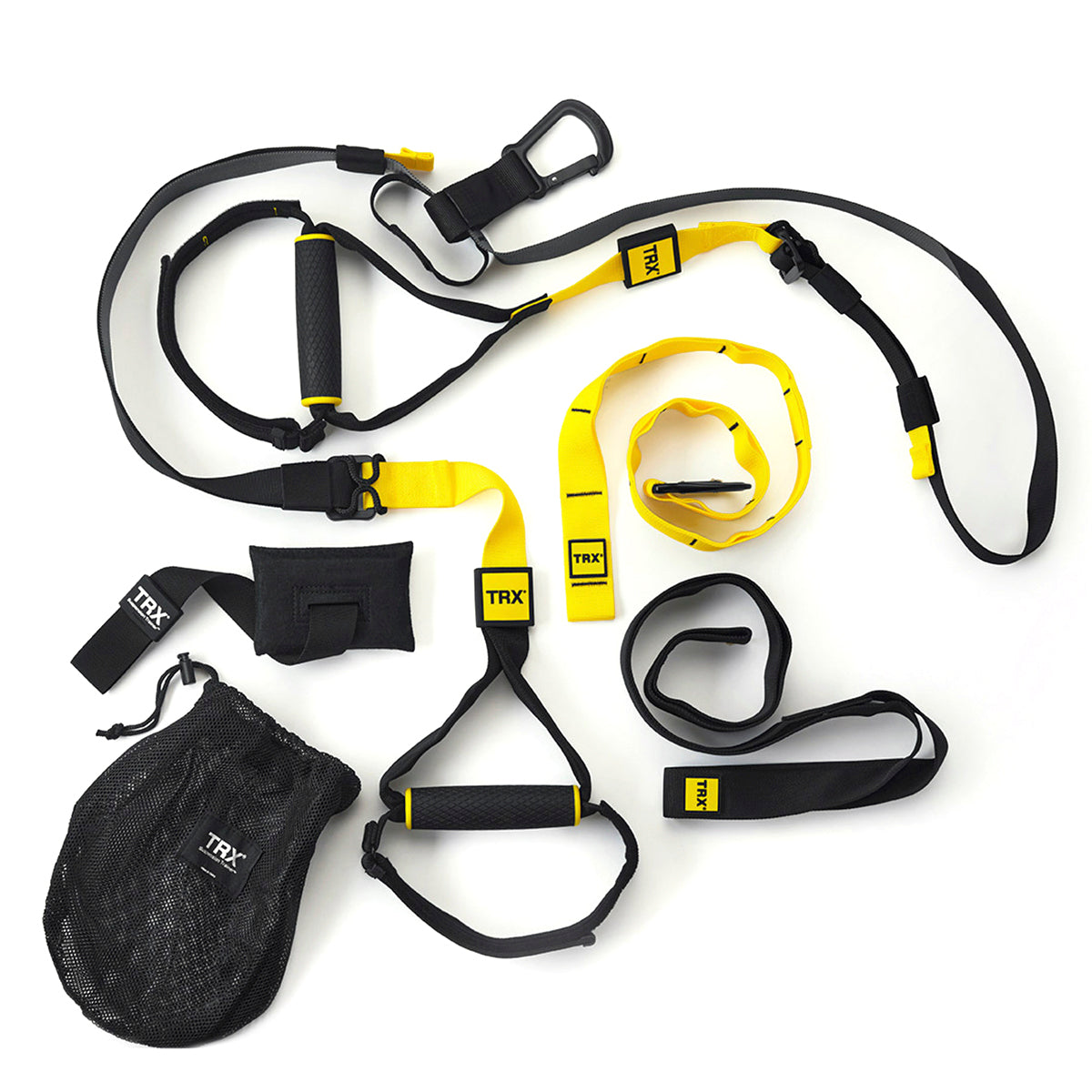
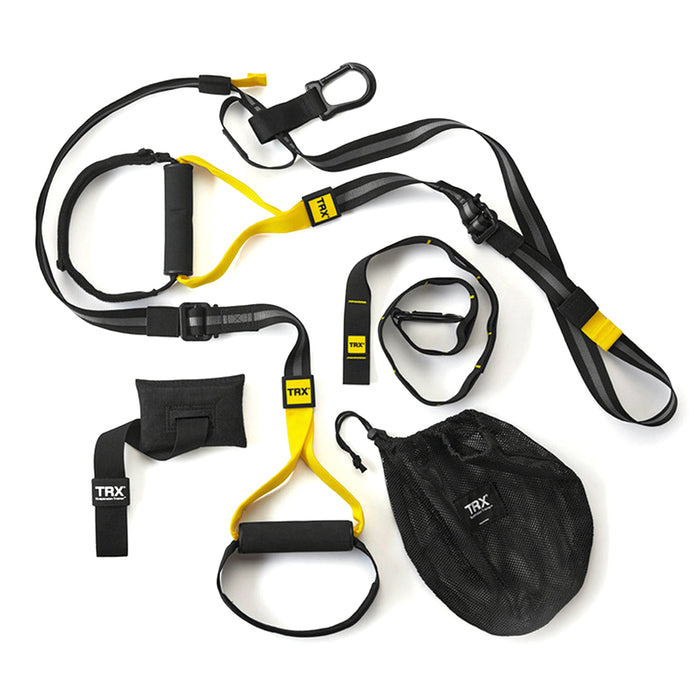
TRX Training brings Suspension Trainers, strength bands, and YBells together in its functional training equipment collection, giving you bodyweight, elastic, and external-load options for back training.
-
Choose a body angle that lets you keep a straight body line, then add reps, time, or a slower lowering phase only when your form stays controlled.
-
Bodyweight resistance can support strength and muscle growth when the routine is consistent and progresses over time.
-
Start with two nonconsecutive back sessions per week, stop if you feel sharp or worsening pain, and get professional guidance for an injury or medical concern.
What TRX Back Exercises Work
TRX pulling movements train more than one muscle at a time. The lats, rhomboids, and traps span the upper and middle back, and suspension-row research has measured rear-delt activity during the pull. Farther down, the spinal erectors help support the trunk. Brace your core to resist unwanted arching and rotation.
These TRX upper back exercises ask your shoulders, hips, and core to work as one connected system. People often search for TRX lower back exercises, but these moves build controlled, full-body tension as the back supports each pull, squat, and rotation. These moves focus on full-body training rather than lower-back isolation or treatment.
Can TRX Back Exercises Build Muscle Without Free Weights?
Yes. Bodyweight resistance can support strength and muscle growth, so TRX back exercises can build muscle when the working angle makes the final reps challenging and the routine progresses over time. The TRX Suspension Trainer™ lets you raise the demand with a deeper lean instead of adding plates. Once your angle is right, slow the lowering phase or pause at the hardest point. Keep your body line steady and change one variable at a time so you can tell what is driving progress.
Take Our Training Quiz
How to Set Up for TRX Back Exercises
Secure your Suspension Trainer to an anchor that is rated for exercise, and test it with a firm pull before you start. Clear enough space to move without hitting a wall, furniture, or another person. If you are building out your setup, compare purpose-built back training equipment that fits your space and training style.
TRX cues often describe your position relative to the anchor. Stand facing the anchor (SF) for rows, flies, and pull-ups. Stand sideways to the anchor (SSW) for resisted rotation. Mid-length straps suit many standing pulls. Mid-calf length creates more room for flies. An over-shortened setup brings the handles high for the pull-up.
For standing pulls, body angle changes how much load you manage. Walk into a deeper lean to increase the challenge, or stand more upright to reduce it. Keep an active plank from head to heels, brace your core, stack your ribs over your pelvis, and control your shoulder blades instead of shrugging.
Muscular effort should feel challenging, but sharp, sudden, or worsening pain is a stop sign. End the set and consult a qualified healthcare professional if you have an injury, persistent pain, or a medical concern that affects exercise.
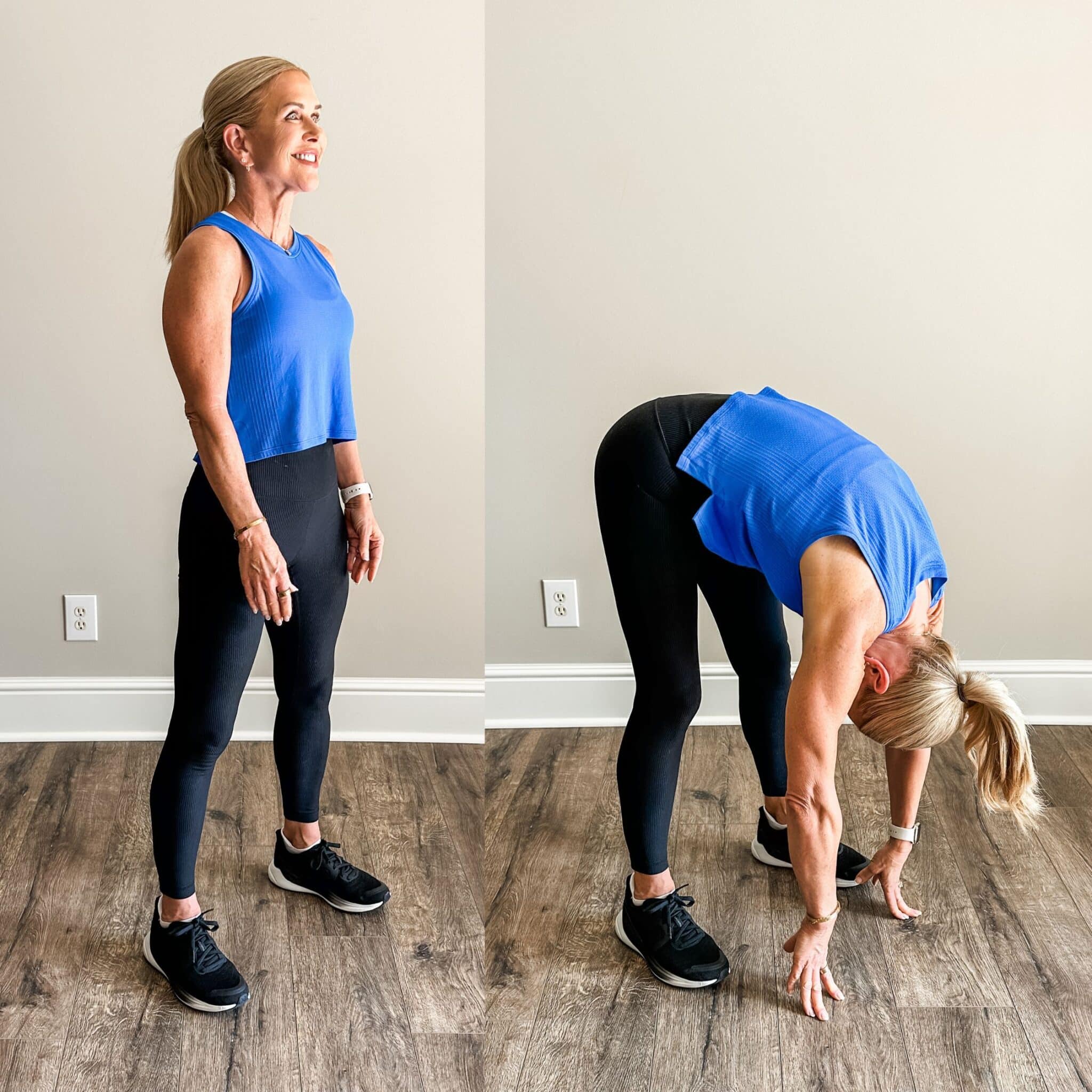
For mobility work before or after training, use these lower back stretching exercises to explore a comfortable range. Treat the routine as general mobility work, not pain treatment.
How to Do a TRX Row
A TRX row starts with a straight body line, a braced core, and the handles moving toward your ribs. The steps below show how to do a TRX row and build the shoulder-blade control used throughout the five featured moves.
-
Set the straps to mid-length. Stand facing the anchor with one handle in each hand and your arms straight.
-
Walk your feet toward the anchor until your body forms a straight, comfortable angle. Keep your heels down and your core braced.
-
Draw your shoulder blades back and down, then bend your elbows and pull the handles toward your ribs.
-
Pause with your chest proud. Straighten your arms slowly while keeping your body aligned.
Muscles worked. lats, rhomboids, middle traps, rear delts, biceps, and core.
Try it. Start with 2 to 3 sets of 8 to 12 controlled reps. To make it easier, walk your feet away from the anchor. To make it harder, move your feet closer and lower your body angle.
5 TRX Back Exercises to Build Strength and Control
These five movements cover horizontal pulls, vertical pulls, rotation, and shoulder-blade control without changing the original exercise order.
Review these TRX exercises before you start the five-move sequence.
Watch the movement sequence in our TRX workout YouTube guide.
TRX Resisted Rotation
Train your body in three dimensions and keep your torso connected from shoulders to hips. These TRX movements complement other back workout exercises that use bodyweight, dumbbells, or barbells. Resisted Rotation challenges your Lats, core, and lower-back stabilizers while you resist twisting through the middle.
-
Set the straps to mid-length and place them in single-handle mode.
-
Stand sideways to the anchor in an offset stance with the inside leg forward. Hold the handle at the center of your chest.
-
Line your sternum up with the anchor and brace your core. Keep your hips and shoulders square.
-
Press the handle away from your chest without letting your torso tilt or rotate, then return with control.
Muscles worked. lats, obliques, deep core muscles, spinal erectors, and shoulders.
Try it. Start with 2 to 3 sets of 8 to 10 reps per side. Step toward the anchor for more load. Step away or shorten the press for an easier option.
TRX Overhead Squat-Wall Slide
The overhead squat may already be part of your leg training. Adding a wall slide turns it into a coordinated back-and-shoulder challenge. Constant strap tension connects the squat to an upper-back pull while your posterior chain and core keep you steady.
-
Set the straps to mid-length and stand facing the anchor with your feet in a comfortable squat stance.
-
Hold the handles with your arms in a Y or I shape. Lean back just enough to keep steady tension in the straps.
-
Lower into a squat while keeping your chest lifted, ribs stacked, and knees tracking over your feet.
-
Drive through your feet to stand as you slide your arms down. Initiate the pull by drawing both shoulder blades down and back.
-
Return your arms overhead with control and begin the next rep.
Muscles worked. traps, lats, rear delts, spinal erectors, glutes, hamstrings, and core.
Try it. Start with 2 to 3 sets of 6 to 10 reps. Use a shallower squat and a smaller arm slide to make it easier. Step closer to the anchor or slow the lowering phase to make it harder.
T-Y Fly Combo
The T-Y Fly Combo belongs in a strong pulling routine. It trains the upper back through two arm paths, asking the rear delts, traps, and smaller shoulder-blade muscles to control every inch of the range of motion (ROM).
-
Set the straps to mid-length or mid-calf and stand facing the anchor.
-
Start with your arms straight in front of you and use an offset foot stance to maintain strap tension.
-
Lean back in an active plank. Pull your straight arms out to a T while drawing your shoulder blades together.
-
Lower with control until your hands meet in front of you.
-
On the next rep, raise your straight arms into a Y. Alternate T and Y reps without shrugging.
Muscles worked. rear delts, rhomboids, middle and lower traps, lats, and core.
Try it. Start with 2 to 3 sets of 6 to 10 total reps. Stand more upright for an easier option. Move your feet closer to the anchor or pause at the top for a harder one.
Take Our Training Quiz
TRX Power Pull
The TRX Power Pull combines a single-arm row with controlled rotation, giving your upper back and core plenty to coordinate. Keep the shoulder blade moving smoothly as your hips and shoulders rotate together.
-
Set the straps to mid-length in single-handle mode. Stand facing the anchor and hold the handle in one hand.
-
Begin at the top of a single-arm row with your elbow bent and the handle beside your ribs.
-
Straighten your working arm as you rotate away from the anchor. Reach your free arm back and keep your torso connected.
-
Set the working shoulder blade down, then squeeze your shoulder blades together as you pull out of the rotation.
-
Finish in the single-arm row and repeat before switching sides.
Muscles worked. lats, rhomboids, traps, rear delts, biceps, obliques, and core.
Try it. Start with 2 to 3 sets of 6 to 10 reps per side. Reduce the rotation and stand taller to make it easier. Use a deeper body angle or add controlled speed only after your form stays solid.
TRX Pull-up
The TRX pull up finishes the sequence with a vertical pull. Your feet stay on the floor, so you can adjust how much help your legs provide. Control the slow lowering phase, and start with a range you can manage.
-
Over-shorten the straps and sit or squat beneath the anchor with one handle in each hand.
-
Place your feet flat and keep your neck long. Draw your shoulder blades down before you bend your elbows.
-
Pull your chest toward the handles while squeezing your shoulder blades together.
-
Use only as much leg assistance as you need to keep the movement smooth.
-
Lower slowly by straightening your arms overhead while maintaining an active torso.
Muscles worked. lats, lower traps, rhomboids, rear delts, biceps, and core.
Try it. Start with 2 to 3 sets of 5 to 8 reps. Use more leg drive for an easier option. Use less leg assistance or extend the lowering phase to make it harder.
10-Minute TRX Back Workout
This 10-minute TRX back workout uses the five movements in their original order. Complete two rounds. Work for 40 seconds, then use 20 seconds to rest, switch sides when needed, and set up the next move.
-
TRX Resisted Rotation: Work 20 seconds per side.
-
TRX Overhead Squat-Wall Slide: Move through smooth, controlled reps.
-
T-Y Fly Combo: Alternate one T rep with one Y rep.
-
TRX Power Pull: Work 20 seconds per side.
-
TRX Pull-up: Use steady reps and control the lowering phase.
Beginner option. Work for 30 seconds and use the remaining 30 seconds to rest and adjust your angle. Choose a more upright body position and use more leg support on pull-ups.
Advanced option. Work for 45 seconds and transition in 15 seconds. Use a deeper body angle, longer lowering phases, or brief pauses instead of rushing the reps.
Want another tool for pulling days? These resistance band back exercises give you a related routine with a different resistance feel.
How Do TRX Rows Compare With Resistance Band Rows?
TRX rows load your body against gravity, but resistance band rows get harder as the band stretches. The TRX Suspension Trainer™ changes the challenge through body angle, foot position, and the amount of bodyweight you place behind the handles. Bands change the resistance through their tension and stretch. Pick the straps when you want one setup that pairs the row with supported pull-ups, flies, and rotational work. Pick bands when you want to train away from a suspension anchor or add a different resistance feel.
TRX Back Exercises FAQ
These answers cover resistance, training frequency, and the difference between rows and pull-ups.
Is TRX good for building back strength?
Yes. Rows, flies, rotations, and supported pull-ups let you train multiple back muscles while adjusting the load with your body angle. Progress comes from consistent practice, controlled reps, and choosing an angle that makes the last few reps challenging without changing your form.
How does body angle change resistance?
For most standing pulls, moving your feet closer to the anchor lowers your body and puts more body weight behind the handles. That increases the challenge. Moving your feet away makes your body more upright and usually reduces the load.
How often can you train your back with TRX?
Many people can start with two nonconsecutive back sessions per week. Your training history, total workout volume, exercise angle, and recovery all matter. Add reps, time, or difficulty gradually instead of changing everything at once.
What is the difference between a TRX row and a TRX pull-up?
A TRX row is a horizontal pull performed from a standing lean, with the handles moving toward your ribs. A TRX pull-up is a more vertical pull performed under the anchor, with your feet helping as needed. Both train the lats and upper back, but the line of pull and body position change the challenge.
Keep Your Back Training Moving
Your back gets stronger when the next workout is easy to start and simple to scale. TRX created Suspension Training®, and the TRX App™ pairs its tools with coach-led sessions you can filter by time, difficulty, and target area. Choose one move above, set an angle that keeps the final reps clean, and open the TRX App™ for a guided workout that fits your day.
P.S. Get other TRX back exercises straight from the TRX App™.
Do your next workout with our TRX equipment.
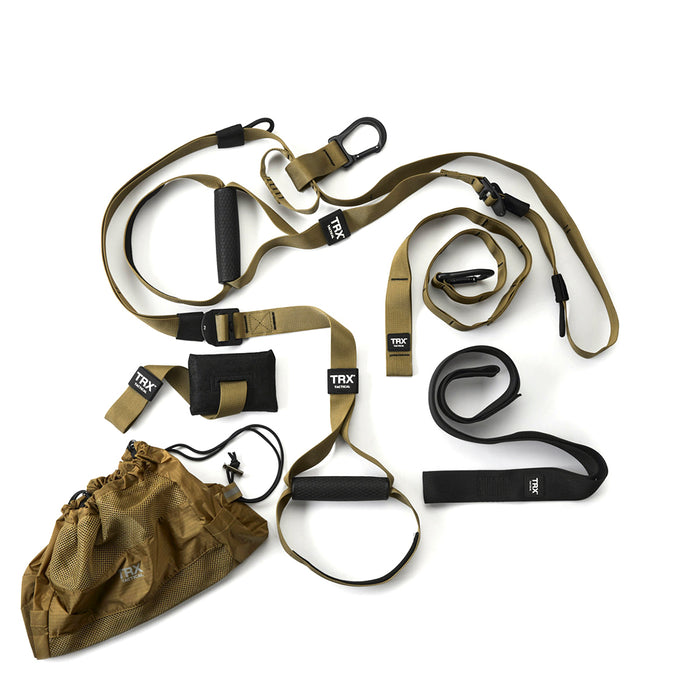
TRX® PRO4 SYSTEM BUY NOW TRX® HOME2 SYSTEM BUY NOW TRX® TACTICAL GYM BUY NOW
References
American College of Sports Medicine. “ACSM Unveils Landmark 2026 Resistance Training Guidelines.” ACSM, 17 Mar. 2026.
American Heart Association. “Strength and Resistance Training Exercise.” American Heart Association, 19 Jan. 2024.
Cleveland Clinic. “Back Muscles.” Cleveland Clinic, 7 July 2024.
Long, Chelsea. “Lower Back Pain After Deadlifts? Here’s How to Do Them Right.” Hospital for Special Surgery, 15 Sept. 2022.
Montana State University Extension. “Stretch into Health.” Montana State University, 2023.
Snarr, Ronald L., and Michael R. Esco. “Comparison of Electromyographic Activity When Performing an Inverted Row With and Without a Suspension Device.” Journal of Exercise Physiology Online, vol. 16, no. 6, 2013, pp. 51-58.

What's Your Reaction?
 Like
0
 Dislike
0
 Agree
0
 Disagree
0
 Excellent
0
 Useful
0
 Great
0