
















































.png?format=1500w#)











10 Kettlebell Exercises to Build Stronger Triceps + Workout


This kettlebell tricep workout brings together presses, extensions, and controlled bodyweight-supported moves. You’ll learn 10 kettlebell tricep exercises, review how the muscle works, and finish with a workout you can scale to your experience. Ready? Let’s move.
Key Takeaways: Kettlebell Tricep Exercises
-
Kettlebells can build triceps strength through presses and extensions, and TRX YBell combines kettlebell and dumbbell grips in one compact weight for load changes within ACSM’s individualized resistance-training guidance.
-
The most direct kettlebell triceps exercises keep the upper arm stable as the elbow extends, while push presses, half-kneeling presses, and goblet squats add compound or isometric support.
-
Choose a bell you can control through the full range, and stop the set when your torso, shoulder, wrist, or elbow position starts to change.
-
A practical plan starts with the most demanding press, adds one or two extension variations, and progresses only one variable after every rep stays clean.
What Are the Triceps?
The triceps brachii sits on the back of your upper arm above the elbow. Its main job is to extend, or straighten, your forearm at the elbow, which supports pressing movements such as push-ups and overhead presses. Cleveland Clinic’s arm anatomy overview places the muscle on the back of the upper arm.
Along with producing elbow extension, your triceps help control the elbow as you lower and press a load. Strong technique matters more than moving the heaviest bell you can find.
Anatomy of the Triceps
The triceps has three heads that work together to straighten the elbow. The long head runs along the inner back of your upper arm and crosses the shoulder joint. The lateral head sits on the outer back of your upper arm and is often easiest to see. The deeper medial head supports elbow extension across pressing angles.
You don’t need a separate move for every head. Use grip and arm position to vary the exercises, then prioritize the options you can control.
The Best Kettlebell Exercises for Triceps
Controlled elbow extension matters more than the number of exercises in your plan. The 10 moves below combine direct triceps work with presses and support exercises. Use our quick fitness assessment quiz to get recommendations matched to your strength level and goals.
TAKE OUR TRAINING QUIZ
Why Kettlebells Work Well for Triceps
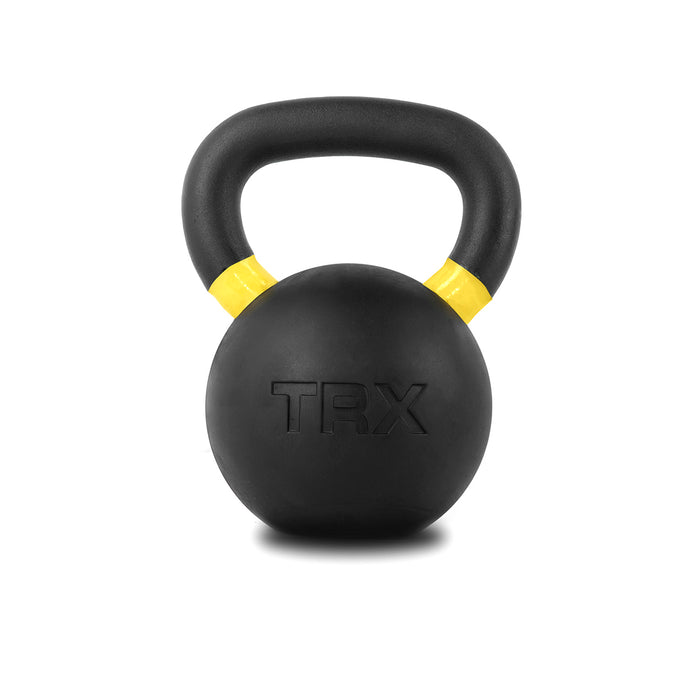
Kettlebells give you several ways to organize the same load. Hold the handle for one-arm work, grip the horns with two hands, or support the bell when the movement suits that position. Each option changes your grip and load placement.
A kettlebell’s handle sits outside its center of mass, so controlling the bell takes more effort than controlling a load with a centered grip. That offset helps only when you control it. Choose clean reps over extra weight.
How to Choose the Right Kettlebell
Start with a kettlebell you can move through the full range without arching your low back, flaring your elbows, or letting your shoulder shift. If you can’t pause at the hardest point and reverse smoothly, lower the load.
Your available weight training equipment matters less than your control. Pick a bell that lets you finish every rep with the same position you used on the first. If you’re starting a new exercise routine, consult your physician first.
Should You Use a YBell, Kettlebell, or Dumbbell for Triceps?
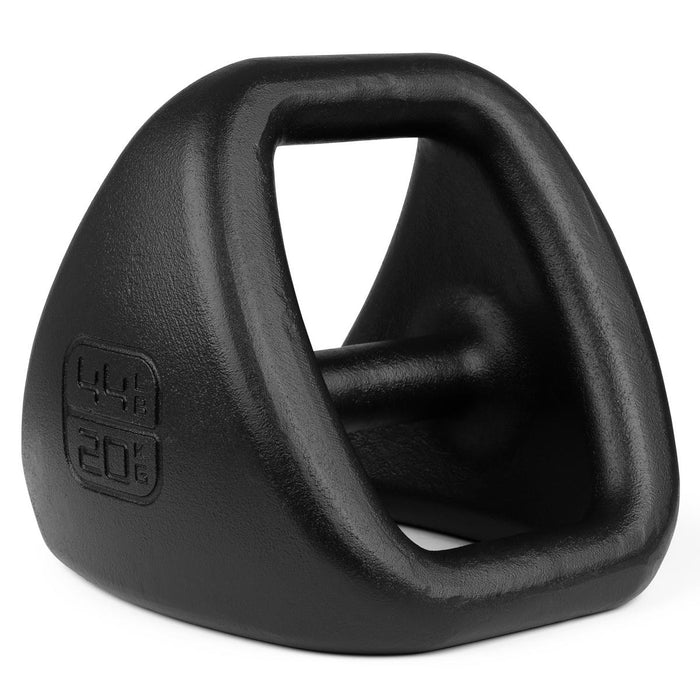
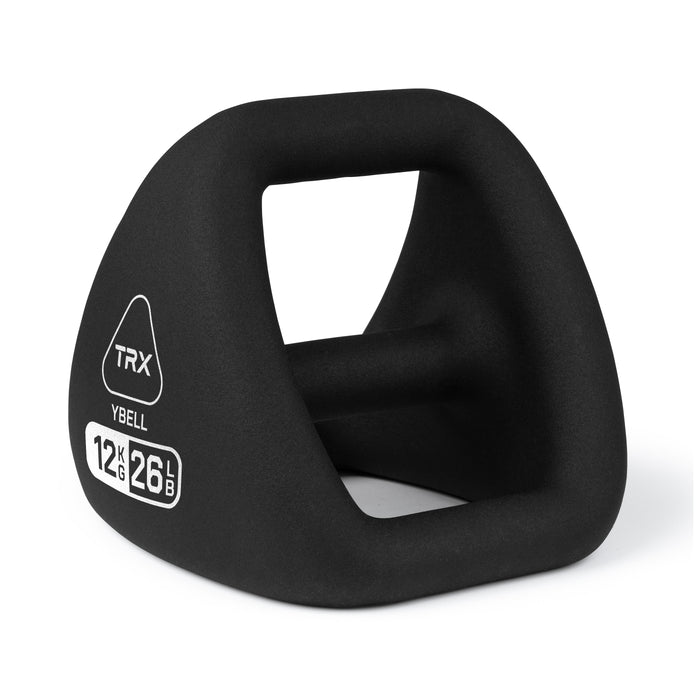
TRX YBell® fits triceps sessions that switch between kettlebell and dumbbell grips because one compact weight handles both styles. Use the kettlebell-style grip for extensions and the dumbbell-style grip for presses when each keeps your wrist neutral and elbow controlled. A standard kettlebell still makes sense if you prefer the horns or handle, and a dumbbell keeps the load centered around your hand. Pick the option that lets your last rep look like your first.
10. Kettlebell Push Press
The push press uses leg drive to help you move the kettlebell overhead. Your triceps finish the press and help stabilize your elbow as the bell rises. Use a strict overhead press to remove the leg drive and make your upper body do more work.
-
Rack the kettlebell at your right shoulder with your wrist straight and elbow close to your body.
-
Bend your knees and dip straight down.
-
Drive through your feet as you stand, then press the kettlebell overhead until your arm is nearly straight.
-
Lower the kettlebell to your shoulder with control, then soften your knees to reset.
9. Triceps Dip
A kettlebell triceps dip is a great bodyweight exercise for the triceps and chest. Place two stable, flat-based kettlebells directly under your shoulders. Skip this setup if either bell rocks or slides.
-
Sit between two stable kettlebells. Place your palms on the handles, straighten your arms, and extend your legs in front of you.
-
Bend your elbows and lower your body, keeping the bells planted and your chest open.
-
Press through your palms to extend your elbows and return to the starting position.
Lower only as far as you can control without shoulder discomfort. Keep your shoulders down and away from your ears throughout the movement.
8. Skull Crushers
Kettlebell skull crushers isolate your triceps with your upper arms held in a steady position. Start light and control the bell through the full range.
-
Lie on your back and hold one kettlebell by the horns above your chest.
-
Keep your upper arms steady as you bend both elbows and lower the kettlebell toward your head.
-
Extend your elbows to raise the kettlebell without changing your shoulder position.
7. Kettlebell Half-Kneeling Press
The half-kneeling press is a kettlebell exercise for the abs that trains your shoulders and triceps through a compound press. The staggered stance makes your core stabilize your torso. Choose a direct alternative below when triceps isolation is the goal.
-
Set up in a half-kneeling position and hold the kettlebell in a front rack on one side.
-
Brace your core and press the kettlebell overhead until your arm is nearly straight. Keep your shoulder down and torso upright.
-
Lower the kettlebell to your shoulder with control. Keep your elbow from flaring and your shoulder in place.
6. Kettlebell Goblet Squat
The goblet squat is a beginner full-body exercise. Your arms hold the bell in place, but your lower body drives the movement. Treat it as a support exercise and choose a direct alternative below when triceps isolation is the goal.
-
Hold the kettlebell by the horns and keep it close to your chest.
-
Keep your elbows close, brace your torso, and sit your hips down and back.
-
Drive through your feet to stand tall without letting the bell pull your chest forward.
5. Kettlebell Tate Press
The Tate press trains your triceps through a distinct elbow-out angle. Use a light kettlebell, keep your wrists steady, and move with control.
-
Lie on your back and hold the kettlebell under the horns above your chest with your thumbs pointing down.
-
Bend your elbows out to the sides and lower the kettlebell toward your chest.
-
Extend your elbows to press the kettlebell back above your chest.
Keep your elbows angled out as you lower the kettlebell so your triceps stay loaded. Stop if the position strains your shoulders.
How Does a YBell Replace More Than One Triceps Tool?
A TRX YBell can save floor space by taking the place of four common tools in one workout. Change your grip for kettlebell-style extensions or dumbbell-style presses, then use it as a push-up stand for bodyweight work. The same load still demands control. If your wrist bends or your elbow position drifts, choose a lighter weight before changing exercises.
4. Kettlebell Triceps Kickback
The kettlebell triceps kickback isolates elbow extension with a light load. Hinge from your hips, hold your upper arm close to your ribs, and use the full range you can control.
-
Hold the kettlebell by the handle. Stagger your stance and hinge at your hips with a flat back.
-
Keep your upper arm close to your ribs and extend your elbow to move the kettlebell behind you.
-
Bend your elbow to return the kettlebell without dropping or rotating your shoulder.

3. Kettlebell Single-Arm Overhead Extension
The kettlebell tricep extension trains your triceps, and your shoulder and core keep the load steady. Start with a light bell, brace your torso, and keep your upper arm stable. ACE’s triceps extension guidance recommends extending without locking the elbow and lowering the weight under control.
-
Stand tall and hold the kettlebell handle with your elbow bent overhead and palm facing behind you.
-
Brace your core and extend your elbow until your arm is nearly straight. Keep the elbow soft instead of locking it.
-
Lower the bell with control, keeping your upper arm and shoulder steady.
2. Kettlebell Bell-Grip Overhead Extension
The two-hand grip gives you more control and can support a heavier load than the single-arm version. Brace your torso, keep both upper arms stable, stop short of locking your elbows, and lower the bell with control.
-
Stand tall and hold the kettlebell by the horns with both hands. Bend your elbows so the bell sits behind your head.
-
Brace your torso and extend both elbows until your arms are nearly straight. Keep your upper arms stable, shoulders down, and lower back neutral.
-
Bend both elbows and lower the kettlebell with control without changing your shoulder position.
Be sure to lower the kettlebell slowly with control to avoid hitting yourself in the back of the head.
1. Push-Up on the Kettlebell
Using kettlebell handles can create room for a deeper push-up, but use only stable, flat-based bells and stay within a comfortable depth.
-
Place your hands on two stable kettlebell handles and set a tall plank with your shoulders over your wrists.
-
Bend both elbows and move your chest slightly forward as you lower. Keep your forearms close to vertical.
-
Press back to the top of the plank from the deepest position you can control. Keep your body braced.
Lower only as far as you can control. Reduce the range if your shoulders lose position or feel uncomfortable.
Direct Triceps Alternatives
The close-grip floor press and JM press are direct kettlebell triceps exercises that keep the emphasis on controlled elbow extension.
Kettlebell Close-Grip Floor Press
Use this kettlebell tricep press when you want direct elbow-extension work with the floor supporting your back. Holding one bell close to the chest keeps the setup simple, and the floor limits how far your elbows can travel behind you.
-
Lie on your back with your knees bent and feet planted.
-
Hold one kettlebell by the horns above the center of your chest, keeping your wrists stacked and elbows close to your sides.
-
Bend your elbows and lower them toward the floor under control, then press the bell up until your arms are nearly straight.
Kettlebell JM Press
The kettlebell JM press blends a close-grip press with a triceps extension. The bell travels toward your upper chest or chin, and your upper arms stay relatively still. Start light and keep the movement smooth.
-
Lie on your back and hold one kettlebell by the horns above your chest.
-
Bend your elbows and guide the bell toward your upper chest or chin without letting your upper arms drift far behind you.
-
Extend your elbows to return the bell over your chest, stopping short of locking them.
Keep your setup compact with TRX equipment that supports kettlebell, dumbbell, and bodyweight triceps work.
Do your next workout with our TRX equipments:
Sample Kettlebell Tricep Workout
Now that you’ve covered the exercises, use the original 40:20 circuit below as one kettlebell tricep workout option. Match the load, volume, and rest to your goal and experience. The current ACSM resistance-training guidance supports consistent training and individualized load and volume instead of one fixed plan.
-
Push-Up on Kettlebells: 40:20 x 4
-
Kettlebell Single-Arm Overhead Extension: 40:20 x 4 per side
-
Kettlebell Triceps Dip: 40:20 x 4
-
Kettlebell Skull Crushers: 40:20 x 4
-
Kettlebell Goblet Squat: 40:20 x 4
Complete every interval for one exercise before moving to the next. Rest 45-60 seconds between sets.
Beginner Option
Choose two direct triceps movements, such as the single-arm kettlebell tricep extension and close-grip floor press. Complete 2 sets of 8-12 controlled reps per side, then rest about 2 minutes. Rest between every set, and apply the per-side reps only to single-arm exercises. End each set before your torso or elbow position changes.
Experienced Option
Choose three movements. For muscle development, use 2-3 sets of 6-12 controlled reps and rest 60-90 seconds. For muscular endurance, use 12-15 reps with a lighter bell and rest about 30 seconds. In both cases, choose a load that makes the final reps challenging without changing your position.
Programming and Progression
Place your most demanding press first. Then move to extensions or kickbacks that use less total-body effort. Training the triceps twice weekly can fit a balanced program when recovery and total pressing volume are considered. For muscle development, build toward about 10 weekly sets across direct triceps work and presses, with clean technique on every rep.
Repeat one option for several weeks. When every rep stays clean, add a rep, extend a work interval slightly, or move up in load. Change one variable at a time.
P.S. Find more kettlebell workouts in TRX Training Club. The platform includes hundreds of workouts you can follow at home or wherever you train.

Kettlebell Triceps FAQ
Kettlebells can train the triceps through presses and extensions, and the best variation depends on your available equipment and comfortable range.
Can Kettlebells Build Your Triceps?
Yes. Tricep exercises with a kettlebell can build strength when you use a challenging load, move through a controlled range, and progress the work over time. You can train with presses, extensions, and bodyweight-supported movements.
What Is the Best Kettlebell Tricep Exercise if You Own One Bell?
The close-grip floor press is a practical choice because one bell is enough and the floor gives you a stable base. Hold the bell at the horns, keep your elbows close to your body, and press until your arms are nearly straight.
How Can You Modify a Kettlebell Tricep Extension?
Use a lighter bell, shorten the range to the point you can control, or switch from a single-arm version to a two-hand bell-grip extension. If overhead positioning feels uncomfortable, choose a close-grip floor press instead. Stop if you feel pain, and speak with a qualified professional before continuing.
Build Your Triceps With the Kettlebell
A kettlebell’s grips and load positions give you several ways to train the triceps. Choose a few movements that suit your body and equipment, then repeat them long enough to track progress. A short, repeatable plan makes progress easier to track than using every exercise at once.
Try a few of these kettlebell tricep exercises, then keep the movements that let you train with the best control. Stay consistent, progress one variable at a time, and let clean reps lead the way. For your next session, pair them with kettlebell chest exercises or try a TRX and kettlebell workout for full-body cross-training.
Clean reps come first, but the right setup makes them easier to repeat. TRX YBell gives you kettlebell, dumbbell, dual-grip medicine-ball, and push-up-stand options in one compact weight, so you can train several triceps angles without crowding your space. Use the YBell NEO or Pro links above to compare weight ranges, then choose the load you can control from first rep to last.
Sources
Solan, M. (2022, February 1). Building better muscle. Harvard Health. https://www.health.harvard.edu/staying-healthy/building-better-muscle
Cleveland Clinic. “Arm Muscles: Anatomy & Function.” Cleveland Clinic. Accessed 27 Oct. 2026.
University of Arkansas for Medical Sciences. “Muscles of the Upper Limb.” UAMS Department of Neuroscience. Accessed 27 Oct. 2026.
American Council on Exercise. “Triceps Extension.” ACE Fitness. Accessed 27 Oct. 2026.
American Council on Exercise. “The Two-Handed Kettlebell Swing.” ACE Fitness, Jan. 2025. Accessed 27 Oct. 2026.
American College of Sports Medicine. “ACSM Publishes Updated Resistance Training Guidelines.” 17 Mar. 2026. Accessed 27 Oct. 2026.
American Council on Exercise. “Resistance Training: Beginner Home and Gym-Based Workouts.” ACE Fitness. Accessed 27 Oct. 2026.
American Council on Exercise. “How to Select the Right Rest Intervals and Post-Training Recovery for Your Clients.” ACE Fitness. Accessed 27 Oct. 2026.
University of Michigan. “Resistance Training and Muscular Fitness.” University of Michigan Human Resources. Accessed 27 Oct. 2026.
American Council on Exercise. “Weight Lifting Tempo and Sets: How to Select the Right Sets for Your Clients.” ACE Fitness, 3 July 2014. Accessed 27 Oct. 2026.
What's Your Reaction?
 Like
0
 Dislike
0
 Agree
0
 Disagree
0
 Excellent
0
 Useful
0
 Great
0