




























































.png?format=1500w#)












TRX Suspension Training vs. Weight Training: Full Comparison


Advantages of Strength Training
The biggest benefits of TRX training come from doing resistance work consistently and making it challenging enough for your goals. The American College of Sports Medicine’s 2026 resistance training guidelines state that barbells, bands, bodyweight exercises, machines, and home-based routines can all improve strength and physical function. Consistency matters more than chasing a needlessly complicated program.
Is TRX Strength Training Good for Beginners?
TRX strength training can work well for beginners because the Suspension Trainer™ lets you adjust resistance with body position instead of changing equipment. Start more upright for rows and presses, keep light tension in both straps, and choose a stance you can hold without twisting or rushing. Move your feet a few inches at a time when your final reps stay clean. The goal is not the steepest angle. It is a repeatable position that makes the target muscles work.
Goal specificity still matters. Training for general strength, muscle growth, maximal strength, or muscular endurance calls for different loading, volume, and exercise choices. Bodyweight work can serve all four goals, but heavier external loads are usually the more direct route to maximal force production. Choose the method that fits the result, then make the program repeatable.
A well-designed strength routine can support all of the following.
-
Build muscular strength and endurance
-
Support muscle growth when your sets stay challenging
-
Improve balance, coordination, and movement control
-
Increase bone-loading activity through appropriate resistance work
-
Use different types of strength training equipment to match your goals and space
-
Carry more strength and confidence into everyday movement

TRX-specific research offers useful context, but it deserves a clear label. An ACE-sponsored eight-week study followed 16 physically active adults who completed three 60-minute sessions per week. Participants improved their one-repetition maximum bench press and leg press results, plus push-up and curl-up performance. The sessions included movements such as kettlebell swings and agility drills, and the sample was small, so treat the findings as promising evidence rather than a universal promise.
TRX can be a legitimate part of a strength program. Your results will still depend on exercise selection, effort, weekly volume, recovery, and whether the challenge keeps moving forward.
TRX vs. Weight Training: The Main Differences
TRX and traditional weights can both build strength, but they load and stabilize movement differently. TRX changes leverage and body position. Free weights and machines make external load easier to measure and increase.
Targeting Different Muscle Groups
One advantage of using the straps for strength training is that many movements ask several muscle groups to work together. A TRX row, for example, trains the upper back and arms while your trunk and lower body hold position.
Suspension exercises use bodyweight resistance and changing leverage, so your core and other stabilizing muscles often help stabilize the movement. The exact demand depends on the exercise, your angle, your points of contact, and how well you control the straps.
Traditional weights give you more ways to target muscles more specifically. Dumbbells, barbells, kettlebells, cables, and machines can isolate a muscle or load a movement pattern with greater precision. Free-weight compound lifts still recruit multiple muscle groups. TRX and weights both support total-body work in different ways.
Combining suspension training with weights can create a balanced workout plan that covers loaded strength, body control, accessory work, and sessions away from the gym.
Can TRX Build Muscle?
Yes, TRX can build muscle when the working muscles receive enough tension, the sets are challenging, and the program progresses over time. If you are wondering, “does TRX build muscle?” the honest answer is that the tool can support muscle growth, but the size of the result depends on your training history, exercise choice, effort, weekly volume, food intake, and recovery.
TRX rows, presses, curls, triceps extensions, split squats, and hamstring curls can all be progressed. Move into a harder angle, increase the range of motion, slow the lowering phase, add a pause, or use a single-arm or single-leg variation when you can control it. Keep the target muscle doing the work instead of turning every set into a balance contest.
Traditional weights have an edge when you need heavier loading or small, repeatable load increases. That makes dumbbells, barbells, cables, and machines especially useful for experienced lifters whose bodyweight is no longer enough for a given movement. For many people, the best muscle-building setup uses both.
You need a way to judge effort. A set should become meaningfully harder as it continues, while your technique stays under control. If you finish every set with plenty left and never progress the movement, muscle growth will eventually stall. If you chase a harder angle before you can control it, the target muscle may do less work. Progress lives between those extremes.
Progressive Overload With TRX vs. Weights
Progressive overload means increasing the training demand as your body adapts. With traditional weights, the most obvious option is adding a small amount of load to the bar, dumbbell, cable stack, or machine while keeping the movement and rep target consistent.
With TRX, you can progress without a plate stack. Step closer to the anchor to create a deeper body angle, extend the range of motion, or slow the lowering phase. You can add pauses at the hardest point, increase repetitions, or move from bilateral to unilateral variations. Change one variable at a time so you can tell whether you are actually getting stronger.
A tougher variation only counts as progress if you own the position. If the straps go slack, your range shortens, or momentum takes over, scale back and rebuild clean reps. Scaling back keeps the challenge where you want it.
Track the details that define the load. Record your foot position, strap length, range of motion, tempo, variation, repetitions, and sets. A note such as “TRX row, mid-length straps, heels under anchor, 10 controlled reps” is far more useful than “did rows.” With weights, record the implement and load as well. Simple notes turn guesswork into a progression plan.
Strengthening the Core
The old claim that research has proved your core works maximally in every TRX movement was too absolute. Many suspension exercises do demand active bracing because your body has to maintain alignment while your hands or feet connect to moving straps. But the level of core demand changes with the exercise and your setup.
An ACE core-training research summary reports that suspension versions produced more torso muscle activation than comparable stable-surface exercises in the research it reviewed. That supports using well-chosen TRX movements for integrated core work without suggesting that every strap exercise beats every weighted option.
Choose specific core exercises when core strength is the goal. A body saw, suspended plank, or controlled knee tuck gives your trunk a clear job. That focused demand may help explain why one gym owner credits core work with keeping clients in her TRX classes for over a decade.
Weights can challenge the core too. Exercises such as kettlebell ab workouts ask you to control a moving load, and weighted ab exercises add direct resistance. Squats, deadlifts, carries, and overhead presses require substantial bracing when they are performed with appropriate form and load.
Adding Extra Weight
External loading is where traditional weight training has the clearest advantage. You can add small increments to dumbbells, barbells, machines, or cables and track the resistance from session to session.
The straps give you more loading options than “body weight only” suggests because leverage changes how much of that weight you move. A weighted vest can add load to selected movements when you already control the unweighted version and the added resistance suits the exercise.
Earn each progression. Keep the range of motion and control you had at the previous level, then increase one variable. If your form changes sharply, the jump was probably too large.
Price and Affordability
The right cost comparison starts with the equipment you will actually use. A traditional home setup may grow over time as you add dumbbells, kettlebells, plates, a bench, a rack, or machines. A commercial gym gives you access to more equipment, but pricing varies by location and membership.
A Suspension Trainer can cover hundreds of TRX exercises with one compact setup. As of October 28, 2026, the TRX® HOME2 SYSTEM had a regular price of $239.95 and a sale price of $191.96. The TRX® PRO4 SYSTEM was listed at $289.95. Prices and promotions can change, so check the current product pages before you buy.
If you are building a small training space, browse the available home gym equipment and choose tools that match your goals. Equipment earns its place when it helps you train consistently, regardless of which option has the lowest upfront price. Since TRX classes are available on TRX Training Club, you can even workout for free with professional trainers when signing up:

Who Should Choose TRX Training?
Choose TRX training when portability, small-space training, scalable bodyweight resistance, and whole-body control matter most. Choose traditional weights when your top priorities are maximal strength, bodybuilding-style isolation work, and precisely measured external loading.
TRX may be a strong fit in these situations.
-
Travel often and want a training tool that fits in a bag
-
Train at home without room for a full rack and weight collection
-
Want resistance you can scale quickly by changing your body angle
-
Value integrated core demand and multi-joint movement
-
Want one tool that can train pushing, pulling, squatting, hinging, and core patterns
Traditional weight training may be a stronger fit in these situations.
-
Train for maximal strength or a specific barbell number
-
Want to add load in small, measurable increments
-
Prefer bodybuilding-style isolation for individual muscle groups
-
Have access to dumbbells, barbells, cables, machines, and appropriate support equipment
Many people will get more from a mixed approach. Your goal, space, schedule, equipment access, and training experience matter more than loyalty to one tool.
What Strength Equipment Fits a Small Home Gym?
A small home strength setup can pair a TRX Suspension Trainer™ for scalable bodyweight work with a TRX YBell® for measured external loading. The straps cover rows, presses, squats, hinges, and core work from one anchor point. A YBell changes function with your grip, serving as a dumbbell, kettlebell, dual-grip medicine ball, or push-up stand. That mix gives you two clear ways to progress. Adjust leverage on the straps or move to a heavier YBell. Choose the tools around your goals first. A compact setup only saves space if it trains the movement patterns you need.
Run your choice through one practical test. Can you progress it for the next several months? A portable setup you use four times a week may beat a fully equipped gym you rarely visit. Regular access to weights may be worth it when your goal depends on heavier, precisely tracked loads. The best method is the one that fits your goal and earns consistent effort.
How to Combine TRX and Weight Training
TRX and weights can share the same week or the same session. One flexible option is to use the straps for warm-ups, rows, core work, or travel sessions and let weights handle your heavier loaded lifts. Another is to complete your main squat, press, hinge, or pull with weights, then use TRX for accessory work that reinforces control and adds training volume.
For example, a weight session might start with barbell squats and presses, then move to TRX rows, split squats, and body saws. On a travel day, a short suspension training workout can keep the same movement patterns in rotation without pretending it is identical to your heaviest gym session.
You can separate the methods across days. A gym day can prioritize heavier external loading. A home or travel session can use the straps for full-body volume and movement practice. Leave enough recovery between hard sessions that train the same muscle groups. More work only helps when you can recover from it and repeat it with quality.
Build the mix around your goals instead of copying a rigid template. If you want a structured starting point, use a 6-week strength training program as a framework, then scale exercise choices, volume, and resistance to your current ability.
TRX Strength Training FAQ
TRX is strength training, but whether it can replace weights depends on your goals, available equipment, and the kind of load you need. These answers cover the most common questions about muscle growth, progression, and expected results.
Is TRX strength training?
Yes. TRX uses gravity and bodyweight resistance, so your muscles must produce force to move or hold your body. That makes it a form of both resistance training and strength training without relying on a barbell or machine stack.
Does TRX count as weight training?
TRX counts as strength training, but “weight training” usually means using external loads such as dumbbells, barbells, kettlebells, or machines. The straps load you through body position and leverage, so the training method and progression options are different.
Can TRX replace weight training?
TRX can replace many exercises when your goals center on general strength, muscular endurance, body control, portability, and efficient full-body sessions. It is less likely to replace traditional weights for maximal-strength goals, precise external loading, or advanced isolation work. For those goals, combine both methods instead of treating TRX vs weights as an either-or decision.
Does TRX build muscle?
TRX can support muscle growth when you train close enough to your current capacity and keep increasing the challenge. Harder angles, more range, slower lowering phases, pauses, extra repetitions, and unilateral variations can all help. Weights make heavier loading and small load increases easier as you become more experienced.
What results can you expect from TRX?
TRX results depend on your starting point, consistency, effort, exercise selection, and progression. You may improve strength, muscular endurance, movement control, and confidence with the straps. Track your reps, angle, range, tempo, and variation to earn the benefits of TRX workouts instead of relying on sweat as your scorecard.
What Is Suspension Training?
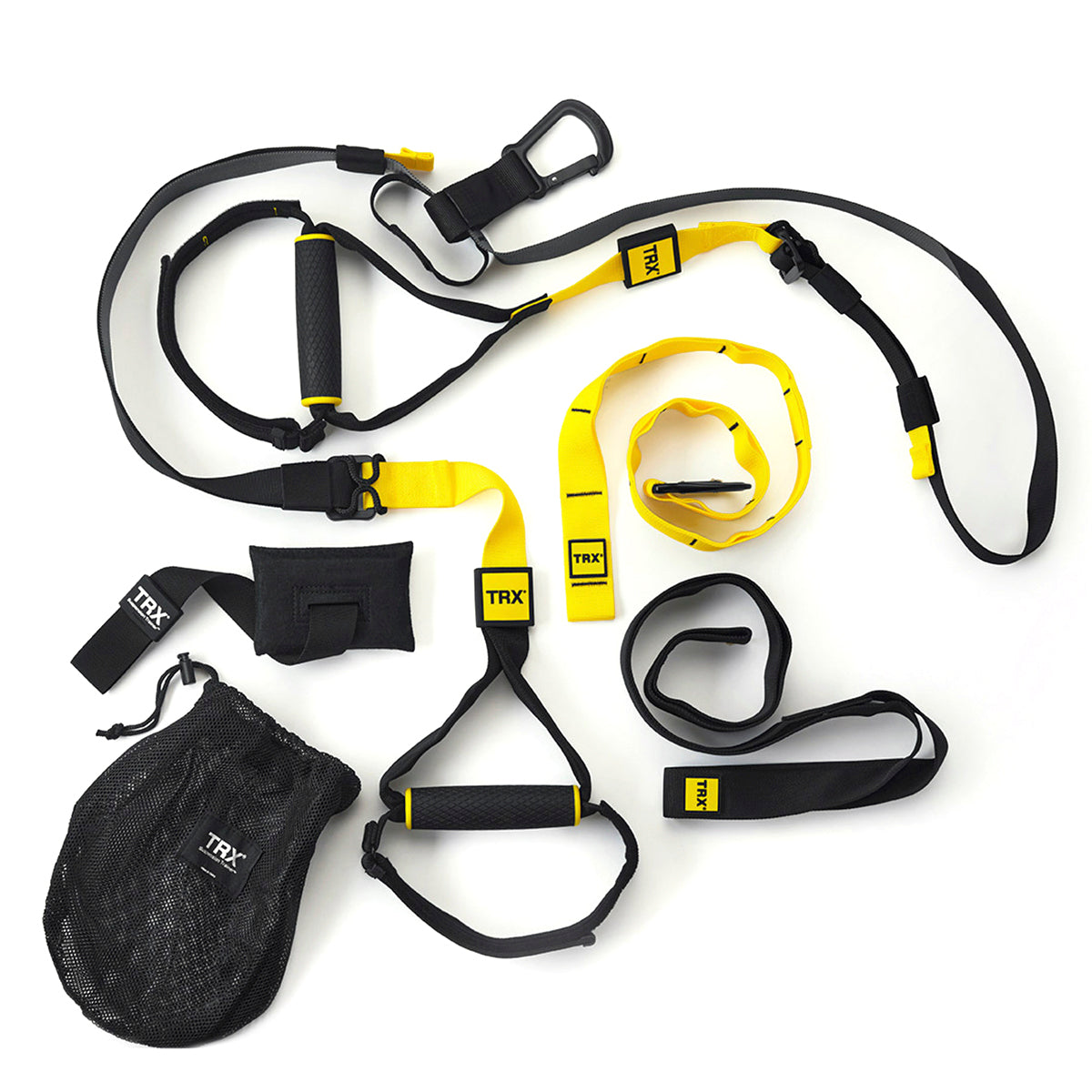
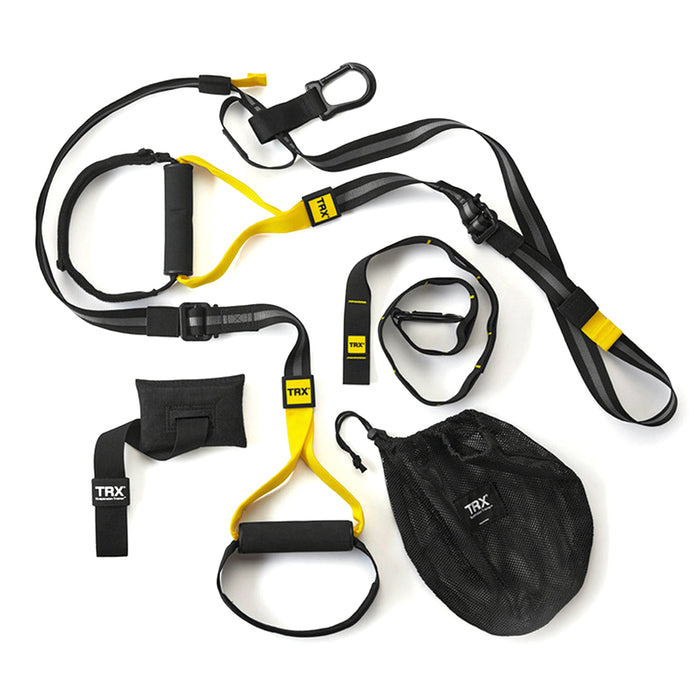
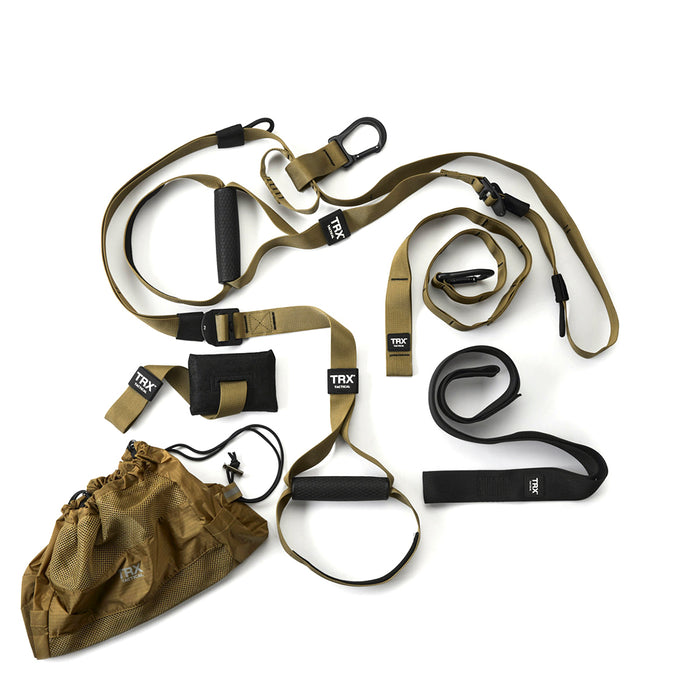
Suspension training uses straps anchored above you to turn gravity and body position into adjustable resistance. You hold the handles or place your feet in the foot cradles, then change your angle, stance, range, or exercise variation to scale the demand. That adjustability is one of the practical benefits of TRX training for beginners and experienced athletes alike.
Suspension Training or Weight Training: Which One’s For You?
Choose the method that matches the result you want and the environment you have. TRX makes full-body strength training portable and easy to scale. Traditional weights make heavy loading, isolation work, and exact load tracking more straightforward.
If you want a compact tool you can use almost anywhere, suspension training is hard to beat. If you want to isolate specific muscles or increase your PR on a loaded lift, traditional weights deserve a central place in your program.
You can use both. Pair the straps with weights, keep the work progressive, and choose the combination you can perform consistently with solid technique.
If you want strength training that fits a doorway, small room, or travel bag, start with a TRX Suspension Trainer™ and make each set harder by adjusting your angle, range, or tempo. TRX pairs its straps with guided workouts in the TRX App™, so you can follow coached sessions instead of building every workout from scratch. Compare the Suspension Trainer systems and choose the setup that fits where and how you train.
References
American College of Sports Medicine. “ACSM Publishes Updated Resistance Training Guidelines.” 17 Mar. 2026.
American Council on Exercise. “ACE-Sponsored Research: Investigating the Acute and Chronic Health Benefits of TRX Suspension Training.” Nov. 2016.
American Council on Exercise. “Getting the Answers to Your Core Questions.” Scientific Advisory Panel Report.
What's Your Reaction?
 Like
0
 Dislike
0
 Agree
0
 Disagree
0
 Excellent
0
 Useful
0
 Great
0