























Edible enrichments for commercial poultry
By Rosie Whittle, PhD, University of Arkansas
Introduction
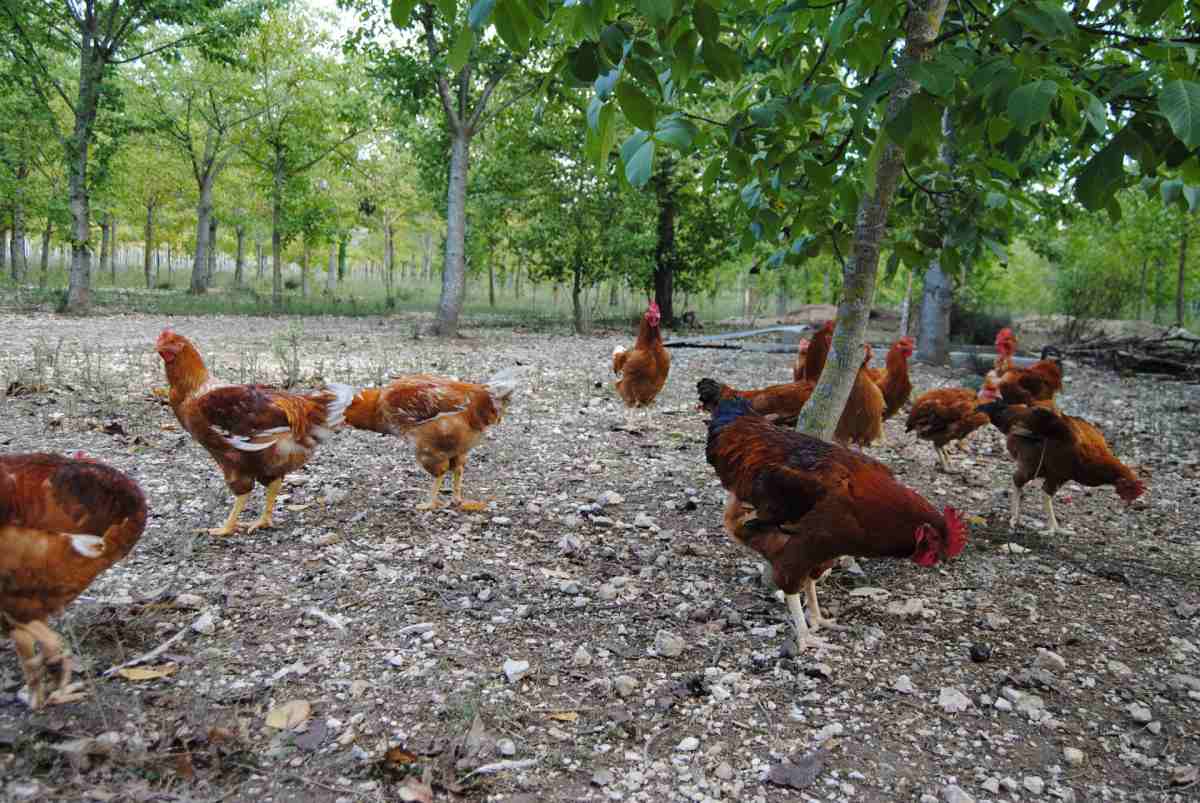
Chickens are highly motivated to peck, forage, and explore their environment. Providing opportunities for birds to express these motivated behaviors, is a key component of animal welfare, and edible enrichments can be an effective way to encourage engagement with the environment.
Edible enrichments are materials that birds can peck, manipulate, consume or forage from. Unlike traditional feed, they are intended to promote natural behavior rather than to meet nutritional requirements.1 Peck stones, insect larvae and bales have attracted interest because they encourage exploratory and foraging behavior and may be viable to incorporate into commercial production systems.
Why use edible enrichments?
The ancestors of modern chickens are foragers, and commercial housing systems may limit the opportunities for foraging behavior. Feed is readily available, but the environment may lack suitable foraging substrates.1
Edible enrichments help address this challenge by encouraging birds to spend time interacting with their surroundings. Potential benefits include:
- Increased activity and environmental engagement
- Greater expression of foraging behavior
- Reduced boredom and frustration
- Diverting pecking behavior away from flock mates
- Increased environmental complexity
Types of edible enrichment
Peck stones
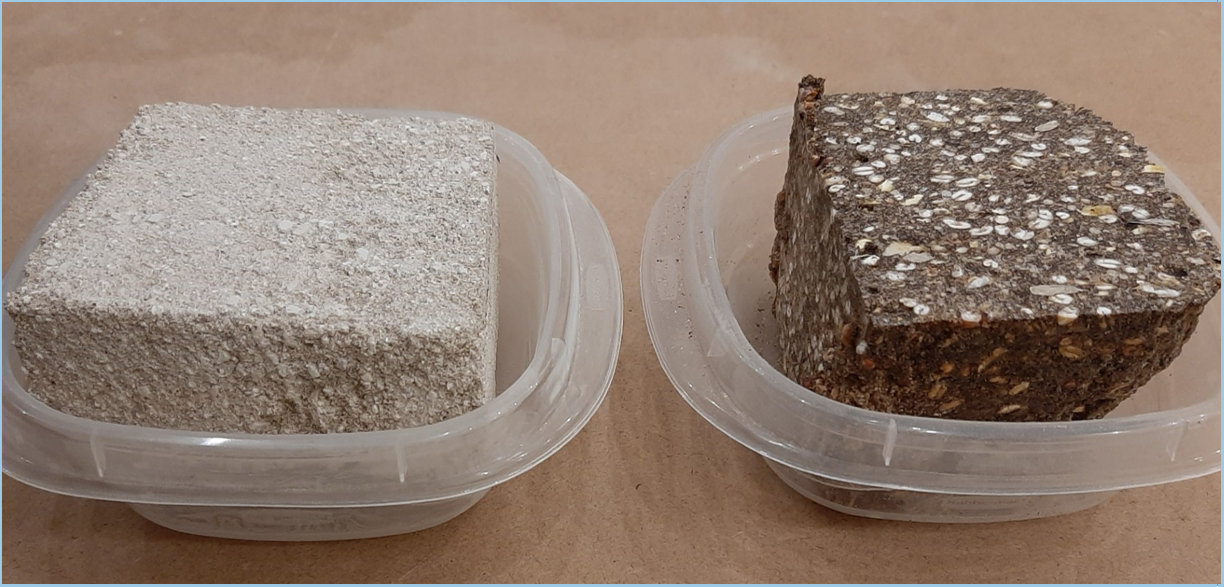
Peck stones, also referred to as mineral blocks or pecking blocks, are compressed products designed to provide birds with an outlet for pecking behavior. They are typically made from minerals and other feed-grade ingredients bound together into a hard structure that requires repeated pecking to break apart (Figure 1). Pecking is one of the most frequently performed behaviors in chickens and peck stones may deter inter-bird pecking in layers2 and broilers.3 Birds naturally investigate objects and peck stones provide a durable target that can satisfy this motivation (Figure 2). Peck stones also promote foraging, dustbathing and comfort behaviors.3
To maximize effectiveness, peck stones should be distributed in locations that are easily accessible to birds and to maintain uniform flock distribution. Producers should also monitor wear and consumption rates as some flocks may show more interest than others and it may depend on age4,5 strain,4 housing conditions and availability of other enrichments.
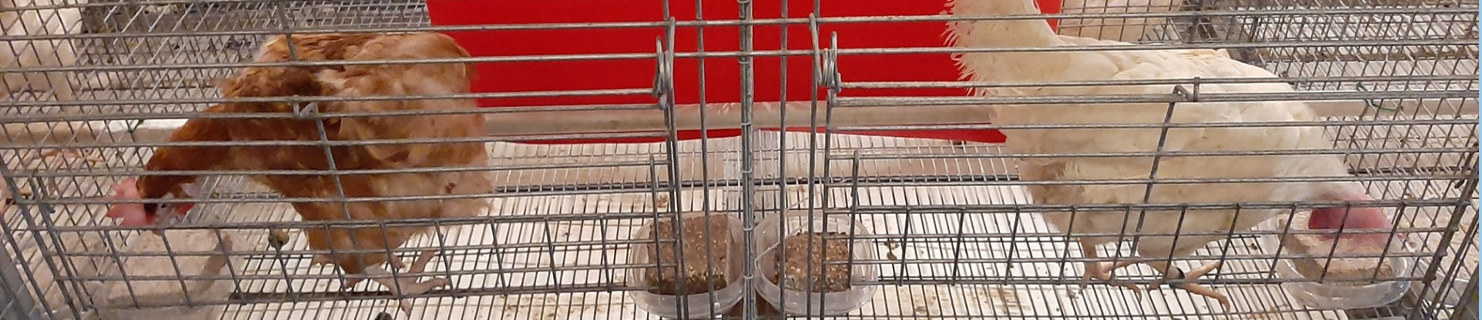
Figure 1: Commercial laying hens in cages used mineral-based peck block enrichment
Credit: Dr. Ana Rentsch
Insect larvae
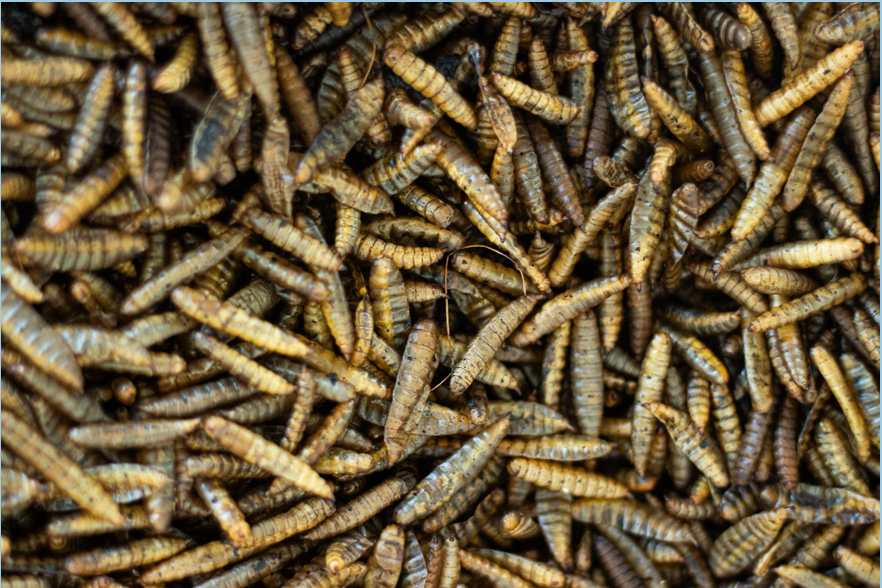
Insect larvae, like black soldier fly larvae and mealworms actively stimulate foraging behavior.6-8 When scattered in the litter or dispensed through enrichment devices, birds must search, peck, and compete to locate them.6 This closely resembles natural foraging activities. Because birds actively search for larvae, this form of enrichment may be useful for stimulating movement and encouraging the use of different areas within a barn.
Insect larvae may be more expensive than other edible enrichments. Producers should also consider how larvae are distributed, scattering them widely will promote foraging and reduce competition or prevent birds from congregating.
Hay bales
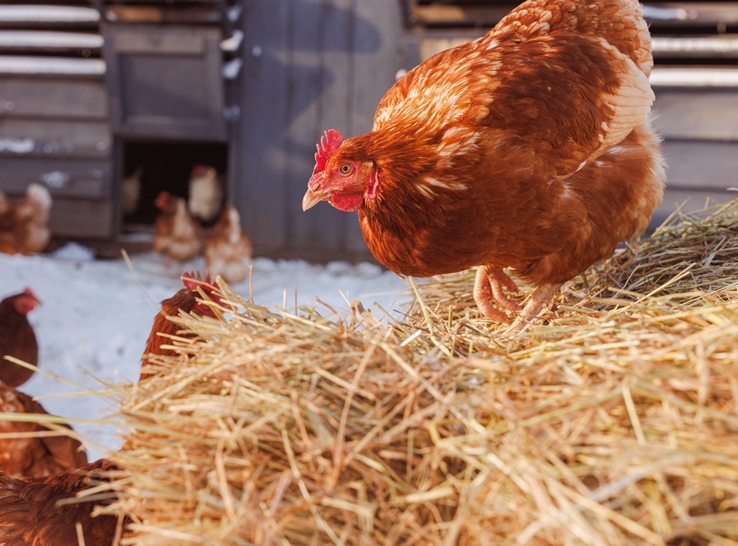
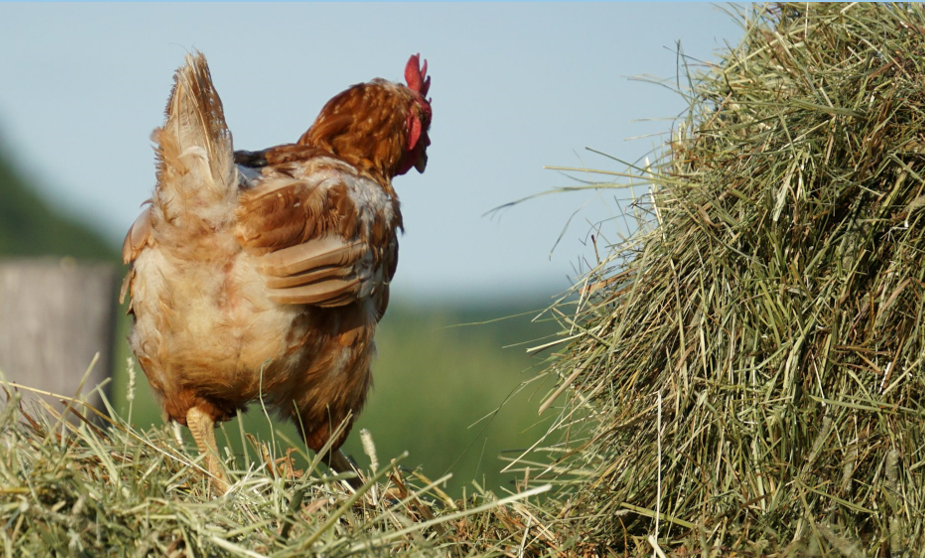
Hay bales are more commonly used in broiler or cage-free operations due to their size. They provide both a physical structure for perching9 and an edible material that can be pecked, pulled apart and consumed.2,10 The fibrous nature of hay bales encourages prolonged interaction.
Bales should be free from mold, excessive dust, or contaminants. As the bale gets broken down, material may become integrated with the litter. While this stimulates additional foraging behavior, litter quality may be altered and should be monitored. Because hay bales occupy floor space, placement should be considered to ensure accessibility to the enrichment while maintaining normal bird movement.
AT A GLANCE!
Peck stones
Best for: Durable pecking outlet
- Long lasting and durable
- Easy to place
- Low maintenance
- Encourages pecking and foraging behavior
Figure 2: Mineral based (left) and grain based (right) peck stones
Credit: Dr. Ana RentschInsect larvae
Best for: Promoting foraging
- Stimulates searching and foraging behaviors
- Encourages movement and activity
- Short term engagement
Figure 3: Dried black soldier fly larvae
Credit: Lets Fly (letsflyfood unsplash)Hay bales
Best for: Dual purpose use
- Edible and structural enrichment
- Long lasting and durable
- Encourages pecking, pulling, and exploration
Figure 4: Laying hen on a bale of hay
Credit: Eric Daoust (dazto unsplash)
Science backed facts!
Edible enrichments may benefit more than behavior. In one study, hens provided with peck stones and hay bale enrichment had less plumage and skin damage compared with hens housed without enrichment2 in addition to decreased beak length,2,5 suggesting enrichments can support both welfare and improve feather condition.
Some hens are consistent peck block users while others rarely interact with them. Pecking blocks are used more in the afternoon, during the time of eggshell formation11 and birds with existing keel bone fractures show greater use of pecking blocks.12 This suggests that hens may selectively use these enrichments when mineral demands are higher.
Hay bales: a playground that becomes a rest stop. Studies have found that birds with access to hay bales spend more time exploring,10 perching and dustbathing, while also showing less gentle feather pecking.9 As birds age, they tend to peck at the bales less and use them more as resting areas.10
Few enrichments capture a bird’s attention like insects. Studies have found that mealworms and black soldier fly larvae increase scratching, litter pecking and foraging activity,6,8 with some birds displaying “worm running” behavior that is more rarely observed in unenriched flocks.6 However, these bursts of activity are often short-lived, occurring primarily immediately after larvae are provided.6 Engagement in insect enrichment may vary depending on time of day and broilers may engage less than layers.13
Black soldier fly larvae may do more than feed curiosity. Studies have reported reduced feather pecking,8 lower fearfulness toward novel objects8 and increased comfort behaviors such as preening, wing flapping, and allopreening in birds provided larvae.7 In some breeds, larvae enrichment has also been associated with improved body weight and egg production.7
Important considerations
Biosecurity: Enrichment bales can improve welfare but may increase pathogen exposure due to contamination from wildlife if improperly sourced or managed.14
Insect larvae may harbor parasites: Insect use requires consideration of biosecurity, feed safety, storage conditions, and economic feasibility. Feeding untreated larvae may risk disease transmission between insects, animals and humans.15
Accessibility: Large enrichments may take up floor space and enough should be provided so that all birds can interact without crowding or competition for the resource.14,16
Litter quality: Enrichments can affect litter quality by changing bird activity and distribution. While foraging and scratching may improve litter aeration and add litter material as bales break down,14 hay and straw bales can also accumulate moisture and fecal material if not managed properly.
Summary
- Edible enrichments promote motivated behaviors such as pecking, foraging and exploration.
- Biosecurity, litter quality, accessibility and cost should be considered before implementation.
- When managed appropriately, edible enrichments can be a tool for supporting poultry
References
- Quino, M.A.; Baker-Cook, B. Targeting Frustration: A Review on Reducing Abnormal Behaviors in Broiler Breeders via Environmental Enrichment. Frontiers in Ethology 2026, 4, 1717389, doi:10.3389/FETHO.2025.1717389.
- Schreiter, R.; Damme, K.; Klunker, M.; Raoult, C.; von Borell, E.; Freick, M. Effects of Edible Environmental Enrichments during the Rearing and Laying Periods in a Littered Aviary—Part 1: Integument Condition in Pullets and Laying Hens. Poult. Sci. 2020, 99, 5184–5196, doi:10.1016/j.psj.2020.07.013.
- Guy, J.H.; Wright, A.N. British Poultry Science Effect of Enrichment with Pecka-BlocksTM on the Behaviour and Feather Condition of Commercially-Reared Broilers. Br. Poult. Sci. 2010, 44, 29–30, doi:10.1080/713655280.
- Schreiter, R.; Damme, K.; Freick, M. Edible Environmental Enrichments in Littered Housing Systems: Do Their Effects on Integument Condition Differ Between Commercial Laying Hen Strains? Animals 2020, Vol. 10, Page 2434 2020, 10, 2434, doi:10.3390/ANI10122434.
- Baker, P.E.; Nicol, C.J.; Weeks, C.A. The Effect of Hard Pecking Enrichment during Rear on Feather Cover, Feather Pecking Behaviour and Beak Length in Beak-Trimmed and Intact-Beak Laying Hen Pullets. Animals 2022, Vol. 12, Page 674 2022, 12, 674, doi:10.3390/ANI12060674.
- Pichova, K.; Nordgreen, J.; Leterrier, C.; Kostal, L.; Moe, R.O. The Effects of Food-Related Environmental Complexity on Litter Directed Behaviour, Fear and Exploration of Novel Stimuli in Young Broiler Chickens. Appl. Anim. Behav. Sci. 2016, 174, 83–89, doi:10.1016/J.APPLANIM.2015.11.007.
- Bellezza Oddon, S.; Biasato, I.; Ferrocino, I.; Imarisio, A.; Renna, M.; Caimi, C.; Gariglio, M.; Dabbou, S.; Pipan, M.; Dekleva, D.; et al. Live Black Soldier Fly Larvae as Environmental Enrichment for Native Chickens: Implications for Bird Performance, Welfare, and Excreta Microbiota. animal 2024, 18, 101341, doi:10.1016/J.ANIMAL.2024.101341.
- Tahamtani, F.M.; Kittelsen, K.; Vasdal, G.; Tahamtani, F.M.; Kittelsen, K.; Vasdal, G. Dried Black Soldier Fly Larvae (Hermetia Illucens) as Environmental Enrichment for Laying Hens – a Full-Scale Commercial Study. J. Insects Food Feed 2025, 11, 2617–2631, doi:10.1163/23524588-BJA10220.
- Daigle, C.L.; Rodenburg, T.B.; Bolhuis, J.E.; Swanson, J.C.; Siegford, J.M. Use of Dynamic and Rewarding Environmental Enrichment to Alleviate Feather Pecking in Non-Cage Laying Hens. Appl. Anim. Behav. Sci. 2014, 161, 75–85, doi:10.1016/J.APPLANIM.2014.10.001.
- Da Silva, M.I.L.; De Lima Almeida Paz, I.C.; Jacinto, A.S.; Filho, M.A.N.; De Oliveira, A.B.S.; Dos Santos, I.G.A.; Dos Santos Mota, F.; Caldara, F.R.; Jacobs, L. Providing Environmental Enrichments Can Reduce Subclinical Spondylolisthesis Prevalence without Affecting Performance in Broiler Chickens. PLoS One 2023, 18, e0284087, doi:10.1371/JOURNAL.PONE.0284087.
- McAuley, M.; Caston, L.J.; Widowski, T.M. Laying Hens Prefer Softer over Harder Mineral-Based Pecking Stones and Peck Them More at the End of the Light Period. Poult. Sci. 2025, 104, 104575, doi:10.1016/J.PSJ.2024.104575.
- Ehigbor, T.F.; Edwards, A.M.; Rentsch, A.K.; Kiarie, E.G.; Harlander, A.; Widowski, T.M. Pecking Block Use at Individual Level Is Associated with Improved Eggshell Quality and Keel Fractures in Laying Hens. Poult. Sci. 2025, 104, 105716, doi:10.1016/J.PSJ.2025.105716.
- Wood, B.; Rufener, C.; Makagon, M.M.; Blatchford, R.A. The Utility of Scatter Feeding as Enrichment: Do Broiler Chickens Engage with Scatter–Fed Items? Animals 2021, 11, 3478, doi:10.3390/ANI11123478.
- Riber, A.B.; Van De Weerd, H.A.; De Jong, I.C.; Steenfeldt, S. Review of Environmental Enrichment for Broiler Chickens. Poult. Sci. 2018, 97, 378–396, doi:10.3382/PS/PEX344.
- Müller, A.; Wiedmer, S.; Kurth, M. Risk Evaluation of Passive Transmission of Animal Parasites by Feeding of Black Soldier Fly (Hermetia Illucens) Larvae and Prepupae. J. Food Prot. 2019, 82, 948–954, doi:10.4315/0362-028X.JFP-18-484.
- Xu, D.; Shu, G.; Liu, Y.; Qin, P.; Zheng, Y.; Tian, Y.; Zhao, X.; Du, X. Farm Environmental Enrichments Improve the Welfare of Layer Chicks and Pullets: A Comprehensive Review. Animals 2022, Vol. 12, Page 2610 2022, 12, 2610, doi:10.3390/ANI12192610.
To view all issues of Poultry Press, click here.
Editor’s note: Content on Modern Poultry’s Industry Insights pages is provided and/or commissioned by our sponsors, who assume full responsibility for its accuracy and compliance.
The post Edible enrichments for commercial poultry appeared first on Modern Poultry.
Apa Reaksi Anda?
 Suka
0
Suka
0
 Kurang Suka
0
Kurang Suka
0
 Setuju
0
Setuju
0
 Tidak Setuju
0
Tidak Setuju
0
 Bagus
0
Bagus
0
 Berguna
0
Berguna
0
 Hebat
0
Hebat
0