






















































How Do At-Home Beauty Tech Devices Work With the Treatment Room?




SKINVITY moved into Selfridges' Smartech space last month, the latest beauty tech brand to graduate from selling direct online to a spot on the prestige retail floor, clinical claims and all and for salons, this means that another wellness tech company is cranking the dial up and putting professional-grade kit, LED, radiofrequency and pressotherapy, into the hands of the same clients who book your treatments.
But here’s the question that goes round every salon when a new device lands. Are these things eating into your bookings, or are they keeping skin in better shape between visits and bringing clients back more often? We talk to Blanca Miñano, who founded SKINVITY in 2020, about how at home beauty devices, and professional treatments are a match made in heaven.
From direct-to-consumer to Selfridges
SKINVITY built its UK business online first, and Miñano is blunt about why that order mattered. "The DTC channel allowed us to build something really important before entering retail," she says. "A direct relationship with our customer, their feedback, their results, their language. We didn't want to arrive at a department store with a product. We wanted to arrive with proof."
The Selfridges Smartech section, she argues, is unusual because of who walks through it. "The customer browsing there is already curious, already open to investing in their skin health. They don't need to be convinced that technology works, they want to know which technology is worth it."
The treatment room seems the same type of client, with clients more educated than ever they tend do not question “does any of this actually work”. More likely, they have watched a friend's skin change over a few weeks of LED, or seen a before-and-after on their feed convincing enough to act on. They have stopped asking whether and started asking which device, and how to use it without undoing the work you do in the room.
The substitution worry
If you have been practising for any length of time, you have probably heard the argument that at-home devices will eventually cannibalise treatment bookings. The reasoning goes that as devices get more capable, clients will simply maintain their results at home and visit the clinic less often, or not at all.
The worry deserves taking seriously, because of how it shapes behaviour in the room. Faced with a client who turns up mid-course of some new mask, the temptation is to wave it away, or to quietly resent it. Both responses tend to backfire with the client, and both miss what is actually happening.
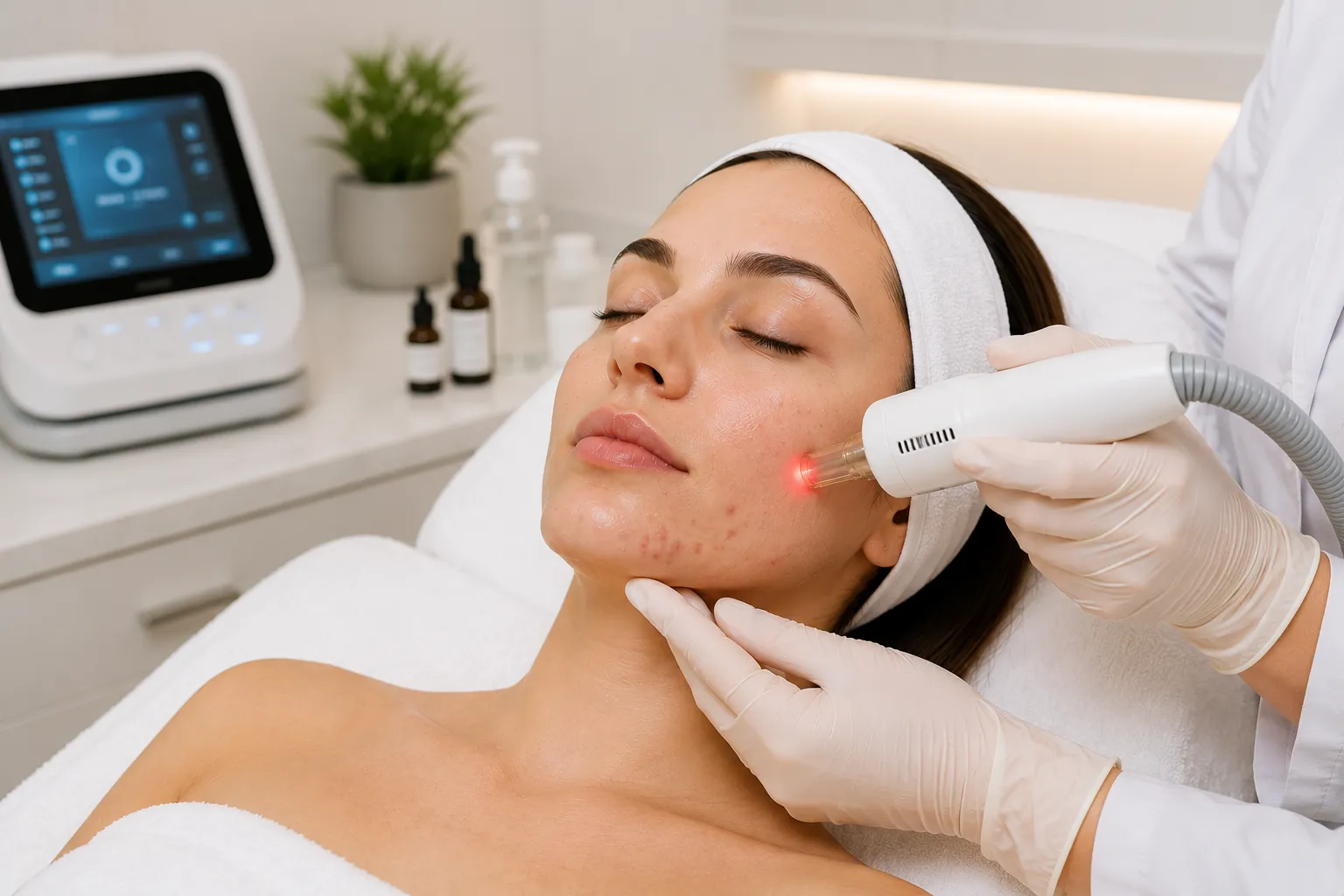
Miñano puts the opposite case for how beauty tech works in conjunction wiht treatments, "Maintenance, without hesitation. And we'd go further, intelligent maintenance," she says. "The technologies in our portfolio are the same technologies used in professional settings. What changes is the protocol, the intensity, and the frequency. A clinician delivers a high-intensity session once every few weeks. An at-home device works at a sustained intensity, every day or every other day. These are not competing modalities, they operate on completely different biological timescales."
It is a useful way to think about it. In her account the clinic session does the heavy lifting, a real cellular response, while the home device keeps the tissue in a state where that response can carry on and bed in afterwards. "Think of it less as clinic versus home and more as the difference between a deep structural intervention and daily physiological and structural support." The clients who use devices consistently, Miñano says, "come to the treatment room in better baseline condition, better skin quality, better tissue response, better results." If that matches what you see, the home device is doing your prep work for you and keep your clients returning because they are having better effects.
And the client you actually get is rarely the one who has ditched the clinic for the kitchen counter. Far more common is the one who has bought the mask and has no real idea how to use it, or they bought the mask because they’re ready to start investing in their skincare. Should it go on before or after the retinoid they are already using? Will it interfere with what you did to their skin last month? Right now those questions are being answered by the brand's app, or by whoever they follow online. The practitioner who answers them instead is the one the client keeps coming back to.
What the devices actually do between appointments
For any of this to stand up, the technology has to do something real to the skin rather than just make the client feel virtuous. This is exactly the ground where clients get confused, and where a practitioner who knows the detail has the advantage and can point the client in the right direction - or even, upsell products.
For Sknvity, Miñano breaks dow that the brand's Silicone LED Mask "emits five distinct wavelengths simultaneously, 630 nm (red), 830 nm, 930 nm and 1072 nm (near and deep infrared), plus 470 nm blue for antibacterial action when needed." The infrared wavelengths, and 1072 nm in particular, "penetrate deep into the tissue with minimal dispersion, reaching planes that most devices on the market simply do not reach."
The thing she singles out is the direct silicone contact, which she says cuts light dispersion and pushes more of the energy into the tissue, at 30 mW/cm². Use it regularly between visits, the argument goes, and you get ongoing fibroblast activity and collagen support, plus a dampening of the low-grade inflammation she points to as one of the bigger drivers of skin ageing and one most people have never heard of. SKINVITY's own lab testing puts the eight-week numbers at 30% better firmness, 19% better elasticity and a 20% reduction in nasolabial fold wrinkles.
The radiofrequency devices work differently. "With radiofrequency, specifically our TriPollar range, the mechanism is thermal," Miñano explains. "Multi-RF technology distributes controlled heat homogeneously across the dermis to stimulate neocollagenesis and elastin production, while DMA (Dynamic Muscle Activation) simultaneously works the deeper muscular planes to restore the structural support that holds the skin in place." The Aura, the device behind the brand's published clinical data, reports SGS-certified results of 28% improvement in skin density and 22% reduction in wrinkles in 28 days.
You do not have to swallow any single figure whole to take the point. LED and radiofrequency are well documented in the clinical literature, well beyond what any one brand publishes about itself. For the practitioner the real question is how much these home devices actually do compared with a proper in-room treatment, and where the line between the two sits.
The blended protocol idea
Follow the maintenance logic and you end up somewhere specific; if the home device and the clinic treatment work best in tandem, they ought to be planned as one thing. Miñano calls this a blended protocol model, and says the more switched-on clinics and aestheticians are already working this way.
"The clinic prescribes not just the in-room treatment but the daily device routine that supports it," she says. "That is a shift from a transaction model to a care model, and it is better for the client and better for the professional."
There is money in that idea as well as good clinical sense. It reframes the work as an ongoing relationship rather than a string of one-off bookings, and it puts you in charge of what your client uses at home, instead of an app or whoever they follow online. It also changes the consultation itself. You would be asking what devices someone already owns before you plan their treatment, not finding out by accident two visits later.
But that raises a harder question - should you actually stock devices yourself? It is not for every business. The margins need checking, staff need training, and someone has to handle aftercare, so it is a genuine commercial decision. But leaving the whole conversation to the client and a department store counter means giving up any say in what ends up on their skin. For a lot of salons the sensible middle is to hold a clear view on which device categories are worth it, stock or no stock, so the subject comes up in consultation as a matter of course.
On where the technology itself goes next, Miñano expects home devices to get smarter in ways that make this kind of integration easier to pull off. "Personalised protocols, biometric feedback, skin-state sensing. The device will know more about what the skin needs on a given day," she says. "That level of personalisation will make the at-home experience more complementary to professional care, not less."
Her bet, in the end, is on the people who quit treating home and clinic as rivals and start joining them up.
What this means for the treatment room
You do not have to start selling devices to act on any of this. The home device is now part of your client's routine whether you engage with it or not, and ignoring it mostly hands the money and the influence to someone else.
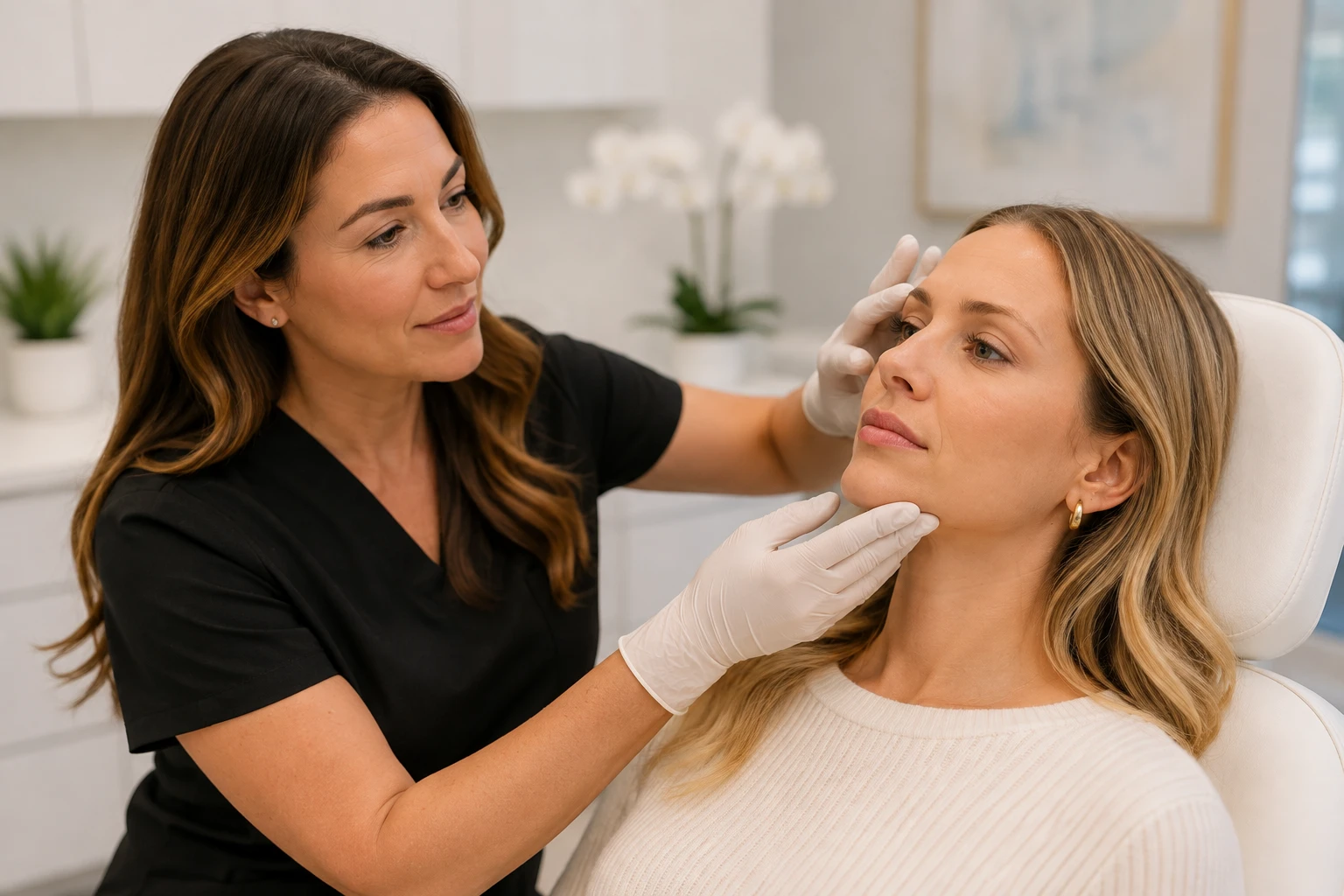
A few honest questions about your own setup, then. Do you actually ask, during consultation, what devices a client is using at home and how often? Most treatment plans are still built as though the skin turns up untouched between visits. And when a client asks you straight out whether some mask is any good, do you have a real answer ready, or just a wary shrug? The industry will continue developing and more brands will land on the same shelves over the coming year but the real work still happens in the treatment room. What is changing is everything around it, and that shift is already showing up in consultations, whether or not the salon is ready to talk about it, and like with everything, it will be the therapist’s work to educate the client.
Sign up with your email address to receive news and updates.
Subscribe
We respect your privacy. Thank you!
What's Your Reaction?
 Like
0
Like
0
 Dislike
0
Dislike
0
 Agree
0
Agree
0
 Disagree
0
Disagree
0
 Excellent
0
Excellent
0
 Useful
0
Useful
0
 Great
0
Great
0