

































Mitigating broiler performance and health challenges caused by mycotoxins in feed

Mycotoxins, commonly found in grains, end up in chicken feed and can cause health complications and decreased performance. Could a dietary supplement mitigate the negative impact of common mycotoxins in broilers?
Matthew Jones, DVM, PhD, director of nutrition and veterinarian at the Southern Poultry Research Group, evaluated whether the dietary supplement, B.I.O.Tox®Activ8 (Biochem, Germany), could support broiler performance when the birds were exposed to two common mycotoxins: fumonisin and deoxynivalenol.
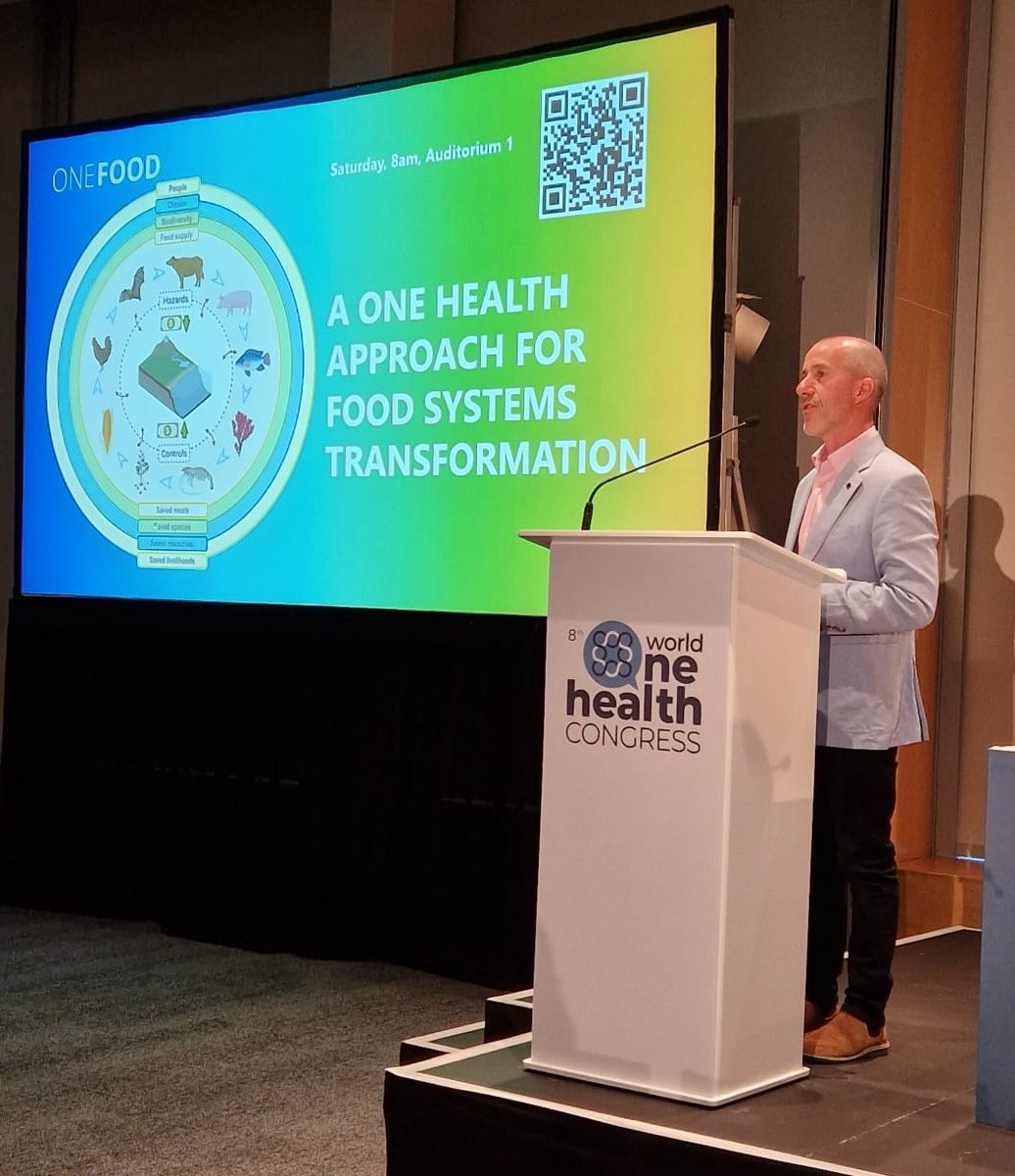
He presented his work at the 2026 International Poultry Scientific Forum.
Study design
For this study, Jones divided the birds into four groups:
- Unchallenged control
- Unchallenged + B.I.O.Tox Activ8
- Mycotoxin-challenged control
- Mycotoxin-challenged + B.I.O.Tox Activ8
To simulate chronic exposure and mimic real-world production conditions with multiple stressors, the challenged birds were supplemented with fungal culture to target added fumonisin at ~3 parts per million (ppm) and deoxynivalenol at ~4 ppm, along with a baseline enteric challenge. The analyzed outcomes were as follows:
| Fumonisin | Deoxynivalenol | |
| Unchallenged average | 2.7 ppm | 0.2 ppm |
| Mycotoxin-challenged average | 8.5 ppm | 4.8 ppm |
| FDA guidance* | 50.0 ppm | 5.0 ppm |
*Guidance for maximum inclusion in finished poultry feeds
“All the broilers were vaccinated at placement with the coccidiosis vaccine and then placed on the litter of a previous necrotic enteritis challenge model, with Eimeria and pathogenic Clostridium perfringens present,” Jones said.
The birds were fed a starter diet from 0 to 14 days, a grower diet from 14 to 28 days and a finisher diet from 28 to 37 days. A mash diet was used to minimize mycotoxin contamination of feed-manufacturing equipment, which Jones noted added inherent challenges.
“Birds do not perform as well on mash diets and waste more feed early on. Some variation in feed intake, as well as the feed conversion at 14 days, is due to the mash component of this challenge model,” he noted. “But as birds age, they waste less feed.”
Performance results
Regarding study outcomes, Jones said, “We didn’t observe significant differences in feed conversion or weight gain at 14 days between individual treatments.”
“However,” he added, “there was a significant main effect for the mycotoxin challenge itself, with the challenged groups having significantly lower body weight relative to the unchallenged groups.”
As birds aged, the negative effects of mycotoxins became more pronounced. By 28 days, the challenged group had significantly lower feed intake and body weight.
The pattern held as the study progressed. By day 37, the challenged group had lower feed intake and body weight than the unchallenged birds.
These findings reinforce a key point for producers: Over time, even at moderate levels, continuous mycotoxin exposure can reduce both feed intake and growth performance.
B.I.O.Tox Activ8 effects
At days 28 and 37, the B.I.O.Tox Activ8 groups, Jones said, were “statistically intermediate.” This also held true for clinical outcomes, specifically mortality.
“In challenged birds receiving the supplement, performance was neither equal to the unchallenged group nor as poor as the challenged control. In other models, where we see consistency and statistical indistinguishability between a challenged group and an unchallenged group across metrics and over time, it indicates that the product is working to support the health of the birds in that given challenge,” he said.
In practical terms, this suggests the supplement may help mitigate, but not fully eliminate, mycotoxin damage.
Enteritis, mortality and health outcomes
This study indicated “the repeated mycotoxin exposure had a measurable impact on both body weight and feed intake. And we observed clinical impacts in terms of overall mortality,” Jones said.
“At 3 weeks, when we would expect peak enteric challenge, we did observe separation between the challenged and the unchallenged birds. What I didn’t expect was the spike in first-week mortality.”
“We saw overall mortality that was significantly higher in the challenged group,” Jones stated. This was particularly true from 0 to 7 days, and Jones noted this warrants further investigation.
He pointed out this early mortality suggests mycotoxins may affect birds sooner than producers typically expect.
Although differences in necrotic enteritis were not statistically significant in this trial, Jones noted that prior research indicates this combination of toxins can exacerbate enteric disease.
By the time producers suspect a mycotoxin issue, producers are rarely able to confirm with analysis because the feed in question has already been consumed. Jones sees the starter phase as an opportunity for producers. “Due to the low feed consumption after placement, from a batch standpoint, the initial starter feed will often remain in the system (feed lines) the longest.”
“Lower broiler body weights at day 14 combined with increased early mortality could indicate a feed problem,” Jones noted. While practical testing and confirmation is a continued challenge for producers, this early feed may represent an avenue for collaboration between integrators and applied research.
Key takeaways
Jones’ study revealed several key takeaways for producers:
- Mycotoxins such as fumonisin and deoxynivalenol are common in US grains and often occur together.
- Even moderate mycotoxin levels can reduce feed intake and weight gain and increase mortality over time.
- Effects of performance/livability of mycotoxin feed contamination may begin earlier than expected, potentially as early as the first week.
- Products like B.I.O.Tox Activ8 may help reduce the severity of performance losses.
- Starter feed may represent an opportunity as a critical management control point.
Overall, the challenge model incorporated multiple stressors including Eimeria maxima, pathogenic C. perfringens and mycotoxins. Combining challenges often makes interpretation of outcomes more difficult. Broadly speaking, Jones’ study confirmed that broilers continuously exposed to supplemented mycotoxin experienced measurable decreases in bodyweight and feed intake, as well as clear health consequences. Supplements like B.I.O.Tox Activ8 may be used as promising counter strategies, especially in combination with early mycotoxin detection, feed management and other proactive control measures as part of a holistic mycotoxin-management program.
The post Mitigating broiler performance and health challenges caused by mycotoxins in feed appeared first on Modern Poultry.
Apa Reaksi Anda?
 Suka
0
Suka
0
 Kurang Suka
0
Kurang Suka
0
 Setuju
0
Setuju
0
 Tidak Setuju
0
Tidak Setuju
0
 Bagus
0
Bagus
0
 Berguna
0
Berguna
0
 Hebat
0
Hebat
0