
































































Why White Gel Polish Looks Patchy and Streaky


It Is Not Just Your Technique
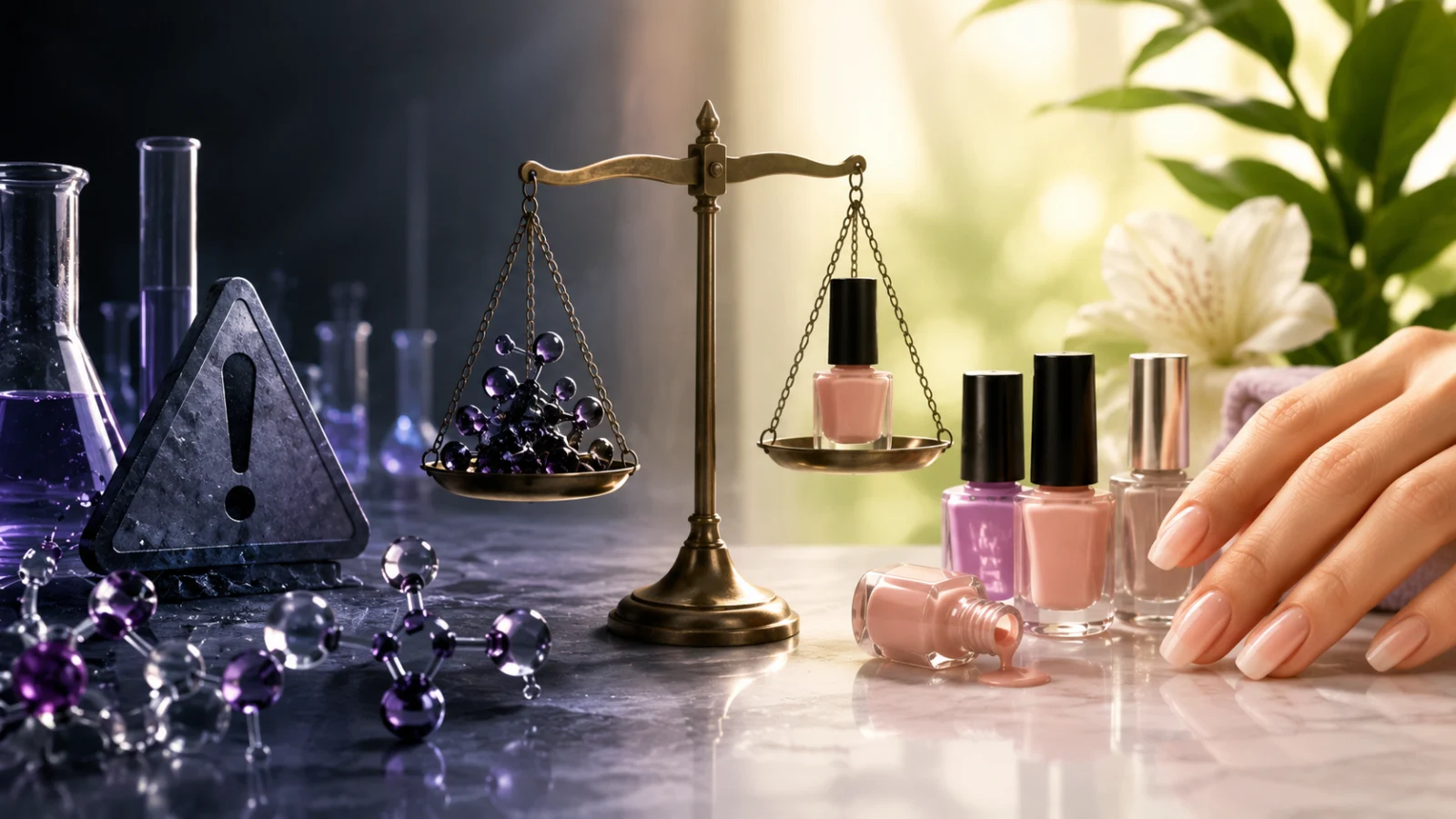
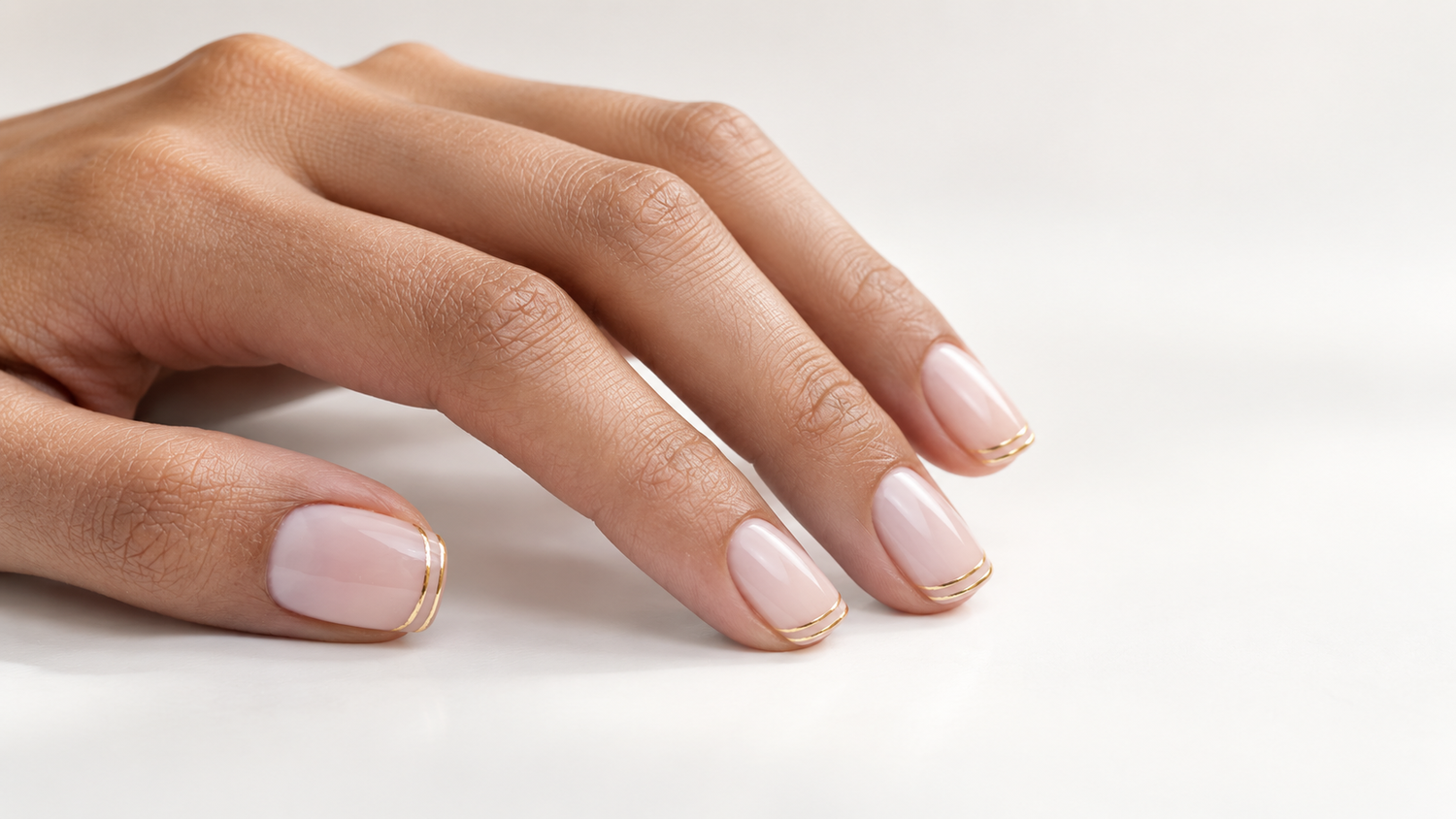
White gel polish is one of the most frustrating colours to work with. It streaks, looks uneven, cures chalky, or comes out patchy even when you have been careful. Meanwhile, a deep burgundy or rich black glides on smoothly with almost no effort. If you have ever wondered why white gel polish looks patchy while darker shades behave so much better, the answer is rooted in science, not skill. Understanding that difference changes everything.
What Opacity Actually Means for Gel Polish
Opacity describes how much light passes through a material. A highly opaque product blocks most of the light that hits it. A transparent product lets light pass through freely.
White gel polishes sit at the very high end of the opacity scale. To achieve that solid, bright white finish, manufacturers load the formula with a significant amount of white pigment. That heavy pigment load is exactly what makes white gel so visually striking. But it also changes how the product behaves during application and curing in ways that no other colour quite replicates.
Think of it like white wall paint. Anyone who has repainted a wall knows that white almost always needs more coats than a mid-tone colour. The same principle applies to your nails.
The Role of Titanium Dioxide
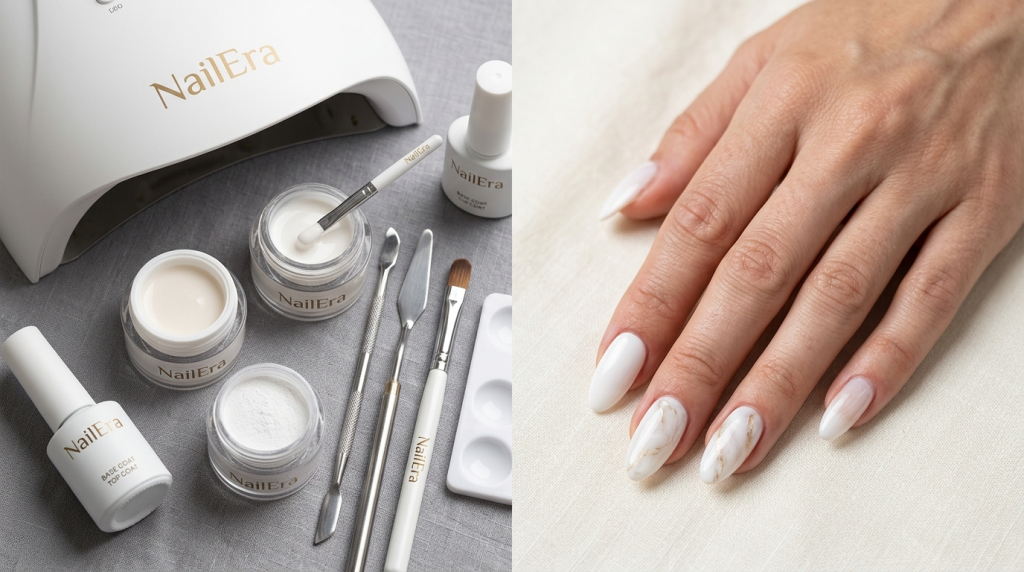
The pigment responsible for most white nail products is titanium dioxide. It is one of the most effective light-reflecting substances used in cosmetics and coatings. It gives white gel that crisp, bright, solid appearance that makes it so popular for French tips, minimalist looks, and bold nail art. According to the Environmental Working Group’s cosmetic ingredient database, titanium dioxide is one of the most widely used pigments in personal care products precisely because of its exceptional opacity and light-scattering properties.
But titanium dioxide comes with trade-offs. At high concentrations, it makes formulas thicker and more viscous. It can also cause pigment particles to settle unevenly within the gel, especially if the product has been sitting for a while or someone has not mixed it properly. When the pigment sits unevenly, brush strokes leave visible ridges. Those ridges are why white gel polish looks patchy even when your application feels smooth.
The same light-reflecting power that makes white so vivid also makes every tiny imperfection visible. This brings us to the most important part of the science.
Why White Reflects Every Flaw
White reflects large amounts of visible light. When light hits a perfectly smooth white surface, it bounces back evenly and the finish looks clean. But when the surface has even tiny ridges, streaks, or variations in thickness, those areas reflect light at slightly different angles. Your eye picks up those differences instantly.
Compare that to black. Dark colours absorb more light rather than reflecting it, which means surface variations are far less visible. A slightly uneven black gel application can look flawless. The same imperfection on white gel looks like a streak or a patch.
White does not necessarily apply worse than other colours. It simply reveals imperfections more easily.
That distinction matters enormously, because the product itself shares responsibility for what you see, not just the hand holding the brush.
Thick Layers and Curing Problems
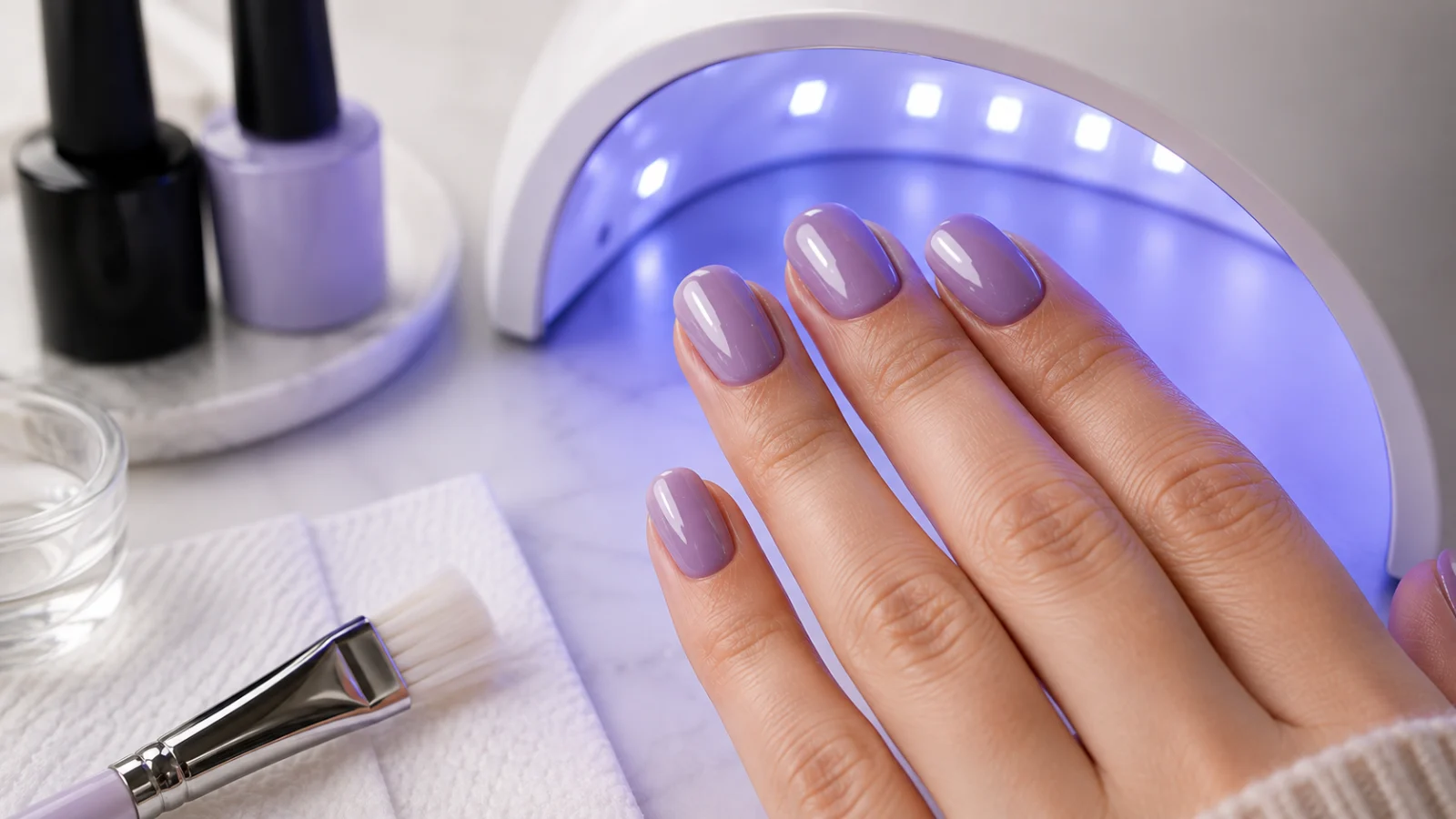
Curing is where white gel can cause another layer of difficulty. UV and LED lamps work by sending light through the gel to activate photoinitiators, which trigger the hardening process. When a layer is thin and relatively translucent, the light passes through easily and the product cures evenly from top to bottom.
White gel is different. That dense pigment load blocks light. A thick white layer can prevent the lamp from fully penetrating to the lower portion of the product. The surface may feel cured, but the base of the layer stays soft. This leads to wrinkling, patchiness, and an inconsistent finish that looks uneven even after wiping the inhibition layer.
Thin, even layers matter more with white than with almost any other colour. The science of light penetration makes that a firm requirement, not a suggestion.
Why White Gel Can Look Chalky
Chalkiness is a separate but related issue. When white gel carries a very high concentration of pigment particles, the surface can develop a matte, dusty appearance rather than a clean finish.
Overworking the gel disrupts the product’s ability to self-level. Gel has a natural tendency to flow and settle into a smooth surface if you leave it alone. Going back over an area too many times, or pressing too hard with the brush, creates micro-ridges. Those ridges scatter light in multiple directions instead of reflecting it cleanly, and that produces the flat, chalky look.
The smoother the surface, the smoother the reflected light. That is the simplest way to understand why technique and product behaviour connect so closely when working with white.
Why Some White Gels Behave Better Than Others
Not all white gel polishes are the same, and this is where brand differences become genuinely important. Different manufacturers use different pigment loads, viscosity levels, and suspension systems to keep the pigment evenly distributed throughout the formula. Some brands also use different photoinitiator systems, which affects how the product responds to your specific lamp.
Beyond that, white gels often serve different purposes. A white gel intended for nail art, like the kind used in detailed gel nail designs, typically has a different formulation from a full-coverage white designed for a clean, opaque finish in one or two coats. A French tip white is often thinner and slightly translucent to blend at the smile line. Treating all white gels the same way produces inconsistent results, because they genuinely are not the same product.
Understanding what your specific white is designed to do matters just as much as how you apply it.
This is also why switching brands can sometimes feel like starting from scratch.
Technique Matters, But So Does the Product
A light hand with the brush, thin layers, and letting the product self-level rather than chasing it around the nail all support better results with white gel. Avoiding overworking the product and fully curing each thin layer before adding the next are habits the science directly supports.
But if your white gel looks uneven or streaky, that is not automatically a technique failure. White gel is scientifically more demanding than almost any other colour you will use. That is not an excuse to skip good habits. It is just the truth about why white gel is hard to apply cleanly, even for people who have been doing nails for years.
The physics of light, the chemistry of titanium dioxide, and the way opacity affects curing all stack up against white gel in ways that simply do not apply to darker shades. Knowing that helps you approach the product with the right expectations.
White gel polish is a fascinating example of how chemistry, light, and perception all come together in a single product. Once you understand opacity and pigment behaviour, the patchiness stops feeling random and starts making complete sense. That understanding forms the foundation for consistently better results.
Getting comfortable with white gel takes more than practice. It takes knowing why the product behaves the way it does, and then building technique around that knowledge rather than fighting against it.
White gel rewards those who understand its quirks. But translating that understanding into clean, even results on your own nails takes more than reading about the science. It takes guided, structured learning from people who have worked through exactly these challenges.
If you want to go deeper into the science and technique behind white gel application, MyNailEra offers in-depth guidance from 12 award-winning nail artists who break down exactly how to work with challenging products. Era, your personal nail coach, can also give you feedback on your own results through the Upload and Critique feature, so you can see precisely where your application works and where to adjust.
The post Why White Gel Polish Looks Patchy and Streaky appeared first on NailKnowledge.
What's Your Reaction?
 Like
0
Like
0
 Dislike
0
Dislike
0
 Agree
0
Agree
0
 Disagree
0
Disagree
0
 Excellent
0
Excellent
0
 Useful
0
Useful
0
 Great
0
Great
0